




California Legislators Consider Increasing Fuel Tax
Two bills making their way through the California General Assembly would raise the state’s fuel taxes.
SACRAMENTO, CA ?Two bills making their way through the California General Assembly would raise the state’s fuel taxes. The first bill, SB1614, would increase the tax by 10 cents a gallon. The measure, now before the Senate Transportation Committee, was introduced by Sen. Tom Torlakson, who represents an area between San Francisco and Sacramento, according to the Associated Press. Under the bill, 9 cents of the tax on each gallon would be used to maintain, operate, improve, or construct state highways and local streets. One cent on each gallon would be used to finance environmental programs designed to mitigate the impact of motor vehicles on air quality. A bill before the state Assembly would also raise the state’s fuel tax. That measure, AB2847, would increase the tax by 5 cents per gallon. Like the Senate bill, AB2847 would require the funds to be used for highways, streets and environmental programs. That bill is now before the Assembly Transportation Committee.
More Operations
Is Delaying Fleet Replacement Really Saving Money?
Could delaying replacement cost your fleet more than it saves? This week’s recap takes a closer look, plus an update on GFX 2027.
Read More →
What Government Fleets Are Missing About Their True Costs
What are fleet budgets missing, and how can agencies use the data they already collect to make a stronger case for change?
Read More →
Rethinking Fleet Decisions From the Budget Office to the Shop
This October we looked back at how public fleets are reconsidering familiar processes and using what they learn to make better decisions.
Read More →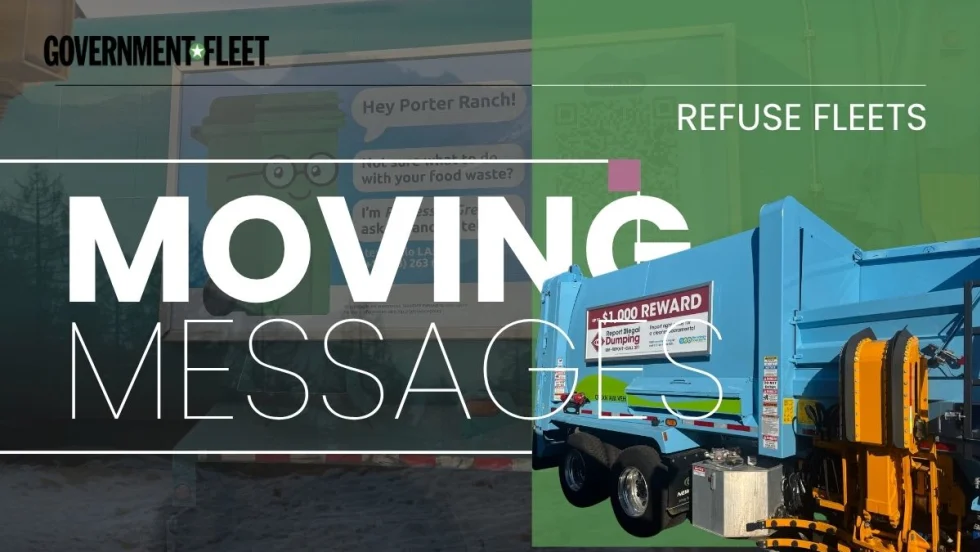
Who Owns the Message on a Refuse Truck?
Refuse trucks can carry public messages into neighborhoods, but keeping those messages current takes planning and clear responsibility.
Read More →
Who Deserves Fleet Recognition and What Could You Teach at GFX?
Who helped shape your fleet career, and what have you learned that could help someone else?
Read More →
What’s Haunting Public Sector Fleets?
Public sector fleet challenges rarely happen in isolation, and addressing one often means understanding how it connects to another.
Read More →
Is Keeping Older Fleet Vehicles Really Saving Money?
Is keeping vehicles longer saving money, and what happens when a diagnostic test points to the wrong fix?
Read More →
How Smart Fleet Strategy Can Help Local Government Agencies Do More with Less
Keeping a vehicle longer may ease this year’s budget, but what does it cost the next one? A closer look at fleet decisions can reveal opportunities to reduce spending while protecting essential services.
Read More →
Connect with Government Fleet on LinkedIn
From industry news and fleet management strategies to conversations with peers, Government Fleet's LinkedIn page offers public-sector fleet professionals another way to stay informed and connected.
Read More →
Town of Queen Creek Named Most Successful Fleet Award Winner of Inaugural RTA Fleet Success Awards
Five fleets were honored at RTA Connect 2026 in Chicago for excellence across resource efficiency, intentional culture, risk management, and stakeholder satisfaction.
Read More →