




Automotive Lift Institute Launches New Website
The Automotive Lift Institute (ALI) has launched a redesigned website that brings together information for lift buyers, owners and users.
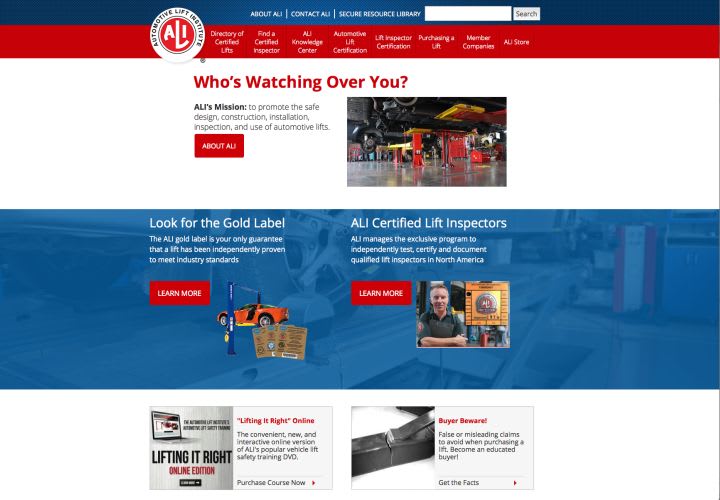
Screenshot via ALI.
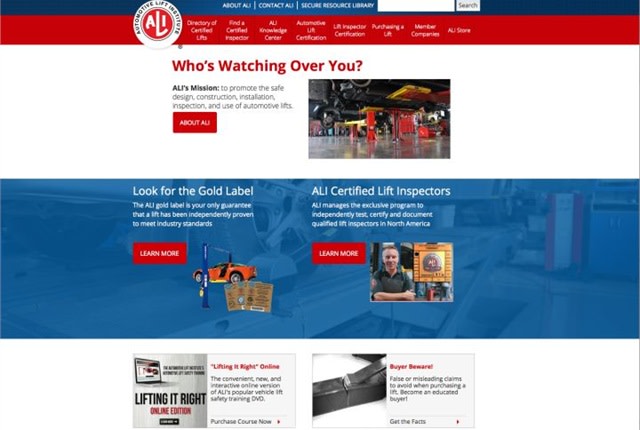
Screenshot via ALI.
The Automotive Lift Institute (ALI) has launched a redesigned website that brings together information for lift buyers, owners and users.
As part of the redesign, ALI brought control of its Directory of Certified Lifts in-house and redeveloped it at the same time as the rest of the site. The Directory of Certified Lifts lists every automotive/truck/vehicle lift that is certified to meet the ANSI/ALI ALCTV (current edition) "Safety Requirements for the Construction, Testing and Validation of Automotive Lifts" standard.
If a lift is not listed, it's not certified. Because lift testing and certification is generally voluntary for manufacturers, lift customers must take charge of their own safety by buying only lifts that have been third-party tested and ALI certified.
The new Directory of Certified Lifts can be browsed by lift type or searched by lift type, manufacturer, brand, model number and/or load rating. Each listing includes the lift's specifications, certification date and manufacturer's contact information. For lifts with certified accessories, the accessories are defined in the listing, including model number, description and rated capacity (if applicable). Listings may also include notes and a picture of the lift.
One new feature of the ALI website is the ALI History section. Set up in a timeline format, the page takes readers from the Institute's founding in 1945 through its near demise in the mid-1970s, its rejuvenation in the 1980s, and its lift-safety-focused activities in the 1990s through the present.
The timeline also calls out notable events in the Institute's past, such as the extension of membership to Canadian manufacturers in 1983 and Aug. 5, 2012, when ALI was the primary partner on the Richard Petty Motorsports No. 43 Ford Fusion driven by Aric Almirola in the NASCAR Sprint Cup Series Pennsylvania 400.
To learn more about ALI, visit www.autolift.org.
More Maintenance
Hidden in Plain Sight: Fleet Compliance Risks
Fleet compliance isn't just about having policies — it's about consistently enforcing them. This practical guide reveals six hidden compliance risks common in public sector and shared fleet operations and outlines proven strategies to improve visibility, accountability, and audit readiness.
Read More →
Is Your Fleet Garage Holding Back Your Operation? | The Fleet Breakroom
Norman Barrientos of Barrientos Design & Consulting explains how agencies can use operational data to show decision-makers why a replacement or major renovation is needed.
Read More →
Reducing Long-Term Maintenance Costs and Downtime
Downtime is rarely caused by a single surprise failure but rather by an issue that builds over time through setbacks ranging from deferred maintenance to poor replacement planning. So what's the fix?
Read More →
The Future of Government Fleet Technicians with Mike Cleary
Insight on preparing for hybrid and electric vehicle service, what fleets need to know about recruiting technicians in a competitive market, and how to make the most of limited training budgets.
Read More →
Work Orders Are More Than Records. They're a Roadmap to Fleet Availability
What if your work orders could predict failures, uncover hidden costs, and boost fleet availability? Here's how leading fleets are using the data.
Read More →
Drive More Profit with Greater Fleet Uptime
Fleet downtime costs money. JASPER helps keep vehicles on the road with quality remanufactured components, fast nationwide delivery, and reliable solutions that boost uptime and profitability.
Read More →
Smart Seasonal Maintenance Tips for Government Fleets
Government fleets carry extra weight, and routes, schedules, and public trust depend on reliability. A systematic spring checklist keeps vehicles in service when agencies need them most.
Read More →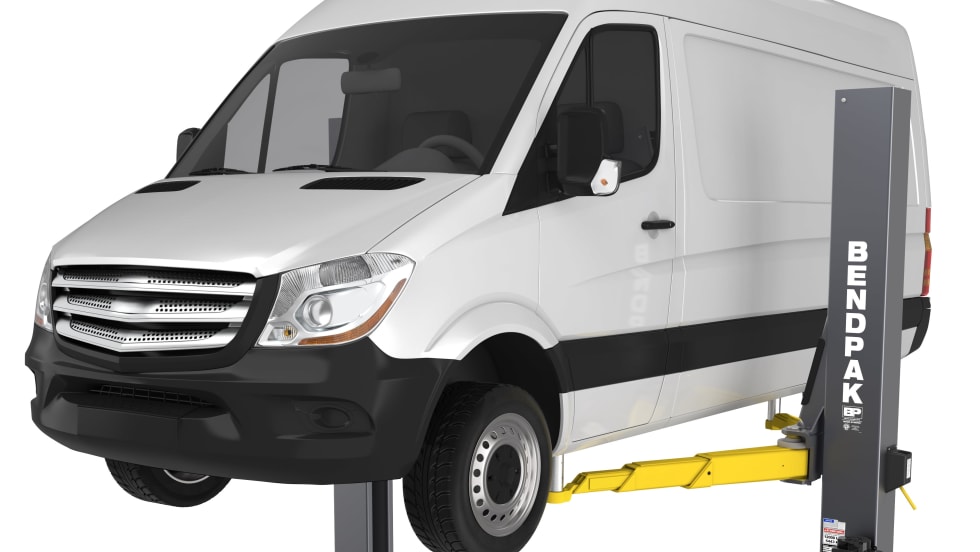
BendPak Debuts 12APF Two-Post Lift for Tall Vehicles in Low-Ceiling Shops
New 12,000-lb. open-top lift designed for commercial vans, trucks, SUVs, and fleet vehicles
Read More →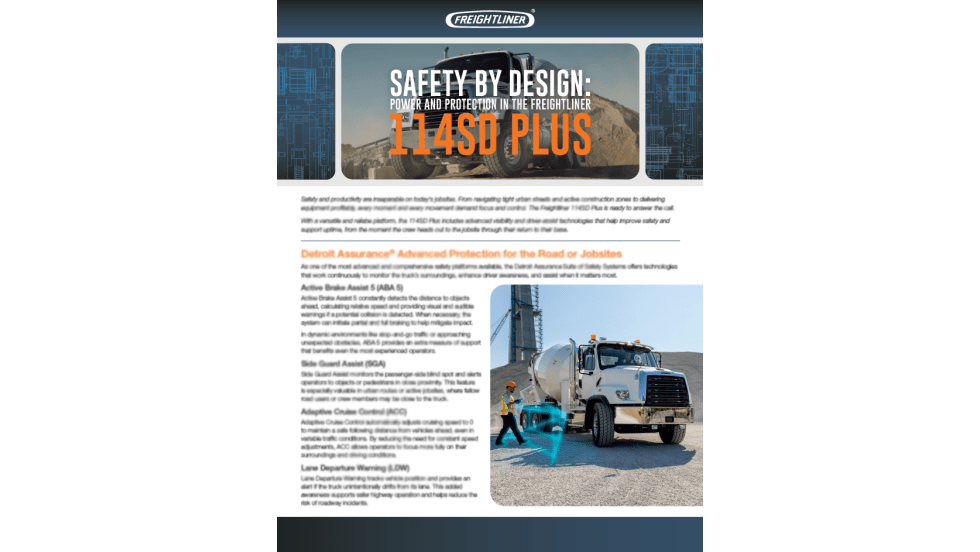
Reducing Risk and Improving Safety in Public Sector Fleets with Advanced Driver-Assist Technology
Public sector fleets face increasing pressure to improve safety, reduce liability, and operate efficiently. See how advanced vehicle technologies are helping agencies protect drivers, the public, and their budgets.
Read More →
Fleetio Launches AI Service Advisor to Simplify and Accelerate Fleet Maintenance Approvals
Fleetio launched an open beta of its AI-powered Service Advisor tool, designed to help fleet managers streamline repair approvals and reduce vehicle downtime.
Read More →