




APWA Names Scott Grayson Executive Director
Scott Grayson will lead the organization and reports to the American Public Works Association (APWA) Board, as well as more than 29,000 members across North America.
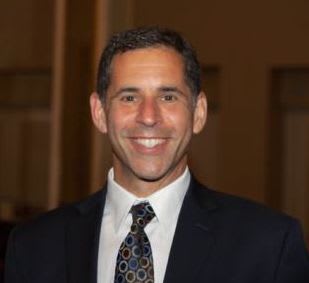
Grayson
Grayson
Scott D. Grayson was recently named by the American Public Works Association (APWA) and Canadian Public Works Association (CPWA) as the new executive director. Selected by the Board of Directors, Grayson will lead the organization and reports to the APWA Board, as well as more than 29,000 members across North America. Grayson will take over the helm on April 15, 2016 from Interim Executive Director Larry W. Frevert, P.E., PWLF, of Kansas City, Kan.
“The Board voted unanimously to hire Scott Grayson. His nearly 30 years of association management expertise combined with his experience as a city council member in the City of Golden Valley, Minn., will provide us with a very unique skill set to ensure that public works professionals’ voices are heard in the U.S. Congress and Canadian Parliament, while also ensuring that their professional development skills are continually being enhanced,” said APWA President Brian Usher, PWLF, public works director of Largo, Fla.
As executive director, Grayson will lead the APWA and CPWA in the management and direction of the formulation and execution of strategic and tactical initiatives. He will also be responsible for the oversight of operations, the management and development of the annual budget, collaborative work with industry partners, and the implementation of organizational best practices and policies. “I am very much looking forward to the opportunity of working with the APWA Board and staff to implement the Board’s strategic priorities of advocacy, professional development and continued growth and engagement of all of APWA’s Chapters in the US and Canada. Through these strategic priorities, APWA will continue to serve as the voice of the profession in the U.S. Congress and Canadian Parliament, provide excellent products and services, and engage all current and future APWA members in North America and beyond,” Grayson said. “I strongly believe that with the increased attention on needed infrastructure improvements throughout our cities in the US and Canada, APWA is positioned to serve both governments as their best resource.”
Grayson is currently the associate managing director for the Institute of Electrical and Electronics Engineers (IEEE-USA), based in Washington D.C., where he is responsible for programs related to employment, career and professional development, entrepreneurship, engineering licensing, and continuing education, as well as supporting the Board. While at IEEE-USA, Grayson has also been responsible for state and federal legislative programs and served as staff liaison to numerous scientific engineering and legal organizations to build coalitions. He has also worked in areas of communications, public relations, membership development, conference management, accreditation, fundraising, research, and most recently developed a leadership program for student and young professional members.
Grayson’s association and nonprofit executive management experience concentrates in the areas of staff management/coaching, Board development, budgeting, strategic planning, government and public relations, licensure, program management, non-dues revenue, electronic and print publications, social media, conference management, chapter relations , fundraising, research and surveys. His educational background includes a Bachelor of Arts degree in Political Science from the University of Wisconsin-Madison, and a Master of Arts degree from New York University’s Center for Latin American and Caribbean Studies, specializing in international politics and economic development.
In addition, Grayson served as a city council member for the City of Golden Valley, Minn., and as chair of the Golden Valley Housing Redevelopment Authority. He has authored or co-authored numerous publications, and is a member of several professional associations including the American Society for Association Executives, the Council of Engineering and Scientific Society Executives, and the Association for Talent Development. He also speaks Spanish and French and has served in numerous community leadership positions.
More Operations

Is Keeping Older Fleet Vehicles Really Saving Money?
Is keeping vehicles longer saving money, and what happens when a diagnostic test points to the wrong fix?
Read More →
How Smart Fleet Strategy Can Help Local Government Agencies Do More with Less
Keeping a vehicle longer may ease this year’s budget, but what does it cost the next one? A closer look at fleet decisions can reveal opportunities to reduce spending while protecting essential services.
Read More →
Connect with Government Fleet on LinkedIn
From industry news and fleet management strategies to conversations with peers, Government Fleet's LinkedIn page offers public-sector fleet professionals another way to stay informed and connected.
Read More →
Town of Queen Creek Named Most Successful Fleet Award Winner of Inaugural RTA Fleet Success Awards
Five fleets were honored at RTA Connect 2026 in Chicago for excellence across resource efficiency, intentional culture, risk management, and stakeholder satisfaction.
Read More →
A buyer's guide to fleet management software in 2027
Buying fleet management software in 2027 means looking beyond features and price. As fleet operations, technology and expectations evolve, this guide explores what today’s fleet professionals should consider when choosing a system that can deliver value now and adapt to what comes next.
Read More →
Hazard Alerts, Fleet Car Sales Rise and a New Shuttle Concept
Fleet car sales doubled, but the bigger picture tells a different story in this week’s roundup.
Read More →
How St. Johns County Turned Fleet Data Into Better Replacement Decisions
St. Johns County, Florida, had fleet data, but turning it into reliable decision guidance was another matter. Instead of starting over with a new fleet management system, the county connected existing tools and built a scoring system that gives managers an objective look at fleet health.
Read More →
Fleet Forward Conference Introduces One-Day Passes for 2026
New one-day registration lets fleet professionals attend Tuesday, Wednesday, or Thursday, with passes available for $249.
Read More →
ENC Unveils its ZAVIR Medium-Duty Shuttle
Two variants of the concept shuttles were revealed: a low-floor configuration and a high-floor configuration.
Read More →
Could Your Next Fleet Technician Start as an Intern?
What if your next technician hasn’t worked in a fleet shop yet? What fleets are doing to free up time.
Read More →