




Allen County, Ind., Looks to Revise Take-Home Fleet Vehicle Policy
FT. WAYNE, IN — According to a recent survey, as many as 20 of the 245 take-home vehicles owned by Allen County government are driven less than 6,000 miles per year — proof there's a need to trim the fleet, officials told the Ft. Wayne News-Sentinel on August 16.
FT. WAYNE, IN — According to a recent survey, as many as 20 of the 245 take-home vehicles owned by Allen County government are driven less than 6,000 miles per year — proof there's a need to trim the fleet, officials told the Ft. Wayne News-Sentinel on August 16. Under a policy proposed by commissioners and council, the county would impose new guidelines on the purchase and use of take-home vehicles. If passed, the policy change could save the cash-starved county government thousands of dollars every year — although nobody can say how much. The policy's main goal is to make sure people who get take-home vehicles actually need them. "Employees assigned take-home vehicles must be called out on work-related duties on a regular and frequent basis," the policy said. "Vehicles not meeting these criteria may be sold or used as 'pool' cars." Each take-home vehicle must be driven at least 6,000 miles per year, the policy said. While several county officials acknowledged such a requirement could induce employees to drive more in order to keep their car, "we hope that won't happen," said County Council President Darren Vogt. Non-police county vehicles aren't supposed to be used for personal business. Vogt said the county will pay attention to "on-call" employees with take-home vehicles. Employees who are seldom called might not need their own vehicle. As of now, vehicles used for public-safety responsibilities and those considered part of an employee benefits package are exempt, although Commissioner Ed Rousseau said use of all the county's 400 vehicles will be scrutinized. "I'm going to look at everything. We want to save money." Rousseau hopes the county can reduce its fleet by at least 15 vehicles. The proposal is similar to one already in effect with the Fort Wayne government, he said. If the policy is passed and county-owned pool cars are not available, employees would be reimbursed for using their own cars on official business. The commissioners in June agreed to increase the county's per-mile payment from 30 cents to 36 cents. Rousseau and Vogt said the policy will be reviewed and could be changed before commissioners vote on it, possibly within a month or two. One issue to be addressed might be this: How does the county decide which vehicles are used for public safety? Until last year, the county didn't even know who was driving its vehicles or where they were going, trusting officials to supervise their employees. In part because of budget concerns, the county began to require that employees record vehicle use.
More Operations
Is Delaying Fleet Replacement Really Saving Money?
Could delaying replacement cost your fleet more than it saves? This week’s recap takes a closer look, plus an update on GFX 2027.
Read More →
What Government Fleets Are Missing About Their True Costs
What are fleet budgets missing, and how can agencies use the data they already collect to make a stronger case for change?
Read More →
Rethinking Fleet Decisions From the Budget Office to the Shop
This October we looked back at how public fleets are reconsidering familiar processes and using what they learn to make better decisions.
Read More →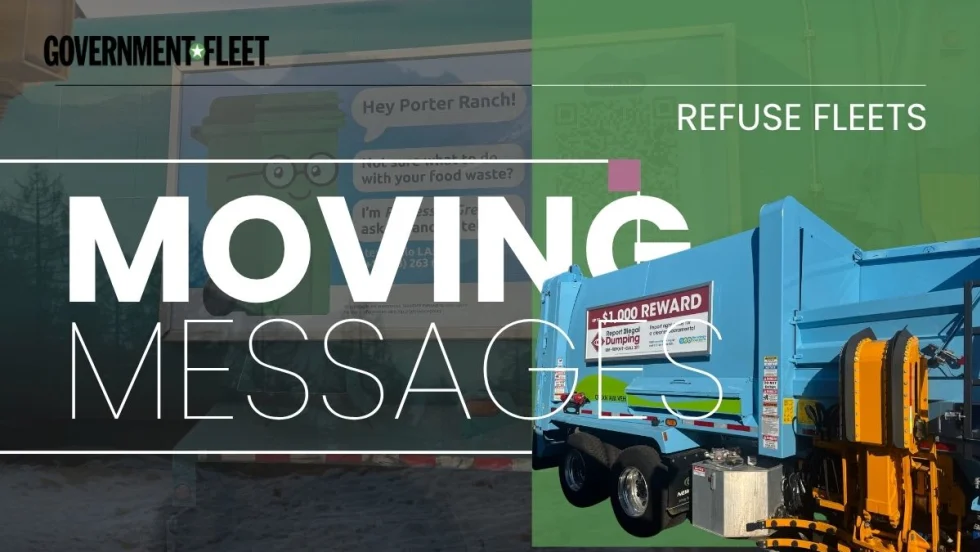
Who Owns the Message on a Refuse Truck?
Refuse trucks can carry public messages into neighborhoods, but keeping those messages current takes planning and clear responsibility.
Read More →
Who Deserves Fleet Recognition and What Could You Teach at GFX?
Who helped shape your fleet career, and what have you learned that could help someone else?
Read More →
What’s Haunting Public Sector Fleets?
Public sector fleet challenges rarely happen in isolation, and addressing one often means understanding how it connects to another.
Read More →
Is Keeping Older Fleet Vehicles Really Saving Money?
Is keeping vehicles longer saving money, and what happens when a diagnostic test points to the wrong fix?
Read More →
How Smart Fleet Strategy Can Help Local Government Agencies Do More with Less
Keeping a vehicle longer may ease this year’s budget, but what does it cost the next one? A closer look at fleet decisions can reveal opportunities to reduce spending while protecting essential services.
Read More →
Connect with Government Fleet on LinkedIn
From industry news and fleet management strategies to conversations with peers, Government Fleet's LinkedIn page offers public-sector fleet professionals another way to stay informed and connected.
Read More →
Town of Queen Creek Named Most Successful Fleet Award Winner of Inaugural RTA Fleet Success Awards
Five fleets were honored at RTA Connect 2026 in Chicago for excellence across resource efficiency, intentional culture, risk management, and stakeholder satisfaction.
Read More →