




Aftermarket Parts Can Void Vehicle Lift Safety Certification
MADISON, IN – Fleet maintenance managers and independent service providers who want to ensure they are buying vehicle lifts that reach the highest levels of safety and performance choose lifts that have been third-party certified to comply with ANSI/ALI ALCTV-1998 standards.
MADISON, IN – Fleet maintenance managers and independent service providers who want to ensure they are buying vehicle lifts that reach the highest levels of safety and performance choose lifts that have been third-party certified to comply with ANSI/ALI ALCTV-1998 standards. Forty-seven states plus Washington, D.C., and numerous local governments, use the International Building Code, which requires that all installed vehicle lifts be certified to this standard. Other regulators, such as New York State, Worksafe B.C., and the Ontario Ministry of Labor, have taken even stronger steps, with region-wide regulation supporting requirements for ANSI-compliant lifts. However, according to Rotary Lift, many people don’t realize that installing aftermarket replacement parts on a vehicle lift can invalidate the lift’s certification and create risk management issues. Rotary Lift recommends using only original equipment (OE) replacement parts to ensure proper fit and function on any brand of vehicle lift. Rotary Life also warns maintenance managers to be alert to counterfeit parts. The Stop Counterfeiting in Manufactured Goods Act that was signed into law by President Bush in 2006 states that it is illegal to misrepresent a part built by a third party as a genuine replacement part. These counterfeit parts may be labeled “Made for Rotary Lift Model XXX.” To ensure you are buying genuine OE replacement parts, purchase them from factory-authorized distributors and installers.
More Operations

How St. Johns County Turned Fleet Data Into Better Replacement Decisions
St. Johns County, Florida, had fleet data, but turning it into reliable decision guidance was another matter. Instead of starting over with a new fleet management system, the county connected existing tools and built a scoring system that gives managers an objective look at fleet health.
Read More →
Fleet Forward Conference Introduces One-Day Passes for 2026
New one-day registration lets fleet professionals attend Tuesday, Wednesday, or Thursday, with passes available for $249.
Read More →
ENC Unveils its ZAVIR Medium-Duty Shuttle
Two variants of the concept shuttles were revealed: a low-floor configuration and a high-floor configuration.
Read More →
Could Your Next Fleet Technician Start as an Intern?
What if your next technician hasn’t worked in a fleet shop yet? What fleets are doing to free up time.
Read More →
How Phoenix Is Building Its Next Generation of Fleet Technicians
With more than 8,000 vehicles and pieces of equipment to maintain, the City of Phoenix could not afford to wait for fully trained technicians to walk through the door. Instead, they revamped their entire workforce strategy and showed how public fleets can create their own talent pipeline while preparing existing employees for increasingly complex vehicles.
Read More →
What’s Slowing Your Fleet Down?
Could a change in how work gets done help your fleet return vehicles to service sooner?
Read More →
Can Public Fleets Trust the Data Driving Their Decisions?
Public fleets have more data than ever, but inconsistent records and missing information can still undermine maintenance, replacement, and cost decisions.
Read More →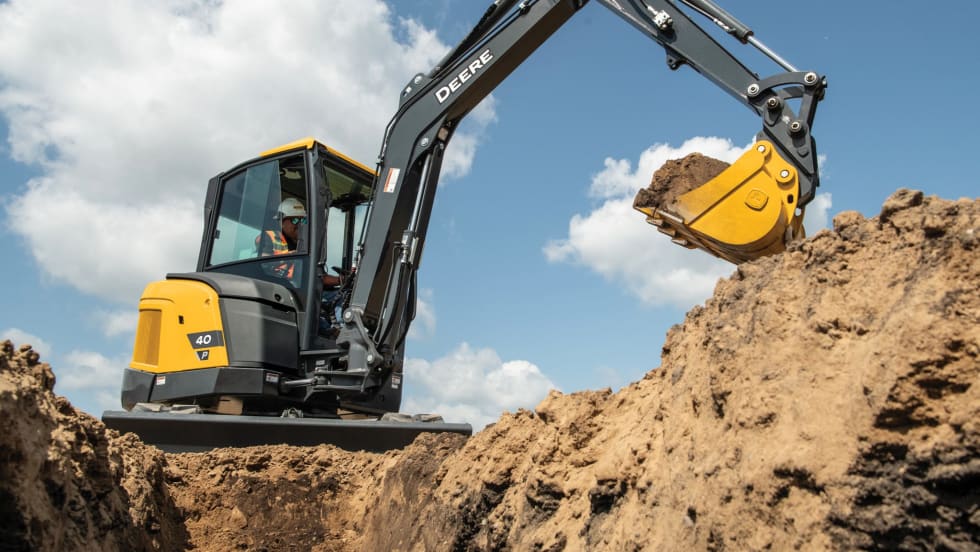
John Deere Introduces 40 P-Tier Compact Excavator
John Deere is adding a compact excavator designed for crews that need to move equipment between jobsites and handle multiple types of work with one machine. The 40 P-Tier weighs less than 10,000 pounds and offers configurable hydraulics, attachment options, and connected fleet-management capabilities.
Read More →
How Leading Fleets Improve and Why Business Plans Matter
This week, we look at what past Leading Fleet winners can teach us about making progress, plus how to build a business plan your fleet will actually use.
Read More →
Nominate a Fleet Leader for the 2027 Public Fleet Hall of Fame
Do you know a fleet leader who has made a lasting impact on the industry? Nominate this fleet professional for the 2027 Public Fleet Hall of Fame.
Read More →