





Related: Fleet Policies & Procedures to Minimize COVID-19 Contagion
Miami-Dade County: Planning for COVID-19 and Hurricanes
Miami-Dade County, Fla., fleet staff continue to service Solid Waste and Police vehicles while purchasing fuel more often and stocking up on extra parts.
April 6, 2020

Alex Alfonso
5 min to read
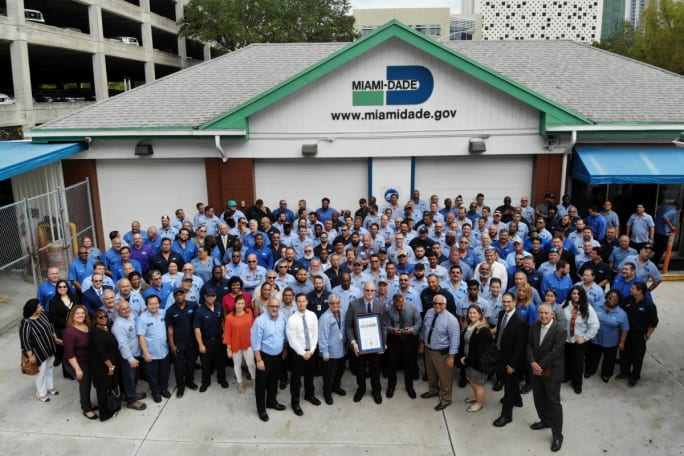
Of the Miami-Dade fleet team, many technicians are still working to service vehicles.
Photo: Miami-Dade ISD
Florida ranks among the top 10 states with the highest number of COVID-19 virus cases, with more than 9,000 positive cases as of April 2. Miami-Dade County is hardest hit, with nearly 2,900 cases.
As if the COVID-19 pandemic weren’t bad enough, many fleet managers in Florida are also preparing for hurricane season, which begins in June. Alex Alfonso, division director of fleet management for the county, talks about how his operation is managing.
Q: What is your agency’s and the fleet operation’s response to the COVID-19 virus?
A: We’re a large fleet. We have service managers overseeing the 19 respective shops; they're out in the field right now. Our biggest customers, Solid Waste and Police, are still running their operations unchanged, but other departments have gone to telecommuting, so we’ve seen work for those departments slow down. But what we've seen conversely is a lot of departments taking the advantage that their people aren't driving the cars to drop them off for overdue services that should have been done.
In the county, the order that we were given was that all administrative staff who worked at the main government building were sent home to remotely work— including me. And the other word that we just received recently is that anybody over the age of 65 or has a serious health condition should be home as well. This last policy affects 8% of our fleet staff — some of them can telecommute to do their administrative duties, and others are home on administrative pay. We’re doing a 14-day observation to see how the situation changes and we might extend that.
Q: How is morale in the shop? Are workers worried?
A: I think some are always worried. You should always have it in the back of your mind, especially with this infectious disease. But I think some others, they take solace that they can come into work because at least it gives them something to do and keep their mind busy.
We've already instituted social distancing policies within the office. Fortunately, the majority of our facilities are large enough that we can keep our technicians at least six feet away from each other. We've even gone as far as taking tape to mark out floors where they receive parts or in common areas. We're separating things enough, so it forces them to have to step away from each other.
Obviously, we have protective measures, we have gloves, we have cleaning supplies. We want to make sure that the guys spray the vehicle down with disinfectant before they go into that cabin area, because we don't know who the driver was previously.
Q: How are you doing with parts? Have you purchased surplus parts?
A: The problem is, as if COVID-19 wasn't bad timing to begin with, it will be our hurricane season soon. We were watching what's happening with the major manufacturers, but the other thing is that we also needed to look at the possibilities of a hurricane coming and how that will affect parts availability. We ended up ordering a surplus of three months’ worth of parts that we traditionally use. That’s for preventive maintenance, tires, brake rotors, etc. For a normal hurricane season, we would stock an extra one-month supply.
Q: What kind of plans do you have in place if someone gets sick?
A: We do have a plan in place, and we’ve discussed what would happen if X percentage of our staff was infected, or none of them can come to work because they’re sick. We’ve talked about cutting down to maybe three or four of our major facilities and having them handle all the work for the county.
Shutting down a facility, unfortunately, that is a realistic possibility. It's not that we want it or wish it upon ourselves — we have to be aware that this threat is real.
Q: Are you doing anything different with fuel?
A: We have 29 fueling sites and during hurricane season, especially when we have a hurricane watch, we will start topping off our tanks at all our sites more often to ensure that we have ample supply. So, we’re doing that now, which also allows us to benefit from lower fuel costs. A couple of months ago, retail pricing was $2.35 per gallon and now it’s $1.99.
Q: Any positives coming out of this? I suppose one is that you have overdue vehicles coming in for PMs!
A: Yes, and I think the positive is that it brings a lot of people together. Even though some of us are remote working, we're having constant conversations.
Q: What do you think the financial effects will be?
A: Especially in Florida, the biggest departments that are getting economically hit from COVID-19 is anything that touches our tourist industry, such as aviation and seaport. I foresee a lot of agencies having to tighten their belts.
Right now, we’re trying to pursue our vehicle purchases — we purchase more than 1,000 vehicles annually, and they’re in different stages of procurement right now as departments send information to us. We're watching what is going to happen with the manufacturers. We are doing everything we can, including issuing purchase orders to the dealers that are still accepting orders. Then from there, we have to wait and see.
For the next fiscal year in October, I foresee them probably doing hiring freezes and other savings measures. I expect them to have us tighten our belts and try to hold back expenses.
More Operations

Is Keeping Older Fleet Vehicles Really Saving Money?
Is keeping vehicles longer saving money, and what happens when a diagnostic test points to the wrong fix?
Read More →
How Smart Fleet Strategy Can Help Local Government Agencies Do More with Less
Keeping a vehicle longer may ease this year’s budget, but what does it cost the next one? A closer look at fleet decisions can reveal opportunities to reduce spending while protecting essential services.
Read More →
Connect with Government Fleet on LinkedIn
From industry news and fleet management strategies to conversations with peers, Government Fleet's LinkedIn page offers public-sector fleet professionals another way to stay informed and connected.
Read More →
Town of Queen Creek Named Most Successful Fleet Award Winner of Inaugural RTA Fleet Success Awards
Five fleets were honored at RTA Connect 2026 in Chicago for excellence across resource efficiency, intentional culture, risk management, and stakeholder satisfaction.
Read More →
Sponsored•October 14, 2026
A buyer's guide to fleet management software in 2027
Buying fleet management software in 2027 means looking beyond features and price. As fleet operations, technology and expectations evolve, this guide explores what today’s fleet professionals should consider when choosing a system that can deliver value now and adapt to what comes next.
Read More →
Hazard Alerts, Fleet Car Sales Rise and a New Shuttle Concept
Fleet car sales doubled, but the bigger picture tells a different story in this week’s roundup.
Read More →
How St. Johns County Turned Fleet Data Into Better Replacement Decisions
St. Johns County, Florida, had fleet data, but turning it into reliable decision guidance was another matter. Instead of starting over with a new fleet management system, the county connected existing tools and built a scoring system that gives managers an objective look at fleet health.
Read More →
Fleet Forward Conference Introduces One-Day Passes for 2026
New one-day registration lets fleet professionals attend Tuesday, Wednesday, or Thursday, with passes available for $249.
Read More →
ENC Unveils its ZAVIR Medium-Duty Shuttle
Two variants of the concept shuttles were revealed: a low-floor configuration and a high-floor configuration.
Read More →
Could Your Next Fleet Technician Start as an Intern?
What if your next technician hasn’t worked in a fleet shop yet? What fleets are doing to free up time.
Read More →