




Read Part 2: Taking a Solar-Powered Ride with Sandia National Laboratories
LSVs: The Unexpected EV Government Fleets Need?
A closer look at low-speed vehicles and why organizations may want to consider adding them to their fleets.
by Byron Dudley
October 2, 2024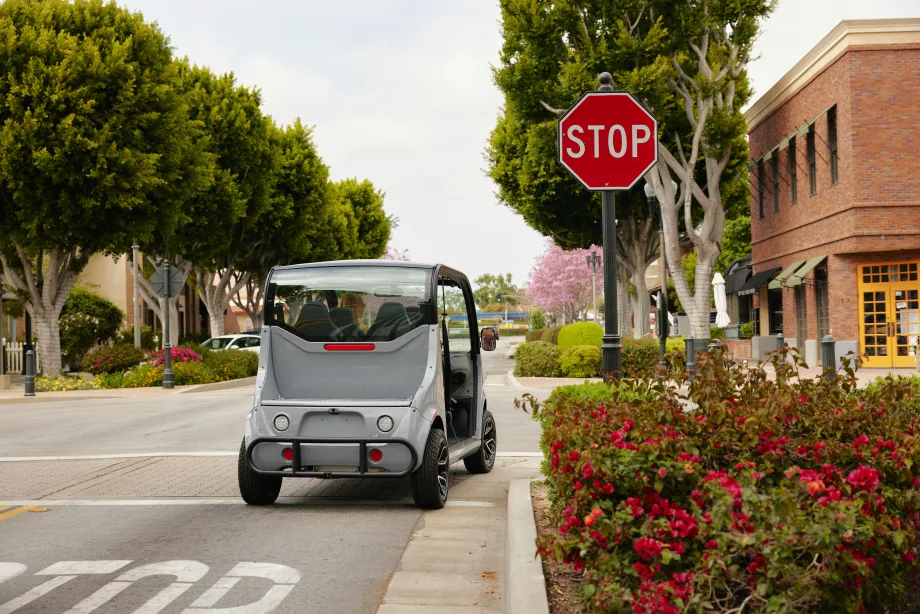
Designed to operate at speeds up to 25 mph and meet designated safety standards by the National Highway Traffic Safety Administration, LSVs offer an enticing alternative to full-sized EVs.
Photo: Waev
5 min to read
Could the future of eco-friendly transportation be sustainable, compact and low speed?
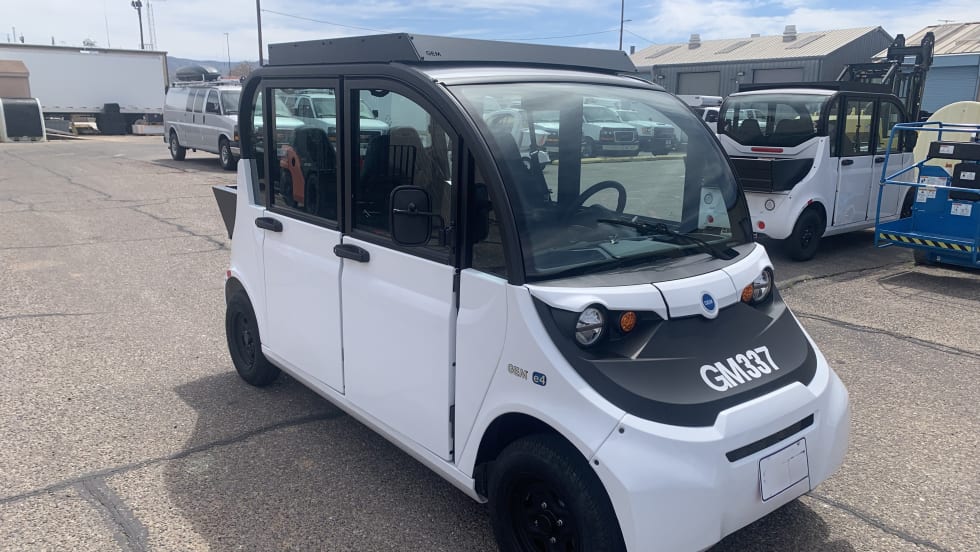
Designed to operate at speeds up to 25 miles per hour and meet designated safety standards by the National Highway Traffic Safety Administration (NHTSA), low-speed vehicles (LSVs) offer an enticing alternative to full-sized electric vehicles. LSVs are a specific, federally designated class of vehicles, not to be confused with golf carts.
These elevated EVs are equipped with standard safety features, and they are street-legal on roads with a posted speed limit of 35 mph or less; making them a key part of any organization’s fleets
— whether it’s facilities and grounds maintenance or public safety and parking enforcement.
These compact, low-speed EVs support green initiatives and operational efficiency while meeting the growing demand for safe and environmentally responsible transportation options.
Taking Low-Speed Safety Into Consideration
Slower is always safer. With its size, weight and low top speed, the chance of injury or fatality is significantly lower in an LSV than a vehicle traveling at highway speeds. And at 25 mph there is only about a 10% chance of a collision resulting in a pedestrian fatality.
Slowing vehicles down mitigates the risk of vehicle-to-vehicle collisions, improves pedestrian and cyclist safety and helps alleviate traffic congestion.
LSVs are also required to meet a suite of safety standards. When the NHTSA created the LSV class nearly 25 years ago, it recognized both the utility of smaller, lower speed vehicles and the necessity of safety features tailored to the vehicles and use-cases.

Incorporating solar panels to GEM LSVs helps extend the vehicle range by adding two miles of charge per hour while vehicles are in direct sunlight.
Photo: Waev
Certain LSVs are also certified to Federal Motor Vehicles Safety standards for lighting, turn signals, mirrors, braking, windshields, rear visibility, and seat belts and voluntarily meet other safety standards.
For operations where highway speeds are not needed, such as grounds maintenance, facilities operations or urban shuttling services, integrating LSVs isn’t just a smart move, it may be the essential step necessary toward an organization’s sustainable and efficient future.
In Anaheim, for example, FRAN (Free Rides Around the Neighborhood) has been providing LSV shuttle rides in downtown since 2019
— offering riders a safe, convenient option for getting around downtown while helping to reduce dangerous traffic congestion.
And in 2022 alone, FRAN was included in the greater Anaheim Transportation Network (ATN) of public transportation options that together removed more than 2.46 million automobile trips from local roadways, creating safer roads for drivers, fleet operators and pedestrians alike.
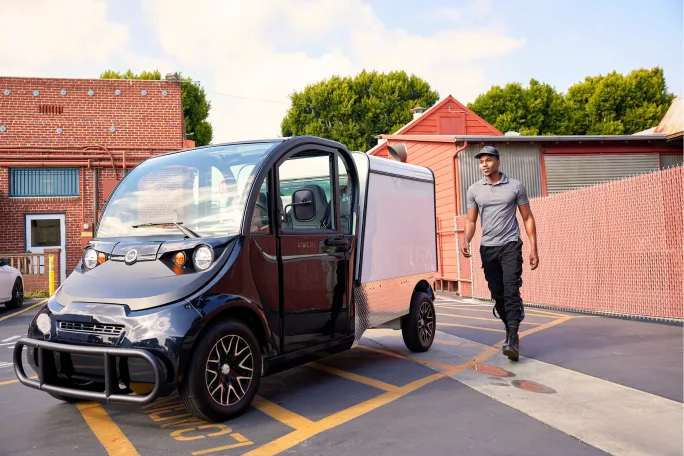
LSVs are highly capable, and with available cargo boxes and beds of varying sizes provide a payload of up to 1,4000 pounds.
Photo: Waev
Meeting a Need for Enhanced Efficiency
Most government organizations do not need vehicle fleets that can travel hundreds of miles. A range of 40-60 miles between charges is typically more than sufficient to get the job done, mileage that LSVs can easily meet.
And when additional distance is needed, battery options provide greater flexibility. GEMs, for example, have lithium-ion battery packs that provide upwards of 95 miles of range between charges. Incorporating solar panels further extends vehicle range by adding two miles of charge per hour while vehicles are in direct sunlight.
LSVs can travel on all roadways posted 35 mph or less, and with an increasing number of cities across the country reducing in-town speed limits, LSVs can get to nearly anywhere full-sized vehicles can.
On traffic-controlled streets, compact LSVs can also travel across town just as quickly as a standard vehicle. Plus, their compact footprint allows them to safely and effectively navigate narrow pathways and crowded streets, making them the vehicle of choice for many municipalities, colleges, and universities.
In fact, LSVs have been a popular shuttling and utility vehicle solution on college and university campuses across the nation for decades. Municipalities looking to implement EVs into their fleets are also finding that LSVs are all they need for parking enforcement and security – especially in bustling metro areas that offer dining and shopping downtown.
Despite their small footprint, LSVs are also highly capable, ensuring organizational productivity is never sacrificed. With varying models that can carry two to six comfortably, there is ample room for the entire crew. Cargo boxes and beds of varying sizes are also available providing a payload of up to 1,400 pounds.
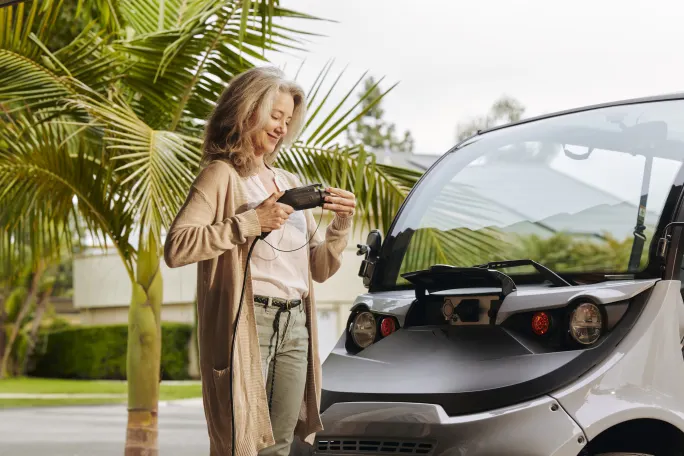
Many LSVs can be charged sufficiently overnight with a standard 120- or 110-volt AC outlet.
Photo: Waev
Low Operational Costs, Especially in an Electrified Environment
As gas vehicles begin to reach the end of their useful lives, making the transition to electric fleets could provide significant savings. A survey of fleets in ten of Arizona’s largest municipalities found that those cities could save a total of nearly $80 million in lifetime vehicle ownership costs just by replacing light-duty vehicles in their fleets with commercial EVs.
Going a step further with low-speed electric vehicles, municipalities may see even greater savings. GEMs, for instance, can operate at about $0.03 per mile. And with fewer moving parts than an internal combustion engine, they also require far less maintenance, providing increased uptime and profits for operations.
LSVs are also overcoming one of the largest hinderances in going electric: infrastructure changes. While full-size commercial electric vehicles often need additional charging capabilities, many LSVs can be charged sufficiently overnight with a standard 120- or 110-volt AC outlet.
For operations that do require quicker charging capabilities, additional options are available – with many states and counties providing incentives to help with charging infrastructure.
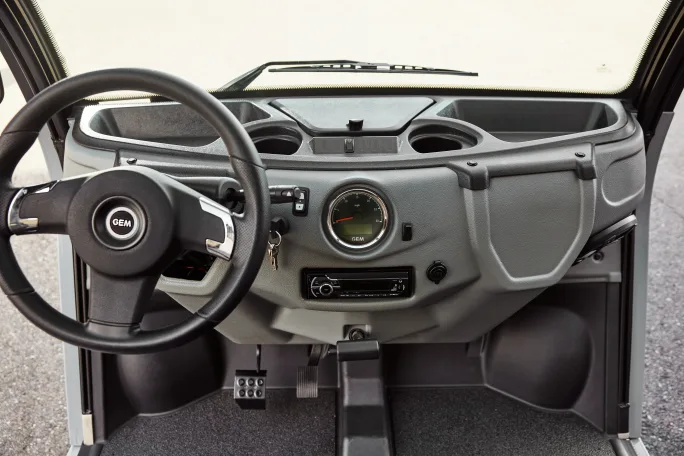
As the market for sustainable transportation continues to grow, LSVs offer a compelling option for operations looking to electrify their fleets.
Photo: Waev
A Growing Need for Sustainable Transportation
IBM research found that a majority of organizations
— 86%
— have a sustainability strategy in place, however, only 35% have taken action. After all, going green demands transformation, which takes time and often a great deal of consideration and investment.
But the future is electric and optimizing state and local government fleets with a safe and cost-effective low-speed EV, is an easy and smart first step toward sustainability.
Recently, Free Rides Everywhere Downtown (FRED), an established program in San Diego that offers free shuttle services with LSVs throughout their downtown, has avoided as many greenhouse gas emissions in one year as are sequestered by 1,518 acres of forest. And with its small-scale footprint, LSVs pull less electricity from the power grid while charging compared to their full-sized counterparts.
An early adopter of low-speed electric vehicles, Sandia National Laboratories has a first-hand understanding of the benefits of electrifying their campus fleets – which will be highlighted in part two of LSVs: The Unexpected EV Government Fleets Need?
About the Author: Byron Dudley is the director of Government Programs for Waev, Inc.
Subscribe to Our Newsletter
More Blog Posts
Taking a Solar-Powered Ride with Sandia National Laboratories
A case study of Sandia National Laboratories examines their transition from gas-powered golf carts to alternative transportation options. In 2002, the organization began this process with the acquisition of low-speed electric vehicles.
Read More →Tire Data I Wish I’d Had as a Fleet Manager
If I had more data on tires, collected several times a day, I may have been able to improve my preventive maintenance program even more. That technology exists now.
Read More →Qualified and Skilled Technicians at Your Shop, On Demand
For fleets facing a technician shortage, a temporary technician at your shop can help reduce vehicle downtime and costs.
Read More →Should You Be Thinking About Bike Shares?
Electric scooters and bikes are starting to show up everywhere. How do you see them affecting your fleet operation?
Read More →Recouping Lost Technician Time
If time is money, what is saving a few hours of your technicians' time worth?
Read More →Vehicle-to-What? — Evolving Vehicle Communication Technologies
Can vehicle collisions be avoided with vehicle-to-infrastructure or vehicle-to-vehicle technology? Several of the major OEMs think so and are spending billions of dollars a year working on the technology.
Read More →Streets of the Future Could Take Automatic Tire Readings
WheelRight allows vehicles to drive through a specialized lane and captures tire pressure readings on all four tires while also providing tire tread depth within a few seconds and printed receipt.
Read More →Improved Communication (There's an App for That)
Slack brings all of your communication together in a way that you can sort. Conversations, PDFs, and documents are all be archived and searchable.
Read More →Booster Fuels: Bringing the Gas Station to You
Booster Fuels brings the gas station to your vehicles for the same price as a gas station. Its team members will fill up vehicles overnight or at a requested time and bill weekly. This could be a solution for fleets with old, expensive fueling infrastructure.
Read More →Rethinking Utilization: Using the Energy in Parked EVs
Think the return on investment for electric vehicles (EVs) is too long? Vehicle-to-grid technology allows EVs to earn money while parked by utilizing their large batteries to provide energy storage services for buildings, utilities, and the grid. This extra money can reduce the total cost of ownership of EVs.
Read More →