Social distancing restrictions may have eased, but another threat looms larger... Three years later, social distancing no longer dominates fleet decisions, but does that mean asset sharing is back to normal?
New fleet asset-sharing strategies are needed to accommodate the current economy.
Photo: Government Fleet
7 min to read
In pre-pandemic times, most discussions about asset sharing stuck to using it to maximize resources. When COVID arrived, the conversation shifted dramatically.
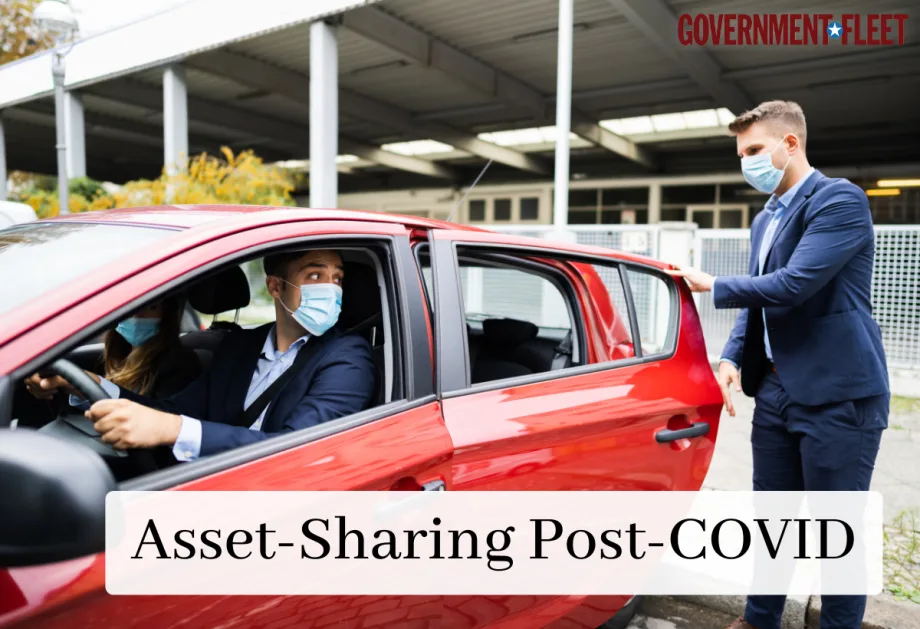
Fleets weren’t thinking about efficiency. They were thinking about the health of their customers. Sharing a vehicle was dangerous, whether that meant employees sharing pool vehicles, exchanging a vehicle at the end of a shift, or riding together to a job site. Instead of using the smallest number of assets to serve the largest number of people, a one-to-one ratio seemed to be the only safe option.
Ad Loading...
Three years later, social distancing no longer dominates fleet decisions, but does that mean asset sharing is back to normal? Three fleets share their current asset-sharing strategies … and the new factor that may be even more complicated to deal with than COVID.
City of Everett, Washington
Before the pandemic, asset sharing was common for the City of Everett, Washington. The Public Works department was a prime example: Crews traveled to job sites together often. Social distancing changed that practice and required more vehicles for the same number of people to do their work safely.
Other departments with shared assets also assigned just one person per vehicle as much as possible. As vehicle requirements increased, pre-pandemic vehicle orders were the city’s saving grace. New vehicles would arrive, the fleet would hang onto equipment earmarked for replacement longer, and there would be enough vehicles to maintain safety.
Two More Takes on Asset Sharing
When Tony Cademarti thinks about asset sharing, included are public transit and the City of Everett’s ridesharing program.
Public Transit: COVID slashed Everett Transit ridership by 80% at its lowest and 50% at its highest. Cademarti said those numbers are beginning to creep back to a pre-pandemic level. The City currently has recently received 10 additional electric transit buses from Gillig.
Ridesharing: The City encourages its employees to share rides to work by partnering with Community Transit’s rideshare program, which provides a mini-van and a gas card. One driver is responsible for picking up and dropping off fellow employees and parks the vehicle at their residence. Riders contribute a small monthly fee to take part in the program.
At the time, Tony Cademarti, Fleet Program Manager for the city’s Motor Vehicle Department, worked to create and enhance a 10-year replacement plan to balance resources across city departments. Fast forward to today, and two developments are challenging that plan.
The first is that drivers have grown accustomed to having a dedicated vehicle. They don’t want to return to the way it was, and that’s driven up the fleet count.
Ad Loading...
“A lot of people want their own vehicle now. Public Works Utilities has held on to a number of their turn-ins because they want to try to keep one person per truck if they can,” Cademarti explained. “But that increases the fleet size, which also increases stress on the shop. If you keep increasing the number of vehicles, eventually you have to add a mechanic.”
The second unforeseen factor is the new vehicle shortage. Although city employees would like to have their own vehicles, they simply can’t get them. The vehicle shortage — not the end of the pandemic — has forced drivers to begin sharing vehicles again.
“OEMs can't build vehicles in a reasonable amount of time and that affects when we replace vehicles,” Cademarti said. “We’ve had instances where a vehicle that should have been replaced dies and putting in a new engine in doesn’t make sense because it’s already at 150,000 miles. Without a vehicle, employees have to double up. If the OEMs would produce vehicles on a certain schedule, I wouldn't have to tell people, ‘Hey, you got to make it work.’”
Cademarti has experienced 18-month order delays as well as cancellations a full year after placing an order, without notice or reason given. Now, he attempts to be more flexible in his plan for replacements to stay ahead of supply chain disruptions.
New vehicle shortages have also required Cademarti to purchase from other OEMs, outside of the fleet standard, which meant an investment in new diagnostic software and more stocked parts in the parts room, as well as a learning curve for technicians.
Ad Loading...
It has also caused vehicles and equipment to be held in inventory past the point of replacement per a reasonable cost/benefit analysis, increasing down times due to emergent repairs. This has also required that vehicles be extended past their useful lives due to expensive repairs, such as engine and transmission replacements.
Although new vehicle delays have pushed city employees to share vehicles, lack of control over when and how that happens is affecting job effectiveness more than it is fleet efficiency.
“The lack of new vehicle availability changes the whole course of work. It pushes you into sharing a vehicle or equipment with someone else or other user groups, but it also affects the capability to do the job,” Cademarti said.
City of Durham
During COVD, the city of Durham, North Carolina, placed restrictions on the number of people allowed to ride in a car together and implemented a vehicle decontamination procedure as well. Unlike the City of Everett, City of Durham Fleet Management Director Joseph W. Clark is seeing fewer vehicle requests now that restrictions have been lifted.
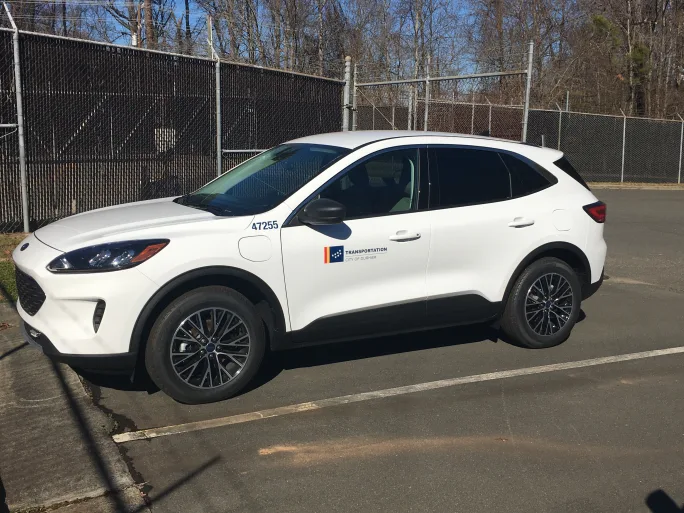
The city of Durham, North Carolina has more than 1,700 vehicles and equipment.
Photo: The City of Durham
“Everything is now operating following pre-COVID procedures,” he said. “But with more individuals working remotely, the demand is shrinking.”
Ad Loading...
Among the more than 1,700 vehicles and equipment Clark’s department manages, 17 are pooled vehicles used mainly for in-town trips and occasional out-of-town travel. The city’s FASTER Fleet Management Information System (FMIS) allows users to reserve vehicles and facilitates chargebacks.
Prior to adopting the FMIS, reserving pool vehicles was performed manually – first with pen and paper, then with spreadsheets, and finally digitally. “Chargebacks were paper-intensive and involved multiple departments, the FMIS eliminated the paper and made the process seamless,” Clark said.
In addition to streamlining the reservation and chargeback process, the FMIS is now helping the fleet deal with the post-COVID vehicle ordering problem.
“Supply chain issues have caused major disruptions in the auto industry. New vehicle orders are being canceled without notice, and lead times for parts and vehicles keep getting longer. We have no choice other than to keep vehicles longer than originally anticipated,” Clark explained. “With that in mind, we are leveraging the data in our FMIS to strategically increase stocking levels for certain parts, and we are also cannibalizing wrecked vehicles to keep vehicle and equipment availability at an acceptable level.”
Modo Co-operative
Modo is a member-owned car-sharing cooperative with 850 vehicles that are shared amongst its 28,000 members in British Columbia’s Lower Mainland, Vancouver Island, and Kelowna.
Ad Loading...
When the cooperative was founded 25 years ago, members booked vehicles by phone. Today, Modo’s proprietary booking software, Engage, allows members to make reservations online, typically through an app. “The software communicates with the onboard technology that we integrate with the vehicle’s electronics to provide a variety of functionalities, including vehicle access and GPS,” said Erin Sullivan, Director of Fleet Operations.
Modo members can book a vehicle up to a year in advance, and access is granted via a fob. Vehicles are cleaned and maintained by Modo staff as well as external service partners like mechanics, body shops, and dealerships.
During the pandemic, Modo saw a dip in reservations but was still careful to keep still-active members safe.
“The pandemic meant that we needed to scale back our fleet size temporarily because fewer members were using our vehicles due to travel restrictions, illness, work-from-home, and public health orders,” Sullivan said. “While the pandemic was at its height, we implemented more stringent processes regarding vehicle cleaning, but with restrictions being eased the fleet is again fully deployed and we are largely back to pre-pandemic processes.”
The pandemic notwithstanding, Modo has increased its fleet size each year to meet the demands of its individual members and business users, including several municipal governments that use Modo’s shared cars to augment their own ad hoc vehicles.
Ad Loading...
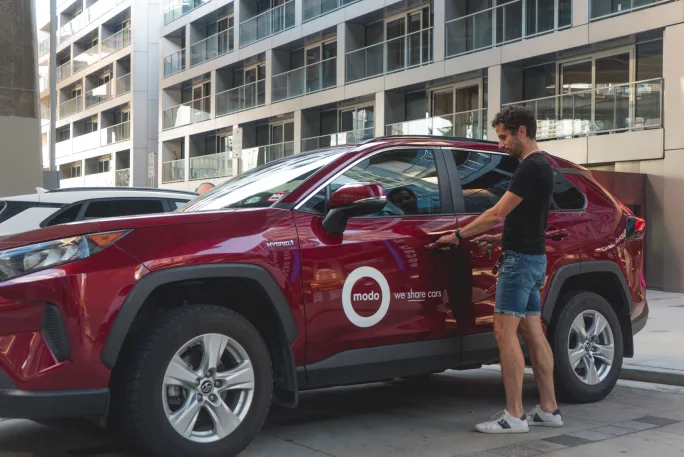
Modo is a member-owned car-sharing cooperative where members can book a vehicle up to a year in advance.
Photo: Modo
“We are thrilled to partner with several municipalities to augment their fleets with our own carsharing fleets. These arrangements allow them to right-size their fleet whilst remaining nimble, as well as encouraging the growth of carsharing in their communities,” Sullivan said. “These partnerships are ways to unlock the economic, ecological, and social benefits of carsharing, for their communities as well as their operations.”
Round-trip carsharing takes between 9-13 privately owned vehicles off the road, which means each vehicle Modo adds to its fleet positively impacts carbon emissions. Modo has plans to further reduce the environmental impact of transportation, but supply chain shortages are hindering progress.
“Modo’s goal is to be 100% zero-emission at the tailpipe by 2030; making us very interested in the acquisition of lower emission vehicles,” Sullivan said. “Sadly, right now, it’s difficult and expensive to do so due to new vehicle inventory shortages. Modo has a diverse fleet with 40 different models currently available, so parts shortages have also impacted us on a case-by-case basis.”
Is the Pandemic Still a Problem?
Many fleets are back to business as usual when it comes to asset-sharing safety. Three years after the pandemic’s onset, the larger threat is the lack of available new vehicle inventory, a ripple effect of COVID-related supply chain disruptions. The pandemic may be growing smaller in the rearview mirror, but its impact on the automotive supply chain isn’t over yet.
Keeping a vehicle longer may ease this year’s budget, but what does it cost the next one? A closer look at fleet decisions can reveal opportunities to reduce spending while protecting essential services.
From industry news and fleet management strategies to conversations with peers, Government Fleet's LinkedIn page offers public-sector fleet professionals another way to stay informed and connected.
Five fleets were honored at RTA Connect 2026 in Chicago for excellence across resource efficiency, intentional culture, risk management, and stakeholder satisfaction.
Buying fleet management software in 2027 means looking beyond features and price. As fleet operations, technology and expectations evolve, this guide explores what today’s fleet professionals should consider when choosing a system that can deliver value now and adapt to what comes next.
St. Johns County, Florida, had fleet data, but turning it into reliable decision guidance was another matter. Instead of starting over with a new fleet management system, the county connected existing tools and built a scoring system that gives managers an objective look at fleet health.