


About the Author
Bob Stanton, CPFP, CPM, is an independent fleet consultant and retired public sector fleet manager with 40+ years of experience. He can be reached at victorybob@gmail.com.
 MENU
MENU SEARCH
Government agencies scrutinizing costs may look to functional consolidation of support roles. But there are challenges that come with functional consolidation, including the loss of subject matter expertise.

Government agencies scrutinizing costs may look to functional consolidation of support roles. But there are challenges that come with functional consolidation, including the loss of subject matter expertise.
Photo: Getty Images
With the very unusual year of 2020 in the rearview, governments and businesses alike will begin gradually aligning their focus on the remainder of the decade, as they should. Beyond the unique challenges created by the pandemic, business priorities of the future will again bubble to the surface as the population’s vaccination rate increases.
In the public sector, pandemic-related impacts, particularly on revenue streams, will continue to modify growth and service strategies until post-pandemic revenue normalizes. Consequently, public sector entities must, by necessity, continue to scrutinize their expense profiles as doing more with less revenue prevails.
Among the modifications being considered, even before the pandemic became everyone’s priority, is the functional consolidation of support roles by local governments. The objective here is for functional management to “share” responsibilities to reduce management overhead costs in a time of revenue distress. Governments have consolidated fleet and purchasing, fleet and facilities, purchasing and the office of management and budget, and finance and purchasing. Consolidation may seem, from the outside looking in, to be efficient and forward-looking, when in reality these mergers typically result in a loss of functional expertise to the detriment of operational efficiency and institutional knowledge.
For the fleet function especially, this decade presents a litany of new challenges demanding subject matter expertise in areas not experienced before. This article is designed to assist public sector entities — and in particular, local governments — that may be considering functional consolidation by highlighting those challenges. These challenges must be met and managed by professionals who understand them fully and can assist the government in navigating through them effectively. The intent is to illustrate that functional consolidation will dilute the expertise government agencies require to master these challenges.
Each challenge will be broadly represented to summarize their potential impacts and prevent the chaos that may result if mishandled.
Expect a renewed emphasis on environment “everything” with a new administration in Washington. That said, local governments seeking to improve their green profile with taxpayers would be wise to ensure their fleet expert has a seat at the table. Instead of legislating long-term green objectives (e.g. 100% fossil fuel free by a certain date), local governments can, using their fleet expert, achieve shorter term gains in sustainability while likely achieving lower costs by following the expert recommendations of their fleet professionals. A worse scenario is when elected officials enact long-term goals such as noted above without expert input and when they are unlikely to still be in office when the goal is supposed to be achieved.
This decade will see accelerated progress in vehicle electrification, and while this will be an attractive target for early adoption, there are still many pitfalls that need to be considered. These include:
Will the electric utility have the necessary capacity to support a migration to fully electric vehicles (EVs), and will buildings be capable of managing the increased loads required?
What will become of exhausted vehicle batteries?
How will an increased population of EVs impact our maintenance program?
Will the mission profiles of our current vehicles parallel the limited range profiles of EVs?
Where can EVs improve citizens’ service?
Can we achieve a competitive enough resale for EVs to help justify their acquisition?
The fleet subject matter expert (SME) should be the government entity’s guide in navigating these and other ramifications to ensure EV adoption is mastered.
The maintenance of diesel emissions systems now common in trucks and heavy equipment will continue to challenge fleet operators both in cost control and downtime management. Without the proper maintenance and oversight, these systems can become extremely problematic and costly. Vendor resources, while certainly available, are equally challenged by this technology and are often not the best problem-solving option. As the accountable professional, the fleet manager understands the balance between cost and downtime.
The current technician shortage is a reality and will not go away. The economy will rebound, causing the shortage to grow in intensity throughout the decade. Technician wages, incentives, and training requirements will all grow, creating challenges not yet seen. Staffing stress at the shop level will be a constant thread weaving itself through all aspects of shop operations; the advent of EVs will provide little relief, as they, too, will present their own training challenges.
Dependence on other maintenance sources such as dealerships, independent garages, mobile maintenance providers, and perhaps even the rehiring of retirees (potentially part-time) will require expert management involvement to ensure needs are met as prudently as possible.
The softness in both the new vehicle and equipment marketplaces will disappear as the economy rebounds. Capital acquisition pricing will “rebound” as well. Every organization needs the rationale of a reasoned voice to temper the appetites of managers who sometimes get carried away by over-spec’ing or over-buying. The fleet manager is that voice of objective reasoning, and, just as in environmental initiatives, their knowledge should be relied upon enough to be included at the table.
Vehicle procurement methods, a greater dependence on factory warranties, the migration to EVs, and personnel policies are among the many areas that will require evaluation and modification going forward. As the professional “on the ground,” the fleet subject matter expert will offer strategies to address each of these areas to ensure citizen service remains a priority as fleet practices morph in response to this changing climate.
The inclusion of vehicle and equipment embedded safety technologies, telematics, camera systems, and advanced driver assistance systems (ADAS) and the like will grow, becoming standard equipment across most platforms in this decade. These systems must be maintained to ensure optimum effectiveness. For instance, windshield replacements for vehicles equipped with ADAS will require calibration. Additionally, new diagnostic equipment will be necessary to pinpoint system failures and direct appropriate maintenance efforts.
Driver distraction will continue to be the most common reason for vehicle accidents. The fleet manager, typically more of an expert than even your risk professional in vehicle accident response and prevention, can assist in the efficacy of crash committee management, investigating vehicle mechanical failure claims, crash investigation using telematics and camera data, and objectively sorting through the noise that typically occurs after a crash.
Local government fleets are unlikely to be broadly impacted by the work-from-home strategy. While more functional vehicles have become mobile office platforms, the work of government fleet vehicles and equipment will continue to be needed on-site for the foreseeable future. However, outsourcing of government functions is still likely to grow, which could directly impact fleet vehicle inventories. Equally likely to occur is both the gradual embracing of ridesharing services and the use of vehicle pools managed by fleet to spread utilization across a broader population of users. These trends could result in a reduction of fleet size in the coming years.
Most government fleets are blessed with robust fleet management information systems that are, unfortunately, typically underutilized. The advent of telematics technology and its future potential will make data, an already important feature in management strategy, an even more critical element as systems mature, OEMs embrace the technology, and the 5G pipeline becomes truly a universal transmission tool. This decade will offer and demand the use of data-generated decisions like never before.
The need for data scientists, fleet analysts, and exception reporting gurus will become more apparent as the decade unfolds. Prioritizing the plethora of data in a meaningful way will require a new level of fleet expertise where the right questions are asked, accompanied by the skill to evaluate data to ensure the right answers are correctly presented. Software engineers can dazzle with brilliance, but a down-to-earth solution must be determined by a subject matter expert.

Government fleet managers are accountable for excellence in customer service; many government fleets even measure and publicize their service levels, unlike their counterparts in personnel, facilities, or IT.
Photo: Getty Images
The government fleet manager’s role, like all other support services, spans the breadth of the entire government. Unlike other support services, however, most local government fleets treat the departments they serve as true customers. As such, they are accountable to them for excellence in customer service; many government fleets even measure and publicize their service levels, unlike their counterparts in personnel, facilities, or IT. In most governments, fleet includes a fee structure or other charging mechanism, further reinforcing their position as a market competitor, accountable both for cost and service performance.
Another differentiator between fleet and their peer support services is fleet’s mandate to respond to service requests in “real time,” all the time. Facilities, Personnel, IT, and Procurement/Purchasing do not possess this mindset of immediacy that fleet departments accept as routine. A breakdown requires immediate attention; a vehicle presented for repairs cannot be turned away. The priority of immediate service is baked into a fleet manager’s DNA; this is especially true for government fleet managers who routinely respond immediately to pursuit, fire, and emergency medical vehicle repair situations. No customer is turned away. Only a professional raised within the fleet community understands this and tailors the management culture of his or her organization accordingly.
Fleet’s adaptability in responding to the pandemic is just one example of how a department, using creativity and limited resources, can exercise its imperative as an essential service to the benefit of the entire government.
These attributes, along with those specifically referenced above, make the government fleet professional a critical pivot point in providing citizen service while controlling, in many cases, millions of dollars in rolling stock, maintenance assets, and a skilled and professional workforce. The value of the fleet subject matter expert to the local government cannot be overstated. Governments that seek to “water down” the importance of fleet do so at their own peril.

What if your next technician hasn’t worked in a fleet shop yet? What fleets are doing to free up time.
Read More →
Could a change in how work gets done help your fleet return vehicles to service sooner?
Read More →
Public fleets have more data than ever, but inconsistent records and missing information can still undermine maintenance, replacement, and cost decisions.
Read More →
With more than 8,000 vehicles and pieces of equipment to maintain, the City of Phoenix could not afford to wait for fully trained technicians to walk through the door. Instead, they revamped their entire workforce strategy and showed how public fleets can create their own talent pipeline while preparing existing employees for increasingly complex vehicles.
Read More →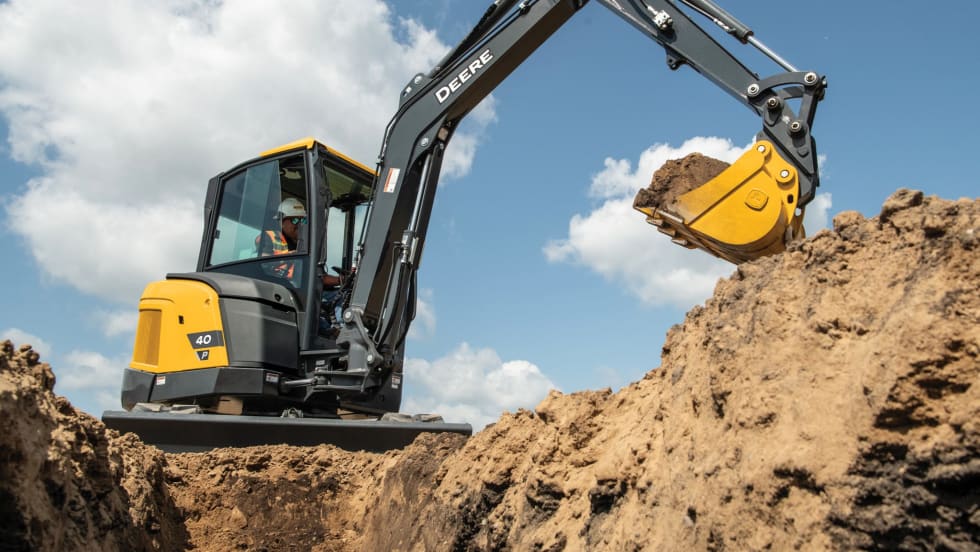
John Deere is adding a compact excavator designed for crews that need to move equipment between jobsites and handle multiple types of work with one machine. The 40 P-Tier weighs less than 10,000 pounds and offers configurable hydraulics, attachment options, and connected fleet-management capabilities.
Read More →
This week, we look at what past Leading Fleet winners can teach us about making progress, plus how to build a business plan your fleet will actually use.
Read More →
Do you know a fleet leader who has made a lasting impact on the industry? Nominate this fleet professional for the 2027 Public Fleet Hall of Fame.
Read More →
A fleet business plan should help agency leaders understand the fleet’s value, give the organization a clear direction, and establish shared expectations with customer departments.
Read More →
What happens when fleets let measured results guide their next decision?
Read More →
This week’s fleet news covers emergency preparedness, shifting vehicle sales, electric truck investments, and new tools for monitoring road conditions.
Read More →