





Women in Public Fleet Management: The State of the Industry
‘Stay Informed’ Fleet Manager Makela Owens on Building Connections, Industry Transitions
Fleet manager Makela Owens discusses the changes and challenges of the fleet industry as well as the motivation for being the fleet industry. Owens is now the Nor Cal POD fleet manager for PepsiCo.
March 7, 2024
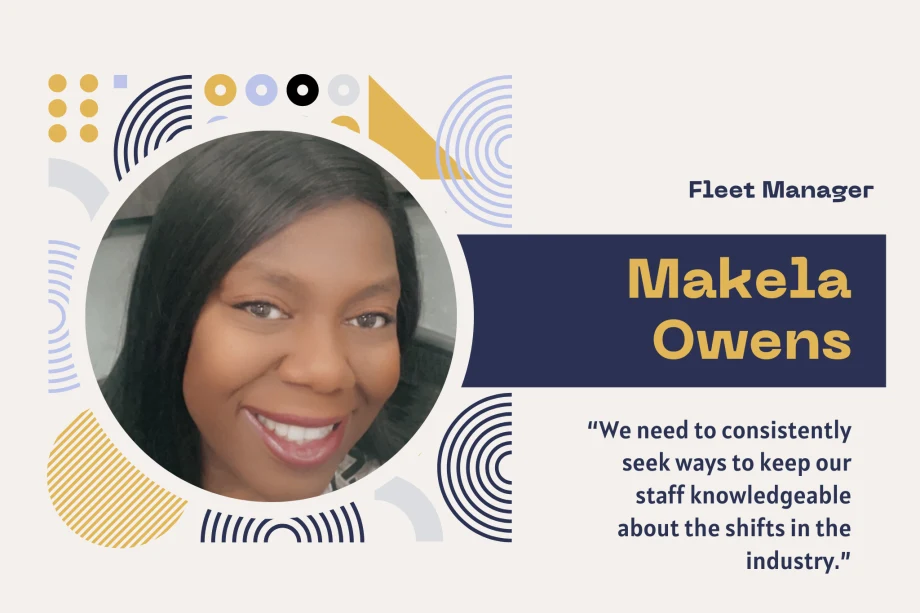
Owens’ long-term goals include asset life cycle management, ongoing training, and technical team development.
Photo: Government Fleet | Makela Owens
3 min to read
Fleet Manager Makela Owens discusses the changes and challenges of the fleet industry as well as the motivation for being in the fleet industry.
Previously the Fleet Management Analyst for County of San Joaquin, Fleet Manager for the city of Stockton, California, and at the beginning of 2024 she transitioned to the Northern California Fleet Manager for Frito Lay.
In her new role as Nor Cal Fleet Manager, Owens oversees 29 shop locations with two leads and 12 technicians covering the California region from Eureka to Bakersfield and the Reno, Nevada, area. This includes the oversight of 780 fleet assets, all maintenance shops, fiscal management, and parts for the Northern California market.
In her new position, Owens’ short-term goals include route efficiency, staff readiness, and execution of the current EV asset transition. Long-term goals include asset life cycle management, ongoing training, and technical team development.
Making Changes and Finding Success as a Fleet
Owens has an obvious passion for the fleet industry, recognizing its unique impact on every aspect of society and its crucial role in keeping the world moving. When asked about the key to a successful fleet, she emphasized the importance of quality technicians and equipment.
Owens believes that a successful fleet is built on the foundation of consistent maintenance and lifecycle management, ensuring the sustained efficiency and effectiveness of the entire fleet.
However, Owens acknowledges that there are still challenges to overcome, especially as a woman.
“The main challenge is being a minority in the industry,” she noted. “It is challenging in that women must always show and prove their value in order to gain the respect required to run a successful fleet.”
Her advice is to stay informed, develop connections, and establish relationships with industry associations and peers.
When it comes to challenges within the industry as a whole Owens points to the electric vehicle transition noting that it requires the collaboration of multiple teams and resources to execute effectively.
What Makes a Good Leader and a Strong Fleet Team
When it comes to her own leadership responsibilities, Owens is focused on open communication and supporting her team.
“They all know that my job is to provide the tools and resources they need in order to complete their mission,” she added.
Owens also pointed out the need for management to provide support and respect to create an environment where each person feels confident to contribute and be the best at what they do.
And Owens’ thoughts on the future?
“Fleet is moving from nuts and bolts to computer and technology awareness,” she explained. “We need to consistently seek ways to keep our staff knowledgeable about the shifts in the industry and be aware of impending legislation that may affect the industry.”
Subscribe to Our Newsletter
More Operations
Is Keeping Older Fleet Vehicles Really Saving Money?
Is keeping vehicles longer saving money, and what happens when a diagnostic test points to the wrong fix?
Read More →
How Smart Fleet Strategy Can Help Local Government Agencies Do More with Less
Keeping a vehicle longer may ease this year’s budget, but what does it cost the next one? A closer look at fleet decisions can reveal opportunities to reduce spending while protecting essential services.
Read More →
Connect with Government Fleet on LinkedIn
From industry news and fleet management strategies to conversations with peers, Government Fleet's LinkedIn page offers public-sector fleet professionals another way to stay informed and connected.
Read More →
Town of Queen Creek Named Most Successful Fleet Award Winner of Inaugural RTA Fleet Success Awards
Five fleets were honored at RTA Connect 2026 in Chicago for excellence across resource efficiency, intentional culture, risk management, and stakeholder satisfaction.
Read More →
Sponsored•October 14, 2026
A buyer's guide to fleet management software in 2027
Buying fleet management software in 2027 means looking beyond features and price. As fleet operations, technology and expectations evolve, this guide explores what today’s fleet professionals should consider when choosing a system that can deliver value now and adapt to what comes next.
Read More →
Hazard Alerts, Fleet Car Sales Rise and a New Shuttle Concept
Fleet car sales doubled, but the bigger picture tells a different story in this week’s roundup.
Read More →
How St. Johns County Turned Fleet Data Into Better Replacement Decisions
St. Johns County, Florida, had fleet data, but turning it into reliable decision guidance was another matter. Instead of starting over with a new fleet management system, the county connected existing tools and built a scoring system that gives managers an objective look at fleet health.
Read More →
Fleet Forward Conference Introduces One-Day Passes for 2026
New one-day registration lets fleet professionals attend Tuesday, Wednesday, or Thursday, with passes available for $249.
Read More →
ENC Unveils its ZAVIR Medium-Duty Shuttle
Two variants of the concept shuttles were revealed: a low-floor configuration and a high-floor configuration.
Read More →
Could Your Next Fleet Technician Start as an Intern?
What if your next technician hasn’t worked in a fleet shop yet? What fleets are doing to free up time.
Read More →