




Smaller, Lighter Vehicles Compete For Front-Line Police Work
LAPD Transportation Director outlines performance parameters.
The February meeting of NAFA's Pacific Southwest Chapter Provided some key insights into the problems and procedures of police car selection, with Don Brittingham from the Los Angeles Police Department, the guest speaker. Brittingham , who is Director of Police Transportation for the Department, left no doubt as to what is expected of the 720 black-and-white and 1400 unmarked cars in his fleet.
"A police car is a version of a regular production vehicle that employs engineering design to provide optimum handling, the most important consideration we look for in a car," Brittingham said. "It's not a high-powered bomb, at least not anymore."
Brittingham went on to explain, with the help of a short film, some of the ins-and-outs of what a police car is, and the technique of selection employed by the LAPD. "Starting from the road up, a police car calls for special tires designed to provide maximum traction and maximum durability, for work under high speed operation up to 125 mph." Fabric radials are used most frequently, as the steel radial tire does not work well at high speeds Brittingham explained. The weight of the steel and centrifugal force combine to make the tire come apart. "Of course, we've been having problems getting up to 125 mph. We have problems getting up to 90 mph to test the brakes, nowadays," he added.
This emphasized one of the major themes of the meeting, that the police car of today is but a mere shadow of its former self. It might handle better and ride better, but it still can be outrun by a six-year-old sedan with a large engine and a lead footed driver. To combat this, many departments have gone the specialization route, where certain cars are used only for routine police work and other, quicker, cars are used for high speed pursuit. The California Highway Patrol has recently experimented with Chevy Z-28's, a car lighter and more fuel efficient than the older Dodges, but with good acceleration and top speed.
Problems soon became evident with the CHP program, though for the small interior size of the Z-28 made it extremely difficult to transport prisoners. A backup unit usually had to be called if more than one prisoner had to be moved. Another drawback is the car's low profile and bucket seats which make it difficult for officers to enter and exit.
The car's neutral handling and top speed outweigh this drawback and the CHP felt the car warrants real-world testing in its fleet. Brittingham said speed and especially handling are top priorities when selecting a police vehicle.
"We're looking for a neutral-handling vehicle. This is the only thing that a police car has that will enable it to out-perform other cars. Maybe we couldn't catch them on the free way, but on city streets where there are turns and dips eventually we'll catch up to them.
This is why suspension plays a large role in the police vehicle. Front and rear suspension parts are replaced or beefed up with a special police package, which includes shocks, anti-sway bars, frame reinforcements and so on, "The frame on a police vehicle is either heavier or has many more reinforcements than the standard car, because when you have the stiffer suspension and harder tires, a standard frame wouldn't last very long under the increased stresses." Even the wheels are of a heavy-duty nature, designed to stand up longer under extreme abuse. "A normal wheel would last maybe 15 or 20 laps on our test track before it broke," Brittingham said.
[PAGEBREAK]
The Los Angeles Police Department, as well as the Sheriff's Department and other police agencies, uses a deserted race track in nearby Pomona to test prospective police vehicles. Cornering, braking, acceleration and top speed trials give a good indication of how the vehicle will perform in the field. Various ergonomics tests are also included to make sure the officer's automotive environment helps instead of hinders.
"Even the seats are stronger. You have to remember, particularly in the black-and-whites, there are officers riding in harder, to provide better back support and to protect against a sore back at the end of a shift."
Also included in the interior package is a speedometer that has been calibrated for accuracy, so that it can be used in court as evidence in speed violation cases. "There is a new federal standard for speedometers, limiting except law enforcement vehicles. Most of those go to 120," Brittingham explained.
Some other options that are included for police departments are extra reinforcements for the roof so siren and lights can be mounted, and a single key system so that everything from the glove box to the trunk can be operated with one key. "You can even get a single key system so that all the cars in your fleet will operate off of one key," he said.
"Also, we usually get higher output alternators, inside hood release, and locking gas caps, which we provide ourselves. These are not to prevent people from stealing gas but to prevent people putting things in your gas tank that don't belong there."
The power steering called for in enforcement vehicles has a stiffer feel than standard units, to give officers the "neutral" handling required. Brakes are semi-metallic or metallic, particularly for the fronts which take most of the punishment. Another LAPD car feature is that the air conditioning will automatically shut off during high speeds or extended idling, to preserve fuel, power and air conditioner life.
"Some of the other options include deactivation switches, so when you open your door the interior light doesn't go on. When you are parked someplace and you open the door, you don't always want people to see you. There are also deactivation switches for the stop and back-up lights, so when you are in an alley and put it in reverse no revealing lights come on."
Transmission oil coolers and engine oil coolers are also required, as well as special wiring harnesses for roof accessories.
Getting further into the testing of proposed police cars, Brittingham explained that the major manufacturers supply cars to the department for testing each year, and are not even allowed to bid until the cars have been scored in the various tests. "We work with the Sheriff's Department and have two officers from each department drive the cars. Each driver will do two or three warm up laps and then drive for speed. They're running not to drive like a race driver, but more like a like a test pilot, to get the feel of the car and see how the car handles, to get an objective opinion of it. After they are through they write their opinions down. We do time the laps, but they are not racing against one another."
When testing is completed, those cars that passed are accepted for bidding. "Normally we will impound the cars and keep them until the bids are opened and we decide who is the successful bidder. Then we impound that car until the cars start coming in from the manufacturer, to make sure the cars they are delivering are the same as the one we have tested."
Brittingham feels the police cars being supplied to the department now generally handle better than their heavier, more powerful forerunners. But along with the improved handling come less powerful engines. "Unfortunately, the 400 engine is gone, the 360 Chrysler is gone, the 318 Chrysler is here, the 350 Chevy is gone and the 305 Chevy is here. They no longer make the Matador police car, so, basically there are only three manufacturers of police vehicles."
The Ford 351 engine is the biggest power plant available to California agencies and Brittingham feels "it will probably do about 120, on the LTD model. In the other 49 states, the Chrysler 360 four-barrel dual exhaust model is probably the fastest."
[PAGEBREAK]
"It's getting to the point, after meeting the CAFÉ requirements and the emissions requirements, we're going to put rubber band boosters in the cars."
As far as turbo-charging and the police fleet is concerned, Brittingham definitely foresees possibilities. Police fleet in Sweden are already using Turbo Saabs with great success, and it's probably only a question of time before this trend surfaces locally. "Probably more for fuel economy than for performance," he said. "Turbos are good, but you can't put them on aftermarket . . . it would be prohibitive cost-wise. I think we will see them eventually, though."
Communications equipment for law enforcement vehicles has benefitted greatly from the proliferation of small, portable computer terminals, and the LAPD is currently equipping its vehicles with the versatile on-board terminals. "We're not 100-percent equipped, yet, but the people of Los Angeles have voted $40 million for a communications system, and we're going with the system. It won't tie up the air. An officer can punch in the information on his keyboard, then press a button and it's transmitted instantly. The reply will come back on his screen as printed information. Another plus is the time the terminals save. When you pull someone over, legally you are not supposed to detain them beyond a reasonable amount of time, and when you have to run a warrant check, this can take some time. With the computer system, the information is transmitted a lot quicker."
"Also, if a guy is in trouble, all he has to do is hit a button and it goes out as 'officer in trouble' and assistance is on its way."
Asked how his department was handling the fuel crisis, and the possibilities of seeking alternate fuels to gasoline, Brittingham replied that he couldn't see his fleet going dual-fuel in the near future, as they have to buy what the car manufacturers offer. "From what I've read, I don't think we'll get away from gasoline. Alcohol is not really energy efficient. I look for a cut down in traffic as fuel gets more expensive, and we think twice about taking a trip." Until a high-mileage high-power engine is offered by the manufacturers, they will have to deal with fuel efficiency using medium mileage low-power cars.
The last car that Brittingham feels answered most of their needs was the Matador. "Those that really knew how to drive preferred the Matador. It was a little expensive to maintain, but it was probably one of the better performing, more neutral handling cars we've ever had." The LAPD still has some Plymouths in service, and he feels these have done an "admirable" job, though none of them have a high-performance reputation.
"We still have a few old 69s around, and they are a real pleasure to drive."
More Articles

Is Keeping Older Fleet Vehicles Really Saving Money?
Is keeping vehicles longer saving money, and what happens when a diagnostic test points to the wrong fix?
Read More →
How Smart Fleet Strategy Can Help Local Government Agencies Do More with Less
Keeping a vehicle longer may ease this year’s budget, but what does it cost the next one? A closer look at fleet decisions can reveal opportunities to reduce spending while protecting essential services.
Read More →
Connect with Government Fleet on LinkedIn
From industry news and fleet management strategies to conversations with peers, Government Fleet's LinkedIn page offers public-sector fleet professionals another way to stay informed and connected.
Read More →
Now What Should We Do? Looking Beyond the Pinpoint Test
When a pinpoint test leads to a replacement that doesn’t fix the problem, technicians need to look beyond the instructions.
Read More →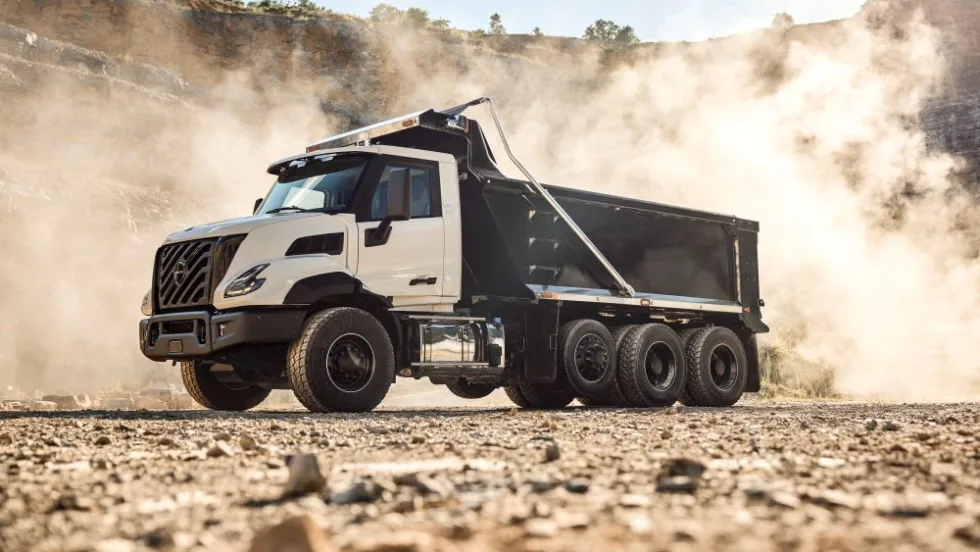
Volvo Trucks Unveils New Volvo VNX, a Vocational and Heavy-Haul Truck
The Volvo VNX features standard forward pedestrian detection that continuously scans for people in the truck's path, and optional blind-spot detection, now available on both sides.
Read More →
Town of Queen Creek Named Most Successful Fleet Award Winner of Inaugural RTA Fleet Success Awards
Five fleets were honored at RTA Connect 2026 in Chicago for excellence across resource efficiency, intentional culture, risk management, and stakeholder satisfaction.
Read More →
A buyer's guide to fleet management software in 2027
Buying fleet management software in 2027 means looking beyond features and price. As fleet operations, technology and expectations evolve, this guide explores what today’s fleet professionals should consider when choosing a system that can deliver value now and adapt to what comes next.
Read More →
Hazard Alerts, Fleet Car Sales Rise and a New Shuttle Concept
Fleet car sales doubled, but the bigger picture tells a different story in this week’s roundup.
Read More →
New Partnership Aims to Expand Public Digital Hazard Alert System Statewide
The Hawai’i Department of Transportation (HDOT) is expanding advance digital hazard alerts for the public statewide.
Read More →
How St. Johns County Turned Fleet Data Into Better Replacement Decisions
St. Johns County, Florida, had fleet data, but turning it into reliable decision guidance was another matter. Instead of starting over with a new fleet management system, the county connected existing tools and built a scoring system that gives managers an objective look at fleet health.
Read More →