




Ram ProMaster City: An Option for Right-sizing
With eight different configurations for the newest and smallest Ram van offering, the 2015 ProMaster city can be used by agencies looking to right-size and reduce costs.
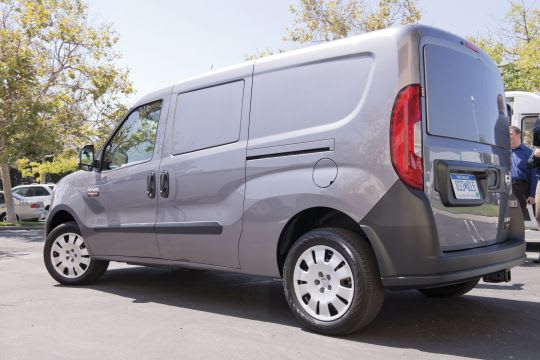
Photo by Vince Taroc.
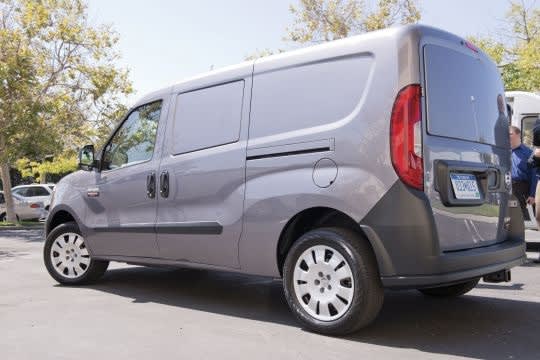
Photo by Vince Taroc.
The newest vehicle to join the Ram Trucks van lineup is the 2015 ProMaster City. The smaller vehicle gives fleet managers another option when right-sizing from larger vans or transitioning from compact pickup trucks.
“The whole industry, both government and commercial, is focused on ‘right-sizing’ their fleets. That is why these small vans are a perfect solution for so many fleets,” said Frank Dankovich, director of fleet sales with Chrysler Group LLC. “Why pay for more vehicle if you don’t need to? Why pay for a large van or truck with higher fuel costs over the life of the vehicle if you don’t need to? If you are managing a large fleet, the savings can add up fast.”
Boasting Best-in-Class Cargo Capacity
The Class 1 ProMaster City is powered by the 2.4L Tigershark I-4 engine. The engine generates a best-in-class 178 hp at 6,400 rpm, while its peak torque — 174 lb.-ft. at 3,900 rpm — is greater than any standard-equipment engine in the ProMaster City’s segment, according to the company. It also has a segment-exclusive nine-speed automatic transmission.
The vehicle has best-in-class cargo capacity of 131.7 cubic feet, roof height of 51.8 inches, and best-in-class payload of 1,883 lbs. with easy access provided by 60/40 split rear doors and dual sliding side doors.
The vertical side panels are upfitter-friendly and simplify the attachment of shelves or storage racks for specialized commercial use. The roof of the van is prepped for load rails or roof racks, with a weight capacity of 154 lbs.
Front-wheel-drive, seven standard airbags, electronic stability control, and available rear back-up camera provide enhanced safety features that are important to all fleets, Dankovich said. He added that the vehicle’s five-year, 100,000-mile powertrain warranty is 40,000 more miles than the vehicle’s key competitor.
The vehicle comes with eight different configurations: six cargo and two wagon models.
Fit for Various Government Uses
Dankovich said the ProMaster City can be used by nearly every department of every governmental entity mainly because of its combined fuel efficiency and utility.
“All agencies are budget constrained. No fleet managers are given blank checks. So a new vehicle that can deliver improved total cost of ownership is going to be well received by government fleets,” he said.
He emphasized that Public Works agencies may use the vehicle to move materials to work sites; schools and universities may use it to transport supplies from one facility to another; and even police and sheriff’s offices that have a need for a smaller vehicle can use it to move equipment during investigations and for public events.
Additionally, with the wagon configuration, users can move up to five passengers and still have close to four feet of cargo length to the rear doors.
Start of production for the vehicle will begin in the fourth quarter of this year, and fleet vehicles are expected to begin to arrive in early first quarter of 2015.
Pricing and fuel economy have not been announced at time of publication, but Dankovich said the product will have a very competitive price. The automaker also expects to be rated at or very near best in class for fuel economy.
Related:
More Operations
Is Keeping Older Fleet Vehicles Really Saving Money?
Is keeping vehicles longer saving money, and what happens when a diagnostic test points to the wrong fix?
Read More →
How Smart Fleet Strategy Can Help Local Government Agencies Do More with Less
Keeping a vehicle longer may ease this year’s budget, but what does it cost the next one? A closer look at fleet decisions can reveal opportunities to reduce spending while protecting essential services.
Read More →
Connect with Government Fleet on LinkedIn
From industry news and fleet management strategies to conversations with peers, Government Fleet's LinkedIn page offers public-sector fleet professionals another way to stay informed and connected.
Read More →
Town of Queen Creek Named Most Successful Fleet Award Winner of Inaugural RTA Fleet Success Awards
Five fleets were honored at RTA Connect 2026 in Chicago for excellence across resource efficiency, intentional culture, risk management, and stakeholder satisfaction.
Read More →
A buyer's guide to fleet management software in 2027
Buying fleet management software in 2027 means looking beyond features and price. As fleet operations, technology and expectations evolve, this guide explores what today’s fleet professionals should consider when choosing a system that can deliver value now and adapt to what comes next.
Read More →
Hazard Alerts, Fleet Car Sales Rise and a New Shuttle Concept
Fleet car sales doubled, but the bigger picture tells a different story in this week’s roundup.
Read More →
How St. Johns County Turned Fleet Data Into Better Replacement Decisions
St. Johns County, Florida, had fleet data, but turning it into reliable decision guidance was another matter. Instead of starting over with a new fleet management system, the county connected existing tools and built a scoring system that gives managers an objective look at fleet health.
Read More →
Fleet Forward Conference Introduces One-Day Passes for 2026
New one-day registration lets fleet professionals attend Tuesday, Wednesday, or Thursday, with passes available for $249.
Read More →
ENC Unveils its ZAVIR Medium-Duty Shuttle
Two variants of the concept shuttles were revealed: a low-floor configuration and a high-floor configuration.
Read More →
Could Your Next Fleet Technician Start as an Intern?
What if your next technician hasn’t worked in a fleet shop yet? What fleets are doing to free up time.
Read More →