




Public Auctions Offer Benefit for Police Vehicle Resale
With public auctions, agencies can sell used law enforcement units to a targeted, knowledgeable market, without the hassle of organizing a mass sale of outdated vehicles.

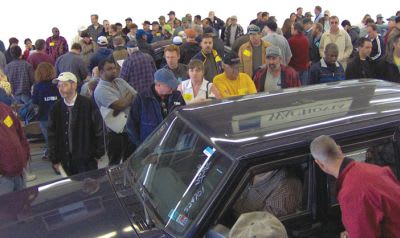
Public auctions provide a convenient method for law enforcement agencies to dispose of older or outdated fleet vehicles while generating a source of funds.
Not only will vehicles be sold to a targeted knowledgeable market, but the auction process can also save public safety departments significant time in organizing a mass sale of outdated vehicles.
Public Auctions Used Exclusively
With auctions, however, a department loses control over setting a desired price of one or more vehicles. As a result, auctions often are used to sell large quantities of fleet vehicles at a specific time and are generally not advised for selling small lots or single units, according to Ft. Lauderdale, Fla., City Police Department Senior Public Information Specialist Chaz Adams.
Ft. Lauderdale police uses public auctions exclusively to sell fleet vehicles, Adams said.
“The live auctions offer the best opportunity for us to receive the highest potential return,” Adams said. “Our average return-on-investment (ROI) for live auctions has been 20 percent or better over the last 11 years, which is high for government (agencies).”
Higher sale prices may also be attributed to Ft. Lauderdale’s tropical climate, which generates less vehicle wear-and-tear than those in colder climates with snow, ice, and below-zero temperatures.
In 2006, Ft. Lauderdale achieved Kelley Blue Book-comparable values for nonpolice cars “good” to “excellent” condition, said Adams. Pickup trucks realized prices in the “fair” condition range of Kelley trade-in values.
Lt. Dan Norris of Montgomery County, Texas, said after a vehicle is driven an average of 120,000 miles, it is generally sold at a county auction for $3,000-7,500 per unit. Fleet vehicles sold at auctions often are purchased at or near Blue Book value, but the county spends little to promote the auction.
“We see private citizens, car buffs, and business owners buying the vehicles — pretty much anyone looking for a good car and a good bargain,” said Norris. “Auction buyers know that our vehicles are well maintained and have many features and additions that aren’t standard in most vehicles.”
Condition Affects Values
A 2002-03 internal audit measured the effectiveness of fleet vehicle cost management strategies in New York’s Greene County Sheriff ’s Department, which generally disposes of its vehicles at public auctions. The audit revealed that Greene County received less money than neighboring jurisdictions for vehicles of similar make, model, and vintage sold at public auctions.
Recent Greene County audits determined this price differential has decreased, but the poorer condition of the county’s vehicles may have impacted their auction value. Expedited disposal process, disposal at an earlier age, and better care during storage,would likely increase resale value.
“We don’t get more money (from selling sheriff ’s department fleet vehicles) at auction,” said Greene County Purchasing Manager Debbie Wilson. “But it’s a convenient method, and we have been doing it for several years.”
Publicize to Target Markets
The City of Ft. Lauderdale and its police department requires auctioneers to conduct a direct mail and marketing campaign for each auction, said Adams.
Experienced auctioneers publicize a particular auction to markets most likely to buy the vehicle type on auction.
“We conduct our own direct advertising and notification (campaign) through our database,”Adams said.“The majority of cars and pickup trucks are purchased by local individuals, wholesalers, and exporters. Larger equipment is purchased by dealers, exporters, or companies with similar types of vehicles in their fleet.”
Dealers often give a trade-in value comparable to Kelley Blue Book values for police vehicles because they know the car was well maintained. But if an agency desires cash rather than a dealer trade-in, that agency can often expect a few thousand dollars less than selling to a private buyer.
The Commonwealth of Pennsylvania broadcasts its state-run public vehicle auctions on its Web site and through various communications. Like most agencies, Pennsylvania outsources auction services to a local auctioneer — Keystone Auto Auction, in the state capital, Harrisburg. A sliding scale of buyer’s fees range from $80-$290 per vehicle.
Auctions Held in External Facility
Pennsylvania conducted a pilot program to determine the benefits of utilizing an external facility to conduct used-vehicle auctions. Several benefits were realized, including cost and workload savings, and alleviation of infrastructure and storage problems. The Commonwealth pursued a longer-term sale agreement for used public vehicles in an external facility. Pennsylvania mandates that Commonwealth-owned vehicles taken out of the fleet must be sold
at public auction.
On average, 300-600 vehicles ranging from police cars to transport vehicles are auctioned off five or six times per year in Pennsylvania, according to state officials. The public auction audience is often comprised of cab companies, automobile dealers, and individual consumers.
Details of upcoming auctions are emailed to a large list of prospective buyers. In addition, advertisements are placed in publications throughout the Commonwealth. Postcard reminders are also mailed to an internal database.
GSA Handles Federal Agency Auctions
The federal government established a method by which publicly run departments sell vehicles at auction. GSA Fleet Services, managed by the U.S. General Services Administration, organizes public vehicle auctions nationwide. GSA conducts its public vehicle auctions through
registered auction lots across the country.
Participants register and obtain a bidder number at the auction house prior to the sale. Unlike many privately-owned auction houses, bidders are not charged a registration fee.
In addition to pre-owned and alternative-fuel vehicles, GSA fleet vehicle sales offers an array of specialized vehicles, including ambulances, police cars, and buses, as well as tractors, wreckers, and other heavy equipment and maintenance utility vehicles.
However, most state and local agencies run their own auctions. Although the process is time-consuming, agencies are also being increasingly pressured to measure ROI. Pennsylvania has updated its process to measure ROI and selling prices against such resources as Kelley Blue Book. The state’s bureau of vehicle management hired a full-time employee who manages the cost measurement structure.
Pennsylvania’s Ford Police Interceptor units with the police package are sold at a premium price because of their added features and durability, according to state officials.
“The time needed to prepare and stage the vehicles for inspection and to facilitate sales is the only minor drawback to auction sales,” Ft. Lauderdale’s Adams said. “But for the value we receive in return, it is worth it.”
More Operations
Is Keeping Older Fleet Vehicles Really Saving Money?
Is keeping vehicles longer saving money, and what happens when a diagnostic test points to the wrong fix?
Read More →
How Smart Fleet Strategy Can Help Local Government Agencies Do More with Less
Keeping a vehicle longer may ease this year’s budget, but what does it cost the next one? A closer look at fleet decisions can reveal opportunities to reduce spending while protecting essential services.
Read More →
Connect with Government Fleet on LinkedIn
From industry news and fleet management strategies to conversations with peers, Government Fleet's LinkedIn page offers public-sector fleet professionals another way to stay informed and connected.
Read More →
Town of Queen Creek Named Most Successful Fleet Award Winner of Inaugural RTA Fleet Success Awards
Five fleets were honored at RTA Connect 2026 in Chicago for excellence across resource efficiency, intentional culture, risk management, and stakeholder satisfaction.
Read More →
A buyer's guide to fleet management software in 2027
Buying fleet management software in 2027 means looking beyond features and price. As fleet operations, technology and expectations evolve, this guide explores what today’s fleet professionals should consider when choosing a system that can deliver value now and adapt to what comes next.
Read More →
Hazard Alerts, Fleet Car Sales Rise and a New Shuttle Concept
Fleet car sales doubled, but the bigger picture tells a different story in this week’s roundup.
Read More →
How St. Johns County Turned Fleet Data Into Better Replacement Decisions
St. Johns County, Florida, had fleet data, but turning it into reliable decision guidance was another matter. Instead of starting over with a new fleet management system, the county connected existing tools and built a scoring system that gives managers an objective look at fleet health.
Read More →
Fleet Forward Conference Introduces One-Day Passes for 2026
New one-day registration lets fleet professionals attend Tuesday, Wednesday, or Thursday, with passes available for $249.
Read More →
ENC Unveils its ZAVIR Medium-Duty Shuttle
Two variants of the concept shuttles were revealed: a low-floor configuration and a high-floor configuration.
Read More →
Could Your Next Fleet Technician Start as an Intern?
What if your next technician hasn’t worked in a fleet shop yet? What fleets are doing to free up time.
Read More →