




Navigating the Lease vs. Buy Maze
Deciding whether to lease or own company-provided vehicles can seem a daunting task. Knowing the basic concepts helps.

Leasing is, put simply, paying the owner of an asset for its use for some period of time, then returning it. It really is that simple.
Photo: Bobit
There is hardly a more basic business question for fleet managers than whether to own or lease capital equipment. There are few areas where this decision is more critical than in acquiring vehicles.
This article examines the advantages and disadvantages of both methods and gives a brief outline of the most important factors the savvy manager will weigh before opting for one or the other.
The Lease Option: Pay For Use, Not Ownership
In order to discuss the pros and cons of the lease option, it might be best to first examine the lease concept itself and look briefly at some of the main lease options available.
Leasing is, put simply, paying the owner of an asset for its use for some period of time, then returning it. It really is that simple. The vehicle lessor buys a truck, for example, then contracts with the lessee for a pre-determined period of time to permit the lessee to use the truck in return for a monthly stipend, which provides the lessor with reimbursement of cost and a reasonable profit.
The only difference between renting a vehicle and leasing it is the length of time for which the user needs it. Leases usually run a minimum of one year, rentals only a matter of days. There are two broad categories of vehicle leases: closed-end and open-end.
A closed-end lease is written for a fixed term, say, three years; the contract provides for a fixed monthly payment, a predetermined limit to the mileage the lessee may put on the vehicle, along with penalties for exceeding the mileage limit, and for “excess wear and tear.” Upon expiration of the lease term, the lessee returns the vehicle to the lessor and, provided there are no excess mileage or damage penalties, has no further obligation. Closed-end leases can also include maintenance and/or insurance, and are sometimes called “walk-away” or “net” leases.
An open-end lease usually has a short minimum term (one year), then continues on a month-to-month basis until the lessee terminates. Most open-end leases contain what is known as a TRAC clause (Terminal Rental Adjustment Clause). The TRAC clause provides that when the vehicle is turned in and sold by the lessor, if the proceeds from the sale exceed a value determined at lease inception, the lessee gets the excess. If the proceeds are less, the lessee must pay the difference. Most open-end leases do not contain mileage or wear-and-tear penalties, and often contain a “step-down” payment schedule, wherein payments decline annually.
As you have probably already determined, the essential difference between closedand open-end leases is where the risk/reward for the value of the vehicle lies. In closed-end leases, the lessor bears the risk of the residual value; in an open-end lease, the lessee.
While there are several variations of these two basic types of lease, the primary aim of a lease transaction is not to obtain or transfer ownership of the vehicle, but to pay for its use for some period of time, then return it to its owner, the lessor.
Leasing Provides Advantages
Every company brings its own unique circumstances to the lease/buy decision, but leasing provides a number of basic advantages:
1. Preservation of Capital.
The capital you need to run your business comes from one of two sources: your business operation (to the extent you expend less cash than you take in, you will have operating capital) or a lender. If your net profit margin is greater than the cost of borrowing, money produced by the business is best reinvested in the company.
Leasing provides a third source for vehicle acquisition. It enables the business to obtain the vehicles it needs without using precious operating capital or dipping into credit lines that may be used for more important purposes.
2. Off-Balance Sheet Treatment.
Vehicle ownership can also unnecessarily burden your balance sheet. Buying vehicles (as with all capital expenditures) requires two entries on the balance sheet. Although the “left” (asset) side gets an asset (the vehicle), the “right” side (liabilities) gets debt (if the money is borrowed), or a reduction in cash (if cash from operations is used). Your financial rations (debt-to-equity) suffer, making your company less attractive to lenders or investors. A properly structured lease transaction permits off-balance-sheet treatment. The overall lease obligations merely appear as a footnote.
3. Less Administration.
Vehicle ownership carries with it various administrative burdens, such as tag and license renewal, payment of personal property taxes, title retention, etc. A leased vehicle is owned by the lessor, whose name is on the title and the registration, and in whose name taxes must be paid. The administration of the paperwork and recordkeeping requirements attendant to ownership falls to the lessor.
4. Lessor Acquisition/Disposal.
The actual processes of vehicle acquisition and disposal are time-consuming and require some expertise to do well. Independent lessors can lease any make or model, order the vehicle for you, pay for it, and obtain the title and tags, relieving you and your employees these tasks.
Lessors are also better equipped to sell vehicles when they come out of service. Whether the vehicle is leased under an openend or closed-end lease, the lessor must sell it — another headache you don’t need.
5. Use vs. Ownership.
Finally, the practical question must be asked: Do I need to own vehicles or do I need to use them? Vehicles are most often either a business tool, that is, a means by which the business accomplishes its goals, or a form of compensation.
Ownership Offers Advantages, Too
Ownership of company vehicles also has its advantages:
1. Tax Benefits.
Companies can all use tax benefits, whether currently (if profitable) or in the future (as carry-forwards). Owner assets are depreciable and those deductions can be used to offset profits. The depreciation benefit for leased vehicles stays with the lessor (owner).
2. Pricing Leverage.
Using local dealerships for all acquisitions, with the attendant promise of future service business and employee referrals, can be leveraged in negotiating attractive pricing. Using a large national fleet dealer group can provide “big fleet” pricing to small and mid-sized fleets.
3. Depreciation Control.
The single largest cost in running a vehicle fleet is depreciation — the difference between the original cost and resale proceeds. Fleets give up some measure of control of this number to a lessor, who will resell vehicles in bulk. The ability (or desire) to sell vehicles individually will, if done properly and knowledgably, inevitably lower net depreciation.
4. Net Present Value Cost.
In some instances, the net present value cost (this will be addressed later) of ownership can be lower, primarily due to the introduction of the profit factor into the transaction. Lessors make money in a number of ways: through purchasing vehicle, by charging administrative fees, or marking up the cost of funds. A company can avoid these costs by purchasing vehicles, provided pricing is aggressively negotiated. Money is available at an attractive rate and, most importantly, resale proceeds are maximized.
Lease vs. Own: Basic Concepts
A detailed analysis of the lease-versus-own question would take more space available here; entire books have been written on the subject. Rather, we’ll examine the basic concepts that impact the decision, both financial and administrative.
Know why the question is being asked. Companies examine this question for a number of reasons. Financial, administrative, headcount, any number of things will initiate a look at the issue. Make certain all parties involved in the analysis understand the motivation behind it, as this will ultimately impact the final decision.
Narrow the focus. Deciding whether to lease or own based upon very general assumptions may work in a business school classroom, but not in the real world. A number of options are available for both leasing and ownership. The company must first determine which of the options available for both leasing and ownership are best before comparing one with the other.
Evaluate all costs. Three broad categories of expense are common to both leasing and ownership: cost of funds, depreciation, and overhead/administrative. Lease/own is not merely a financial decision; all costs, both hard and soft, should be evaluated.
Cash Flow Components Vital to Your Decision
There are two primary components to the cash flows inherent to company vehicles: cash, in the form of lease payments (outflow), debt payments (outflow), residual proceeds (inflow), TRAC adjustments (in- or outflow), and tax benefits (depreciation, lease payments, debt interest, etc.). Cash represents the actual movement of funds into and out of the company. Money changes hands.
Tax benefits represent a reduction of the company’s tax liability resulting from the use of company vehicles. While money does not actually change hands, these benefits reduce the taxes the company must pay, and thus are treated as an inflow. Tax liabilities may also occur if the transaction creates an increase of income, upon which the company must pay taxes.
Both leasing and ownership consist of a series of these cash flows, occurring over the life of the vehicle. Leasing cash flows consist of a series of monthly payments, partially offset by the tax benefit created by their deductibility.
Ownership cash flows depend upon the method used to buy the vehicle. If cash is used, the flows consist of a single large outflow, followed by the tax benefit derived from depreciation deductions, ending with an inflow from the sale of the vehicle. If debt is used, the cash flow begins with a simultaneous inflow/outflow (borrowing the money, then paying for the vehicle), then the monthly deductions for depreciation and interest expense, ending again with an inflow from resale proceeds. (Most corporations pay taxes quarterly, so the cash flows will be slightly different.)
This is, of course, a simplification of a more complex series of transactions, but for purposes of this article, we’re most interested in the concepts.
It is an old adage that a dollar today is worth more than a dollar tomorrow. Because of the effects of inflation, it is usually advantageous to spread outflows of cash over a period of time. From a purely financial standpoint, it is as important when money changes hands as it is how much. It is for this reason the aftertax cash flows for both alternatives must be “discounted,” that is, reduced in value to account for inflation. This process is called present value. The further in the future the flow, the less it is worth in today’s dollars.
It is not important that the manager knows how to perform the present value analysis (financial calculators, computer software, or a good financial executive will do this). What is important is that the concepts of after-tax cash flow and present value are understood, and the results of the calculations are clear, so a decision can be made.
Remember to Consider Administrative/Overhead Costs
Far too often, the lease-versus-own decision is made solely on the results of the present value analysis. Choosing one or the other will have a significant impact upon how vehicles are handled internally. A company must address a number of questions to determine the impact.
If currently owning vehicles, and considering leasing, ask:
1. What functions will the lessor assume that are currently performed in-house: order processing, title administration, registration/tag renewals, tax administration, and used-vehicle sales?
2. What other fleet management functions might be outsourced: maintenance management, collision repair, or safety programs?
3. What will the lessor charge for services not included in the lease rate?
If currently leasing, and you are considering ownership, ask:
1. What functions will you now assume under company ownership?
2. Will you now have to produce a capital budget for vehicles?
3. Will you obtain the same fleet management services at the same prices that you may now get from your lessor?
4. Is the company willing to divert the necessary resources (staff, etc.) to properly manage an owned fleet?
Do the Following When Making the Lease/Own Decision
Learn the Basics. You cannot decide whether to lease or own unless you are familiar with the various methods of doing both.
Understand the Goals. What are the company’s goals? Better cash flow? More control? Administrative savings?
Recognize the Financial Impact. Make an effort to understand the basic concepts of cash flow and present value.
Place a Value on Soft Costs. Administrative and productivity costs must have a monetary value before a proper decision can be made.
More Operations

Hazard Alerts, Fleet Car Sales Rise and a New Shuttle Concept
Fleet car sales doubled, but the bigger picture tells a different story in this week’s roundup.
Read More →
How St. Johns County Turned Fleet Data Into Better Replacement Decisions
St. Johns County, Florida, had fleet data, but turning it into reliable decision guidance was another matter. Instead of starting over with a new fleet management system, the county connected existing tools and built a scoring system that gives managers an objective look at fleet health.
Read More →
Fleet Forward Conference Introduces One-Day Passes for 2026
New one-day registration lets fleet professionals attend Tuesday, Wednesday, or Thursday, with passes available for $249.
Read More →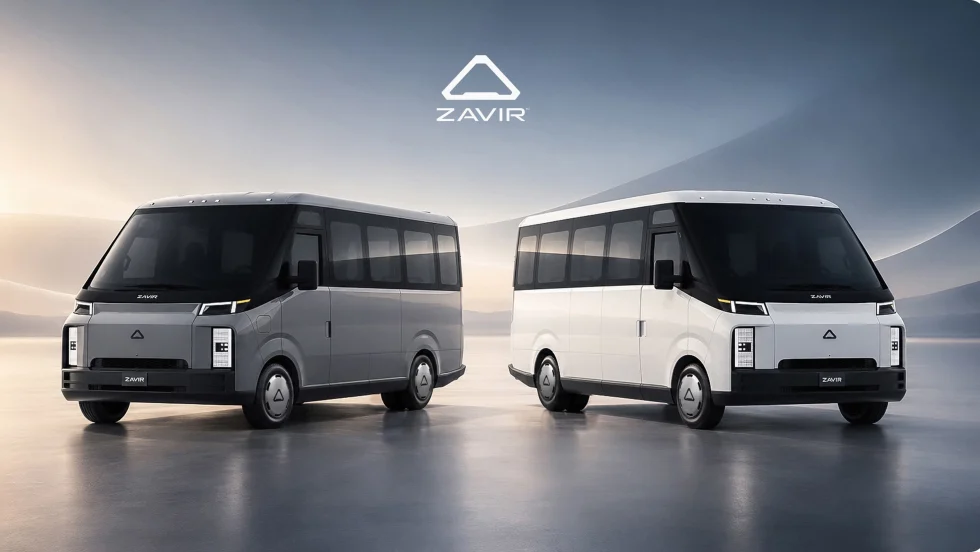
ENC Unveils its ZAVIR Medium-Duty Shuttle
Two variants of the concept shuttles were revealed: a low-floor configuration and a high-floor configuration.
Read More →
Could Your Next Fleet Technician Start as an Intern?
What if your next technician hasn’t worked in a fleet shop yet? What fleets are doing to free up time.
Read More →
How Phoenix Is Building Its Next Generation of Fleet Technicians
With more than 8,000 vehicles and pieces of equipment to maintain, the City of Phoenix could not afford to wait for fully trained technicians to walk through the door. Instead, they revamped their entire workforce strategy and showed how public fleets can create their own talent pipeline while preparing existing employees for increasingly complex vehicles.
Read More →
What’s Slowing Your Fleet Down?
Could a change in how work gets done help your fleet return vehicles to service sooner?
Read More →
Can Public Fleets Trust the Data Driving Their Decisions?
Public fleets have more data than ever, but inconsistent records and missing information can still undermine maintenance, replacement, and cost decisions.
Read More →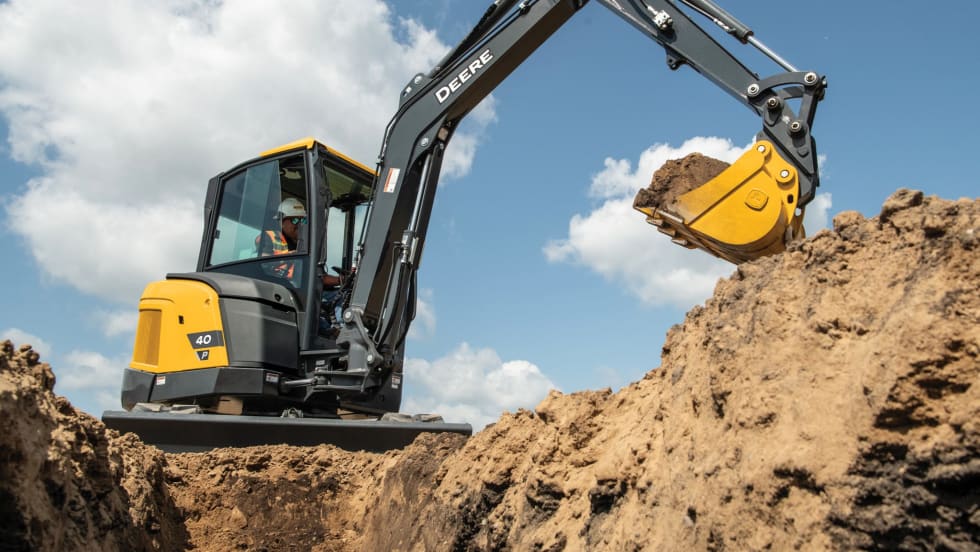
John Deere Introduces 40 P-Tier Compact Excavator
John Deere is adding a compact excavator designed for crews that need to move equipment between jobsites and handle multiple types of work with one machine. The 40 P-Tier weighs less than 10,000 pounds and offers configurable hydraulics, attachment options, and connected fleet-management capabilities.
Read More →
How Leading Fleets Improve and Why Business Plans Matter
This week, we look at what past Leading Fleet winners can teach us about making progress, plus how to build a business plan your fleet will actually use.
Read More →