




Maximizing Vehicle & Equipment Resale at Auction
Here are some tips for bringing in top resale dollar for those “unusual” pieces of equipment.
Sure, that bucket truck is grand in the perfect shade of company green. But at resale, that color is bound to be looking a little sour. Armando Camarena sees it all the time. President of U.S.Auctions, he often finds himself with used utility line equipment, cargo trucks, and the like to move. And they move so much easier, he says, if they’re simply painted white.
“That’s the biggest advice I can give any fleet manager or supervisor anywhere,” he says. “Keep the equipment white. Don’t paint the trucks yellow, don’t paint them light blue. And don’t paint them orange. The resale value is so much higher on a white vehicle. All you have to do is put a logo on it, and that’s inexpensive to take off. But the resale difference might be $500-$1,000. Who wants to drive a baby blue pickup truck?”
Not Your Average Stuff
Selling a piece of utility equipment isn’t the same as moving a traditional vehicle. Some of the same rules apply, especially when it comes to cost cycles, and depreciation. But, because the vehicles have such specific uses, they can bring unique challenges for fleet administrators. And each vehicle has challenges of its own. A buyer for a chipper truck is not necessarily the same as the buyer of a backhoe.
Camarena recently started U.S. Auctions with a group of partners with 55 years of combined auction experience, and began his career in moving “unusual” equipment while doing asset forfeiture for the U.S.Marshals Service in the early 1990s. Many items had been confiscated following drug busts, so the merchandise varied widely.
“I’ve dealt with just about everything imaginable that you can auction,” says Camarena, who is based in California. “There were Jags, Cadillacs, ‘pimped-out’ Tahoes and Range Rovers, and once, I even sold a 737 jetliner.”
Since then, there have also been numerous “vactors,”with vacuums, extendable booms, and water pumps (which might be used for cleaning out storm drains); tree chippers; construction vehicles; and other highly specialized pieces of equipment. As such, Camarena is confident he knows how to seek out the best buyers, size up a good match, and sell the equipment for top-dollar. And he’s happy to pass on what he’s learned.
He starts with the reminder to keep the color of the equipment in check. Beyond that, Camarena advises public fleet managers who deal with utility equipment to look at all options once it is time to sell it.
Carefully Choose a Remarketer
An equipment remarketer should be chosen carefully. Direct experience in selling unusual pieces helps bring in top-dollar, due to fewer contacts and a lack of understanding. First, Camarena says, the remarketer should already have a built-up clientele. “That way, they can call them up and say what kind of equipment they might have coming,” he says. “And buyers will fly in from all over to see it.”
The remarketer should also have knowledge of what an item usually sells for. Someone who has never sold that particular type of equipment may be at a loss.
With traditional fleet vehicles, upstream selling to company employees can be a win-win for everyone involved. But it’s not an ideal plan for unconventional equipment. Chances are, not many employees need a bucket truck outside of work.
Even if vehicles are typical items, the sheer number a public fleet must sell can cause problems for an inexperienced remarketer. Rather than offering all similar fleet vehicles at the same time, Camarena says, a seasoned outfit will know to release them gradually for better sale.
It’s essential fleet managers check both experience and references. “If you’re going to sell through a public auction, you’ve got to ask how long the company has been around,”Camarena advises. “Are they licensed and bonded? Do they know what they’re doing?”
In addition, he says, “You really must attend the public auction and see how the vehicles and equipment are actually presented. You can’t just make the decision while you’re sitting in your office. You’ve got to touch and feel the auction company to see how the registration process is done.”
In reality, Camarena notes, there’s a fairly small circle of organizations that can handle virtually anything that’s thrown their way. “You’ve probably only got 15 or 20 companies that do everything,” he says. “But I think doing business this way is very interesting and exciting.”
Virtual Marketplace Expands Buyer Pool
The Internet has changed auction sales by broadening the reach to potential buyers. Virtual marketplaces have continued to pop up, and equipment can be found on sites that range from individual auction houses to eBay.
But more than equipment is available online. Many sites offer information. Bobit Business Media, for example, has gotten in on the game. The company has launched its own resource for the Automotive Fleet, Business Fleet, and Government Fleet Web sites, sponsored by Fleet Lease Disposal, which includes remarketing news, articles, and a depreciation calculator.
While the Internet offers increased options for sales and information, therein lies a new challenge. The more information is readily available, the more the fleet manager is expected to know. Ignorance is no longer an option, especially when updates are always available at the click of a computer key.
As such, Camarena says, fleet managers simply must be aware of what’s going on around them and what may be coming down the pike. What happens in California, for example, can and will directly affect fleet sales in other parts of the country.
Because of the state’s strict environmental concerns, for example, legislation that starts there is often viewed as a testing ground for the remainder of the United States. In addition, equipment that comes from California is always a big draw, since it hasn’t been damaged by salt or snow, as it would have in other regions.
A Little Diesel = A Big Deal
Environmentally, one current challenge is the mandates concerning diesel particulate matter and sulfur. Regulations that went into effect Jan. 1 prohibit operating diesel vehicles 14,000 GVW and above without a retrofit. The mandates, as defined by the California Air Resources Board (CARB), are specifically aimed at stationary engines and transport refrigeration units, and call for conversion to ultra-low sulfur diesel to reduce the amount of particulate matter emissions.(More info is available at www.arb.ca.gov/regact/dpmcm05/revfro.pdf).
“And that’s a big deal,”Camarena says. “If you are, for example, the City of Los Angeles, and you have diesel-burning refuse trucks, you can’t run them in the state of California anymore.”
A retrofit costs an average $15,000 per vehicle, he says. To help ease the pain of the transition, credits are offered. However, the move has turned the California resale industry “upside down.”'
“Trucks that would normally sell for $10,000-$15,000 are now going for $6,000-$9,000,” he says. “And the people who are profiting are the out-of-state dealers.” Competition could drive down the amount of money other state fleets can bring in, especially if potential buyers already have their eyes on California equipment first.
“The utility industry is not that big,”Camarena says. Because it’s so specific, it offers plenty of opportunity for learning by watching others’ mistakes and successes.“I keep contact with a number of fleet managers myself, so I can keep abreast of what’s going on, what’s working, what’s not,” he says.
Camarena encourages fleet managers to do the same.He’d also like to see more news circulated on issues specific to the city, county, and state governments, as well as team projects, that can help everyone benefit. It’s not just about “keeping up,” after all. It’s about paying attention to current trends, understanding all the options, and knowing enough to keep equipment white. Here are some tips for bringing in top resale dollar for those “unusual” pieces of equipment.
More Operations

How St. Johns County Turned Fleet Data Into Better Replacement Decisions
St. Johns County, Florida, had fleet data, but turning it into reliable decision guidance was another matter. Instead of starting over with a new fleet management system, the county connected existing tools and built a scoring system that gives managers an objective look at fleet health.
Read More →
Fleet Forward Conference Introduces One-Day Passes for 2026
New one-day registration lets fleet professionals attend Tuesday, Wednesday, or Thursday, with passes available for $249.
Read More →
ENC Unveils its ZAVIR Medium-Duty Shuttle
Two variants of the concept shuttles were revealed: a low-floor configuration and a high-floor configuration.
Read More →
Could Your Next Fleet Technician Start as an Intern?
What if your next technician hasn’t worked in a fleet shop yet? What fleets are doing to free up time.
Read More →
How Phoenix Is Building Its Next Generation of Fleet Technicians
With more than 8,000 vehicles and pieces of equipment to maintain, the City of Phoenix could not afford to wait for fully trained technicians to walk through the door. Instead, they revamped their entire workforce strategy and showed how public fleets can create their own talent pipeline while preparing existing employees for increasingly complex vehicles.
Read More →
What’s Slowing Your Fleet Down?
Could a change in how work gets done help your fleet return vehicles to service sooner?
Read More →
Can Public Fleets Trust the Data Driving Their Decisions?
Public fleets have more data than ever, but inconsistent records and missing information can still undermine maintenance, replacement, and cost decisions.
Read More →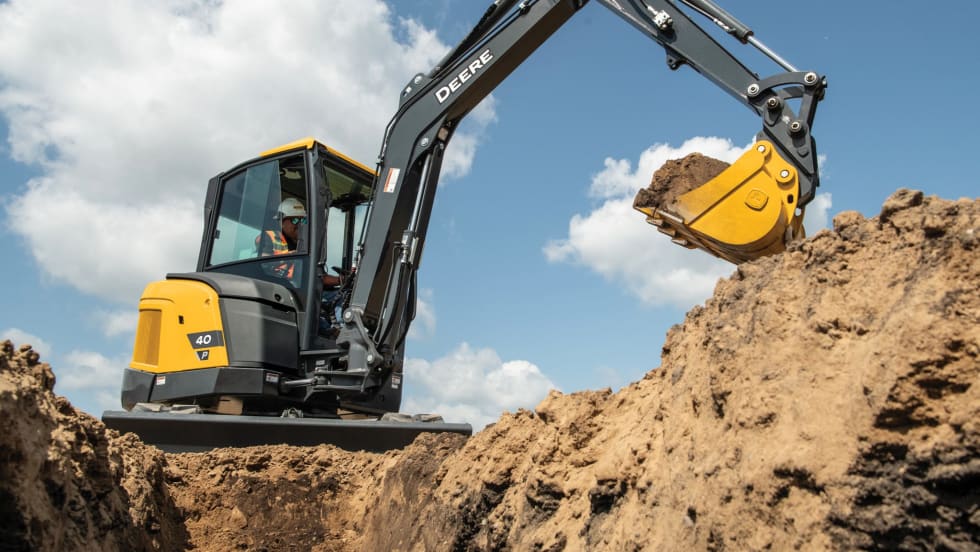
John Deere Introduces 40 P-Tier Compact Excavator
John Deere is adding a compact excavator designed for crews that need to move equipment between jobsites and handle multiple types of work with one machine. The 40 P-Tier weighs less than 10,000 pounds and offers configurable hydraulics, attachment options, and connected fleet-management capabilities.
Read More →
How Leading Fleets Improve and Why Business Plans Matter
This week, we look at what past Leading Fleet winners can teach us about making progress, plus how to build a business plan your fleet will actually use.
Read More →
Nominate a Fleet Leader for the 2027 Public Fleet Hall of Fame
Do you know a fleet leader who has made a lasting impact on the industry? Nominate this fleet professional for the 2027 Public Fleet Hall of Fame.
Read More →