




Living up to ‘Beverly Hills’ Standards: Beverly Hills Fleet on Staff Training and ‘Green’ Operations
Beverly Hills, Calif., Fleet Services operates in a new facility constructed in 2008 -- a LEED Silver certified building -- and is constructing a compressed natural gas (CNG) station expected to be completed in April.

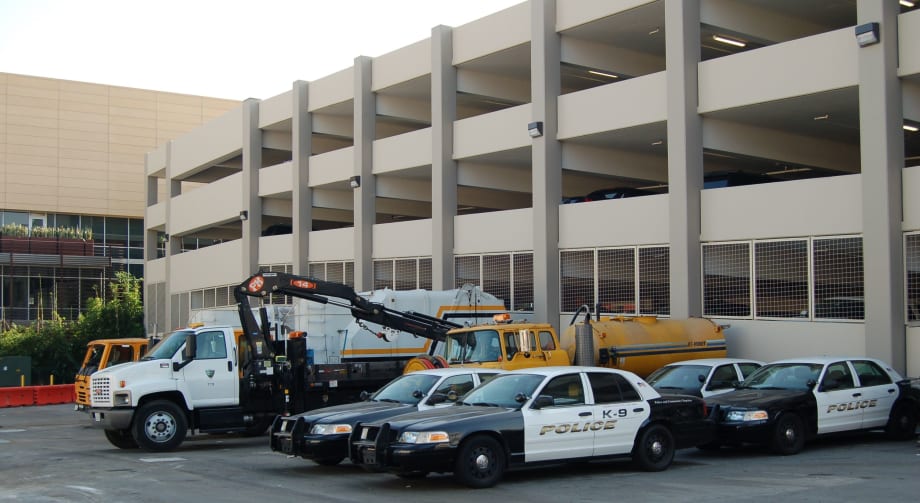
Beverly Hills Fleet Services, under the Public Works & Transportation Department, maintains 360 City units.
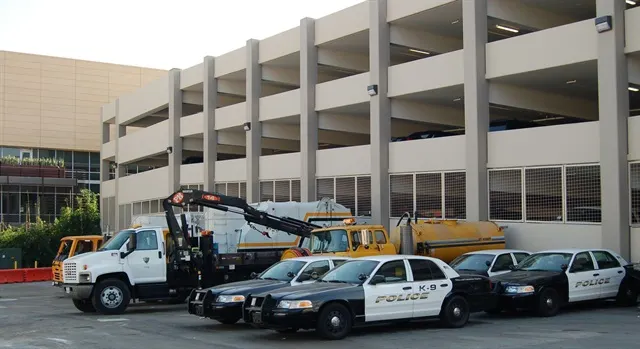
Beverly Hills Fleet Services, under the Public Works & Transportation Department, maintains 360 City units.
The City of Beverly Hills, Calif., Fleet Services recently opened its doors to the Government Fleet magazine editors, providing an information session and facility tour. The City, known for its rich and famous, has a fleet division to be proud of, with a new facility constructed in 2008 -- a LEED Silver certified building -- and a compressed natural gas (CNG) station that is expected to be completed in April. LEED (Leadership in Energy and Environmental Design) is an internallly recognized certification for building sustainability.
According to Rene Biadoma, fleet manager, and Craig Crowder, fleet operations supervisor for the City, one of things they are most proud of is the quality of their staff and ability to keep staff adequately trained. A wall of ASE and other certificates sits just outside Crowder's office, a testament to the quality of fleet technicians at the City.
"The entire crew is ASE certified, boasting 16 ASE Master certificates and an unbroken streak of ASE Blue Seal certifications for Fleet Services since 2003," Biadoma said.
Another accomplishment is the City's current construction of a CNG fueling facility within the fleet facility exclusively for fueling City vehicles. Construction of the fueling facility costs $1M, partially paid for by an MSRC (Mobile Source Air Pollution Reduction Review Committee) grant of $350,000, according to Biadoma. The grant also aids in the purchase of 10 heavy-duty CNG-fueled trucks to replace 10 diesel-powered trucks. The grant amount for procurement is $250,000, or $25,000 toward the increased cost of each vehicle. The fleet division already has five vehicles delivered-four sweepers and one high-pressure sewer cleaner. The next vehicles in line to be added to the City fleet are two refuse trucks.
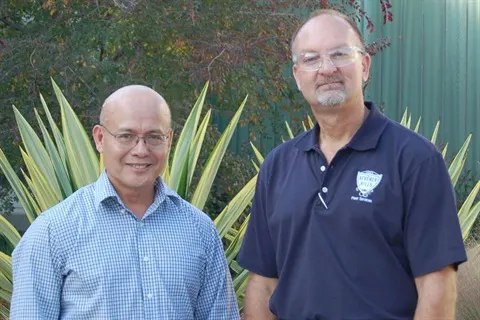
Pictured are Rene Biadoma, fleet manager, and Craig Crowder, fleet operations supervisor for the City of Beverly Hills.
The CNG fueling station and new vehicles are among the City's other "green" vehicles, part of the Beverly Hills Sustainable City Plan that aims to minimize mobile source emissions from vehicles and minimize stationary source air emissions, among other goals, Biadoma stated. Other alt-fuel vehicles include 3 NEVs (neighborhood electric vehicles) and 15 hybrid passenger vehicles.
Fleet Services has a budget of $9.6M, which includes a $1.6M replacement program. It maintains approximately 360 units from four different departments, including police and fire, and normally employs 12 employees.
In these video interviews, Crowder talks about technician training, LEED certification, and the City's CNG fueling station.
More Green Fleet

Sustainability Partners, Energy Systems Group Help Albuquerque Close the Gap on its 100% Renewable Energy Goal
The eight-site, 6 MW solar project has advanced the city toward 100% renewable energy for municipal operations.
Read More →
Port Authority and CALSTART Launch $45 Million Electric Truck and Charging Programs
The programs aim to boost sustainable operations across the East Coast's busiest seaport.
Read More →
Moving Government Fleets Beyond the Vehicle Purchase: EV as a Service
A discussion on how EVaaS is moving beyond pilot programs and what fleets should consider before beginning a larger deployment.
Read More →
Moving Government Fleets Beyond the Vehicle Purchase: EV as a Service
As fleets move beyond small EV pilots, Sustainability Partners CEO Adam Cain explains how EVaaS can address the infrastructure and long-term planning required for larger deployments.
Read More →
Peterbilt Expands Sourcewell Partnership with Electric Vehicle Lineup
The agreement aims to provide streamlined procurement of Peterbilt trucks for government, education, nonprofit and tribal organizations across the United States and Canada.
Read More →
EV Adoption & Charging Challenges
Where is your fleet in the journey of vehicle electrification? If you're still looking for answers to fleet electrification you've come to the right place.
Read More →
Hawaii Passes Clean Fuel Policy
Hawaii lawmakers passed clean fuel legislation that could support renewable natural gas production, biogas-powered transportation, and lower-carbon fueling options for public and commercial fleets.
Read More →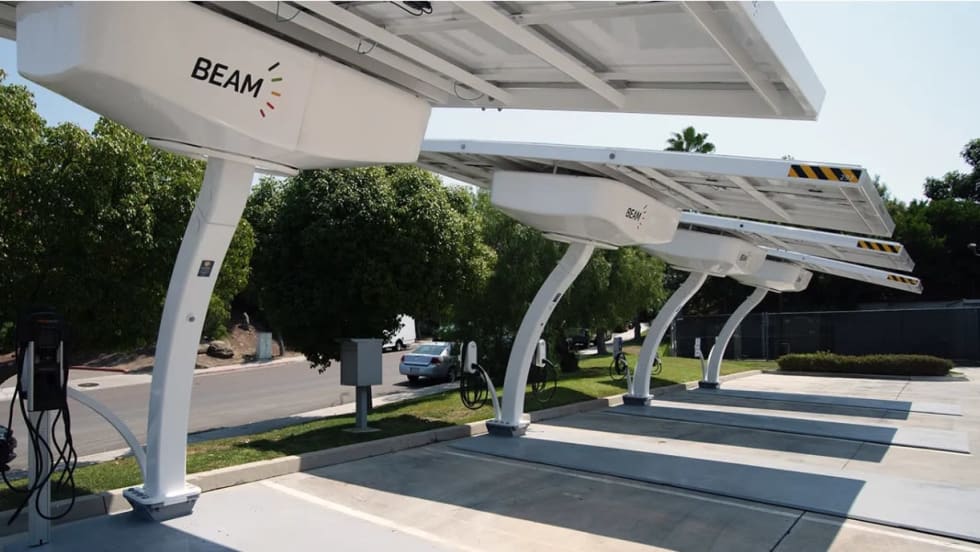
Stanislaus County Deploys Ten Beam Global EV ARC Systems to Support County Fleet Electrification
Stanislaus County deployed 10 off-grid solar-powered EV charging systems and a mobile charging trailer from Beam Global to support its electric fleet operations and emergency response flexibility.
Read More →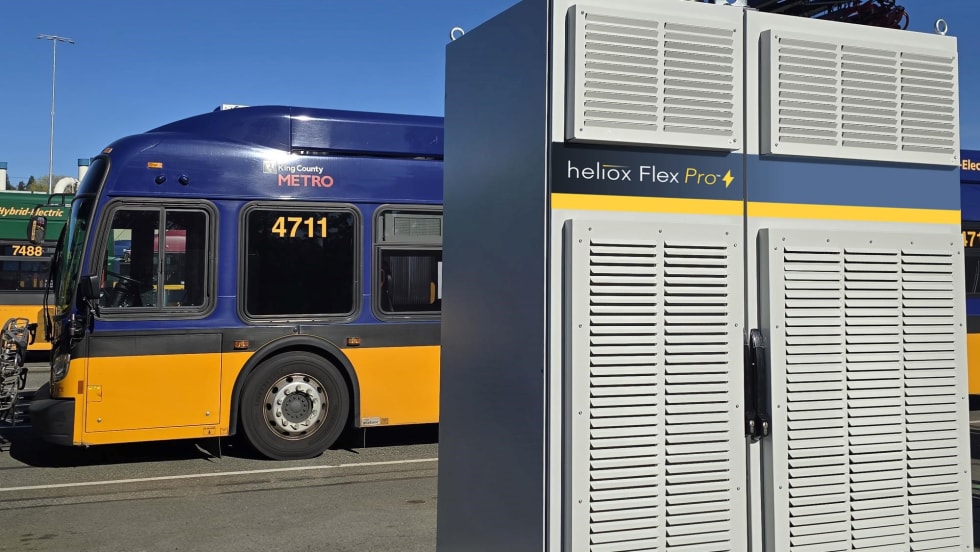
Heliox Pilots 480-kW Bus Charger with King County Metro
King County Metro is piloting Heliox’s new 480-kW Flex Pro charger to support expansion of its battery-electric bus fleet and depot charging infrastructure. The compact charging system supports pantograph and plug-in charging configurations for high-density transit operations.
Read More →