




Similar Content: 7 Steps to Bring Maintenance In House
Lessons Learned 3 Years After Bringing Maintenance Work In-House
Larry Campbell from the City of Fort Wayne, Indiana, shares the cost savings of bringing maintenance work in-house and what he would do differently.

Christy Grimes・Former Senior Editor
6 min to read

Making the decision to bring fleet maintenance in-house can be daunting. Fort Wayne, Indiana, Fleet Operations Director Larry Campbell, CPFP, went through that process a little over three years ago for his fleet of more than 2,300 vehicles. We’re crunching the numbers, sharing the actual cost — and savings — of bringing maintenance back in house.
Assessing Outsourced Vs. In-House Work
Fort Wayne’s maintenance work was outsourced for 22 years. In the middle of the most recent contract, Campbell and city leaders made the decision to bring the work in-house after assessing some practices he believed he could improve upon.
Campbell said his in-house maintenance team was able to complete more maintenance work on vehicles than was previously being done. He explained that they check vehicles for other issues while they are being repaired, so they don't have to be sent to the shop for minor issues down the road, leading to more downtime.
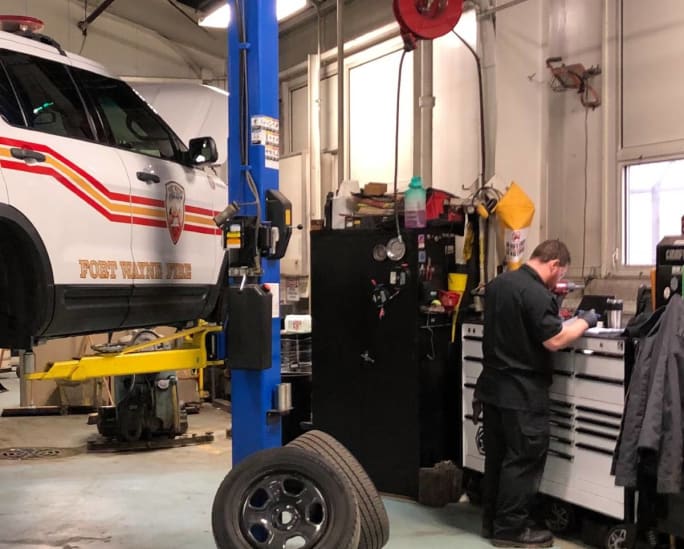
Fort Wayne's in-house maintenance team is able to do most of the work on vehicles on their own, without needing to sublet jobs.
Photo: City of Fort Wayne
The in-house team also did not have to outsource as much work as the contractor did. The contractor outsourced work on vehicles that were no longer within their lifecycles. Subletting this work led to repair costs that were well outside the fleet department’s budget.
Campbell was also able to choose higher quality parts that lasted longer than their generic counterparts.
How an In-House Maintenance Team Leads to Savings
When he did the math, Campbell initially estimated he could save about $300,000 annually because he would be avoiding the outsourced work, low-quality parts purchases, and more. Within the first year, Campbell said he was able to save $700,000. In the second year, he saved $1 million. He is still working to determine how much in the third year, but Campbell estimates it to be about $400,000 in 2021. This latest number is lower due to several accidents in high-cost vehicles and a staff restructure.
With an in-house maintenance team, Campbell realized he didn’t need to sublet work as often as the contractor did. His technicians could do most of the work on their own, meeting timelines they were given. They also completed multiple jobs on each vehicle.
Campbell also saw major savings in welding jobs. In 2017, the year before maintenance was brought in-house, the contractor paid $52,938 for outsourced welding jobs. In 2019, Campbell only needed to outsource $4,160 in welding jobs.
The contractor also included a $500,000 corporate administrative fee that the city was able to eliminate completely when bringing work in-house. Campbell used some of that money to hire more technicians.
When he moved the maintenance work in-house, Campbell increased the parts room inventory by $250,000 more than what the contractor had. That led to quicker turnaround times and fleet availability.
Campbell was also able to avoid outsourcing decal jobs after the city purchased equipment to create its own decals through a new department. Campbell explained that doing this work in-house cut material and labor costs in half.
In addition, technicians were able to complete tasks more efficiently because they were given their own laptops to use at their workstations. Previously, there were not enough laptops to fill out work orders at, leading to techs standing around, waiting for a computer to input their work on, Campbell explained. He said there was a learning curve with this, however, because the older technicians struggled to adjust to the new technology.
The pandemic also helped streamline the work order process, because customers were able to make maintenance and repair requests online and no longer needed to visit the fleet maintenance facility. That is a system the team continues to use, even as the pandemic winds down.
Upcoming Facility Upgrade to Bring More Work In-House
Fort Wayne’s fleet maintenance team is getting a new facility three times the size of its current shop. Campbell explained that the larger size will allow for an alignment rack, something the current facility does not have. Right now, all alignments must be outsourced.
The new fleet facility will be built in an old auto dealership, with office space, conference rooms, and a training center. Campbell was initially looking at building a new facility, which would have come with a price tag of about $30 million. Using the old dealership will cost about half that. The auto dealership property includes a 68,000 sq ft building on seven acres, and construction is expected to be completed in the summer of 2023.
Once the team moves to the new facility, the old building will house seasonal equipment that is currently stored outside. Cold temperatures could cause problems for the equipment. Storing them indoors will eliminate that concern, potentially keeping that equipment from aging more quickly.

Restructuring the Staff
In 2021, Campbell restructured his staffing system. When he switched to an in-house team, he adopted the structure the contractor used, which had different classifications for technicians based on experience and training. That left him limited on who he could hire, because he was only able to have a certain number of technicians at each classification. The classifications also determined the pay scale. Campbell eventually began hiring technicians who did not always fit into the classification they were hired for to meet staffing needs. That would sometimes lead to techs with less experience being paid more than the techs who were more experienced; some of the more experienced technicians were also hired at the entry-level positions, leading them to make less.
The city attorney, the human resources department, and the city comp committee helped Campbell change classification definitions. This allowed for the flexibility to move technicians up if they were exceling at their positions, even if they didn’t meet the specific requirements needed by the previous classification structure. Some of the technicians ended up getting as much as $10 more per hour once staffing was restructured.
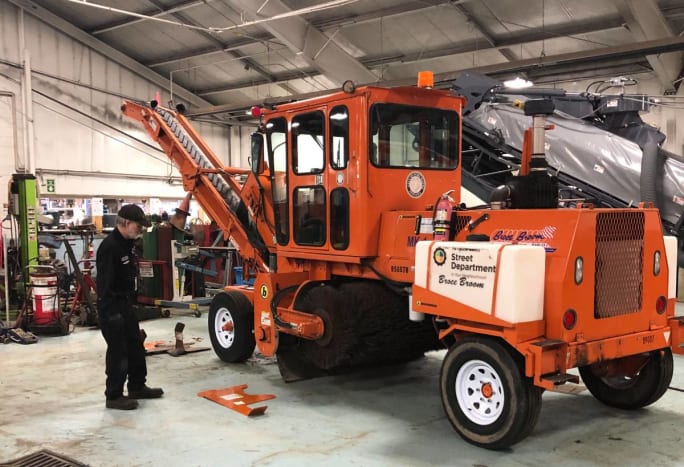
In 2021, Fort Wayne's fleet manager restructured the staff, reclassifying some of the tech positions and pay.
Photo: City of Fort Wayne
Campbell reduced the number of managers on staff when transitioning to an in-house fleet. He reduced the managers from seven people to four people. The funding from the positions he cut helped increase his technician budget, allowing for higher wages, a performance bonus, and a $1,500 per-tech tool allowance.
If he could start over the process of bringing his fleet maintenance work in-house, Campbell said he would go at a slower pace. When he and the mayor decided to make the change, Campbell explained that he rushed through the staffing process, not hiring the right people. He also said he would focus on restructuring the staff up front. The structuring changes were not made until two years into bringing the work in-house. Campbell also suggested crunching the numbers to see which option is cheaper for your team.
“Do your homework. You know what you like and dislike about the contractor, or contract. Look at the dislikes: what do you want to see changed on the contract? Put the pricing together for yourself; know what your price is going to be,” Campbell said.
Subscribe to Our Newsletter
More Operations

Is Keeping Older Fleet Vehicles Really Saving Money?
Is keeping vehicles longer saving money, and what happens when a diagnostic test points to the wrong fix?
Read More →
How Smart Fleet Strategy Can Help Local Government Agencies Do More with Less
Keeping a vehicle longer may ease this year’s budget, but what does it cost the next one? A closer look at fleet decisions can reveal opportunities to reduce spending while protecting essential services.
Read More →
Connect with Government Fleet on LinkedIn
From industry news and fleet management strategies to conversations with peers, Government Fleet's LinkedIn page offers public-sector fleet professionals another way to stay informed and connected.
Read More →
Town of Queen Creek Named Most Successful Fleet Award Winner of Inaugural RTA Fleet Success Awards
Five fleets were honored at RTA Connect 2026 in Chicago for excellence across resource efficiency, intentional culture, risk management, and stakeholder satisfaction.
Read More →
Sponsored•October 14, 2026
A buyer's guide to fleet management software in 2027
Buying fleet management software in 2027 means looking beyond features and price. As fleet operations, technology and expectations evolve, this guide explores what today’s fleet professionals should consider when choosing a system that can deliver value now and adapt to what comes next.
Read More →
Hazard Alerts, Fleet Car Sales Rise and a New Shuttle Concept
Fleet car sales doubled, but the bigger picture tells a different story in this week’s roundup.
Read More →
How St. Johns County Turned Fleet Data Into Better Replacement Decisions
St. Johns County, Florida, had fleet data, but turning it into reliable decision guidance was another matter. Instead of starting over with a new fleet management system, the county connected existing tools and built a scoring system that gives managers an objective look at fleet health.
Read More →
Fleet Forward Conference Introduces One-Day Passes for 2026
New one-day registration lets fleet professionals attend Tuesday, Wednesday, or Thursday, with passes available for $249.
Read More →
ENC Unveils its ZAVIR Medium-Duty Shuttle
Two variants of the concept shuttles were revealed: a low-floor configuration and a high-floor configuration.
Read More →
Could Your Next Fleet Technician Start as an Intern?
What if your next technician hasn’t worked in a fleet shop yet? What fleets are doing to free up time.
Read More →