



At a Glance
Some ways new equipment has improved fleet operations include:
An overhead crane helped a fleet reduce outsourced work
A new exhaust system kept a shop warmer in the winter
New lifts reduced maintenance time.
 MENU
MENU SEARCH
Small tools, step aside: It’s time for the big equipment to shine. Lifts, cranes, and exhaust systems demonstrate their impact on safety, productivity, and downtime.
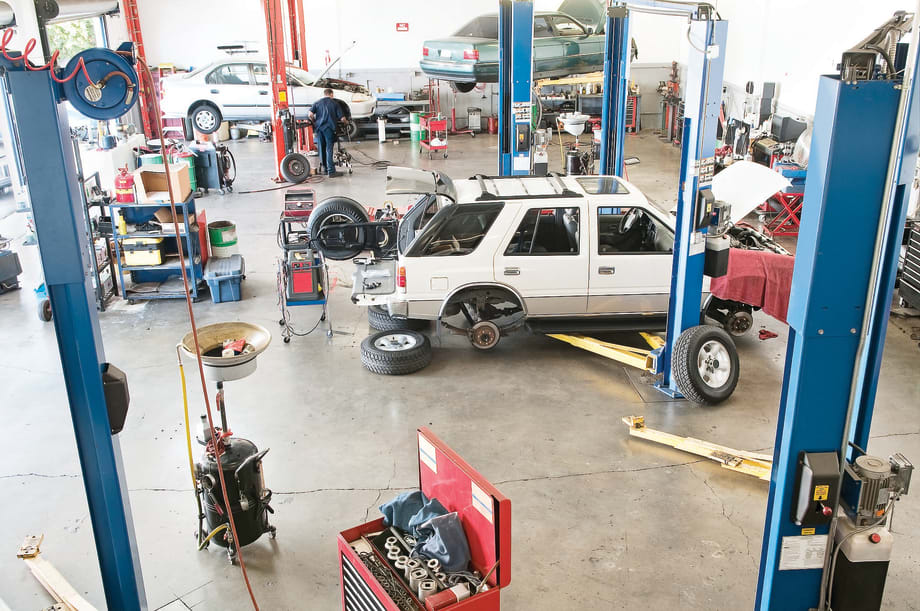
Having the right shop equipment can improve productivity and safety. Photo via istockphoto.com
Having the right shop equipment can improve productivity and safety. Photo via istockphoto.com
Large pieces of equipment such as lifts, cranes, and exhaust systems are the hulks of a shop. But they aren’t just massive in size — they can also have a major impact when it comes to improving how a shop functions. Sometimes, these contributions are large and immediately recognizable, such as moving heavy equipment that couldn’t be raised without it. Others are subtler, such as shaving a few minutes off every job that ultimately totals hundreds of hours of technician time over the course of the year. Both add up to major shop improvements.
For the Town of Castle Rock, Colo., adding a three-ton overhead crane brought work back into the shop. Prior to having the crane, the shop had to outsource much of its heavy equipment repairs, which extended downtime. But with a crane, the fleet could perform work on this equipment in house, which would be both cheaper and faster. The fleet was fortunate to have an overhead crane in another building that wasn’t being used — to acquire it, it spent just $50,000 to build the runners in the shop, then move the crane there.
“The addition of that overhead crane has really helped the fleet technicians work on the heavy equipment we have,” said Paul Colell, fleet services manager, Town of Castle Rock. “In the last two years, I estimate we have saved about 250 hours of labor that we would have had to outsource in the past. We have increased productivity in the shop and increased revenue and reduced equipment downtime. It has also increased safety with the ability to lift heavy items.”
At first, the fleet wasn’t sure how valuable the crane would be. The staff knew it would be nice to have, but staff members soon learned it would be a major contributor to their operation.
“We are a fairly small fleet, with 350 pieces of vehicles and equipment; we were not sure how much use we were going to get with this crane. But after having it for a few months we were finding many more uses for it that we never thought of,” Colell said. “As we started using it, we found many other options for using the crane on light-duty vehicles and equipment as well, many times allowing technicians to work on equipment using the crane and not having to ask other technicians for assistance. It has been a great investment, and we could not live without it.”
The City of Fort Wayne, Ind., saw improvements of another kind: a better working environment for its technicians. The city has two-post lifts for cars, vans, SUVs, pick-ups, and smaller units up to 12,000 lbs. These are used when vehicles are serviced, inspected, and receive exhaust and brake work. “The lifts make it quicker and safer for our technicians to do their work,” said Larry Campbell, CPFP, fleet management director. “Thanks to the lifts, technicians don’t have to roll around on the floor or be hunched over to work on the units.”
Campbell’s fleet also uses mobile column lifts for trucks and larger equipment. These large lifts make it easier to work on equipment such as snow removal trucks, as having equipment lifted in the air allows more room to change the under-body plow blades. “All the lifts have helped improve our shop’s productivity and safety, and have even improved the morale of our technicians,” Campbell said. “We invested in the equipment to make the job easier and safer for the technicians, and that ultimately improves their productivity.”
The City of Fort Wayne’s shop also saw improved conditions as a result of a revised exhaust system. Before, the shop’s in-floor system was in disrepair, so the fleet operated overhead exhaust fans. When it replaced the old system with a functioning in-floor unit with hookups at every bay, some technicians were skeptical, feeling it would take too long to attach the hose to the exhaust pipe. But when the weather turned cold, they saw a major improvement. “Once winter came, they realized the overhead exhaust fans had sucked all of the heat out of the building. With the new system, the shop was a lot warmer and more comfortable.”
Increased productivity is a major benefit of an investment in large shop equipment. Steve Perlstein, sales manager for Mohawk Lifts, explained that the type of lift used can make a major impact on how quickly a job can be done.
For instance, a hydraulically operated mobile lift takes just two minutes or less to lift a vehicle up and down. In comparison, the cycle time for a screw-type mobile lift is five minutes. If the lift raises and lowers four times per day, the total time per day is eight minutes as opposed to 20. In this instance, a hydraulic mobile lift saves 12 minutes per day. For a shop that operates five days per week, that adds up to an hour every week, he explained.
“Sixty minutes per week multiplied by 52 weeks a year equates to an unproductive 52 hours of a shop technician standing next to the lift holding the up (or down) button to cycle the lift,” Perlstein said. “What would any fleet manager do with an extra 52 hours a year? Likely have a more productive shop because he was getting the work out faster.”
Lift manufacturer Rotary Lift has seen a number of fleet and truck maintenance facilities improve productivity as a result of new large shop equipment.
At one large fleet maintenance facility, the addition of a four-post lift enabled technicians to cut the time needed for each maintenance inspection by one hour. Instead of performing six inspections each day, the technicians were able to complete eight. “The new four-post lift helped get each vehicle back on the road quicker, and the facility was able to pay for its new lift in just 86 days based on the decreased labor cost for each inspection,” said Doug Spiller, heavy-duty product manager, Rotary Lift.
In another example, an independent service provider saw its return on investment in less than three months. At its facility, three technicians were on duty 24 hours per day, five days a week. With the introduction of a mobile column lift, those technicians were able to save 160 minutes per shift for a total daily savings of eight hours. “Using the income generated from the extra jobs it was able to complete in those eight hours, plus the corresponding additional parts sales, the shop was able to pay for its lift in just 65 days,” Spiller explained.
A U.S. Army Quick Return on Investment Program (QRIP) study found similar results in time savings, resulting in improved productivity, Perlstein said. Prior to the study, several military shops used hand jacks and jack stands to lift vehicles, which took an average of 40 minutes to set up before repairs could begin. With 10 new lifts, set-up time was reduced to four minutes, expediting service and saving nearly $135,000 in labor, he said.
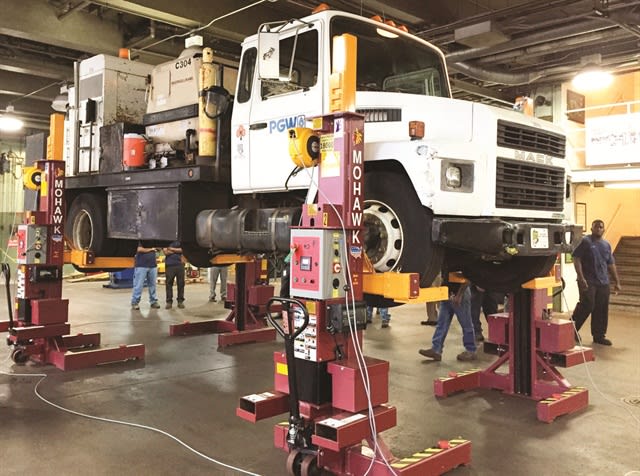
A hydraulically operated truck operates more than twice as fast as a screw-type mobile lift, according to Mohawk Lifts. Photo courtesy of Mohawk Lifts
Safety is another area that can see major improvements as a result of upgrading shop equipment. For instance, with a vehicle lift, technicians have better access to a vehicle’s undercarriage than with jacks or pits. When a vehicle is on a lift, technicians have better lighting by which to do their work, and are less likely to get debris in their eyes and ears than when lying on a creeper.
“The use of vehicle lifts and their accessories frequently decreases the number of accidents and injuries suffered by workers,” Spiller explained. “This results in healthier workers and fewer lost work hours. Over time, many facilities see their workers’ compensation premiums reduced.”
Perlstein agreed. “If shop technicians are working standing upright rather than rolling under a vehicle on a shop creeper, they will be more comfortable at day’s end and have fewer injuries as a result of repeatedly getting up and down, like fatigue and repetitive motion injuries,” he said. “At the same time, better lighting will allow a tech to see a potential breakdown problem before it happens, so they’re making a preventive repair instead of having a vehicle break down when it’s not in the shop.”
Perlstein also pointed out that old equipment may have been manufactured before current safety standards were put in place. Since 1993, responsible lift manufacturers have had their lifts third-party tested and certified by the Automotive Lift Institute (ALI) to confirm they meet industry safety and performance standards. “Some lifts are so old they were manufactured and installed before there was a third-party safety test to confirm compliance with the national safety standard,” he said. “And some are so old they were manufactured and installed before safety locks (load holding devices) became a mandate incorporated into the design of vehicle lifts.”
At Campbell’s shop in the City of Fort Wayne, the fleet invested in Dump-Lok steel braces to improve safety, which are placed between the bed and the frame of the truck to ensure technicians are working safely while the bed is in the air. Technicians can also raise the bed higher, providing them more room to work. “Even though they might have been using the safety that comes with the dump body as well as another locking mechanism under the bed, it still did not look as safe as the dump locks,” Campbell said. “The first set we purchased was always in use. Then, in a safety meeting, the technicians asked if we could get more sets, so we’ve purchased others.”
Investing in large shop equipment may seem like a big step, but much can be gained as a result. With improvements in the areas of safety, technician well-being, downtime, and productivity, it’s worth looking into how that investment can pay off. And, as Colell noted, you might find the equipment to be even more valuable than you first expected.

Fleet car sales doubled, but the bigger picture tells a different story in this week’s roundup.
Read More →
St. Johns County, Florida, had fleet data, but turning it into reliable decision guidance was another matter. Instead of starting over with a new fleet management system, the county connected existing tools and built a scoring system that gives managers an objective look at fleet health.
Read More →
New one-day registration lets fleet professionals attend Tuesday, Wednesday, or Thursday, with passes available for $249.
Read More →
Two variants of the concept shuttles were revealed: a low-floor configuration and a high-floor configuration.
Read More →
What if your next technician hasn’t worked in a fleet shop yet? What fleets are doing to free up time.
Read More →
With more than 8,000 vehicles and pieces of equipment to maintain, the City of Phoenix could not afford to wait for fully trained technicians to walk through the door. Instead, they revamped their entire workforce strategy and showed how public fleets can create their own talent pipeline while preparing existing employees for increasingly complex vehicles.
Read More →
Could a change in how work gets done help your fleet return vehicles to service sooner?
Read More →
Public fleets have more data than ever, but inconsistent records and missing information can still undermine maintenance, replacement, and cost decisions.
Read More →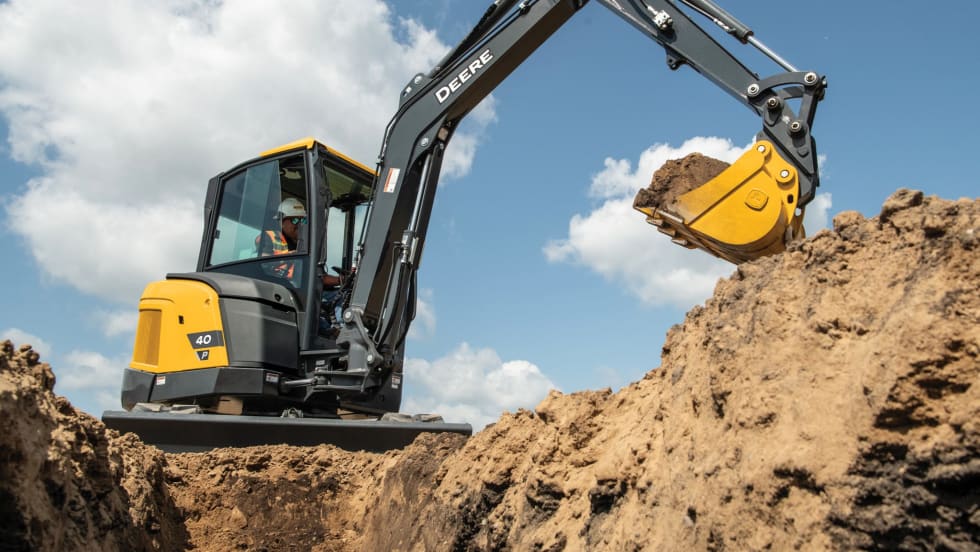
John Deere is adding a compact excavator designed for crews that need to move equipment between jobsites and handle multiple types of work with one machine. The 40 P-Tier weighs less than 10,000 pounds and offers configurable hydraulics, attachment options, and connected fleet-management capabilities.
Read More →
This week, we look at what past Leading Fleet winners can teach us about making progress, plus how to build a business plan your fleet will actually use.
Read More →