




L.A. Police Use Model Test Program
Medium-price cars are receiving more attention from the nation's police departments.
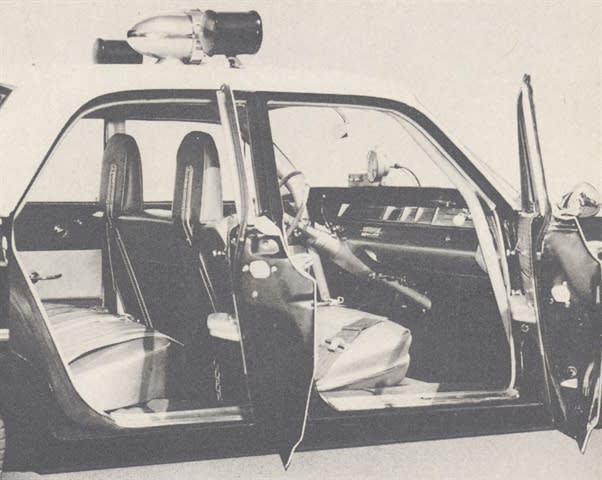
Close-up interior view of a 1963 Oldsmobile Highway Patrol Apprehender shows the special equipment installed by the LAPD in its freeway patrol cruisers.
A few years ago, the only medium-price cars to be found in police departments were those used by the superintendent or other top official. Today, Chevrolet, Ford and Plymouth still dominate the police scene but Chrysler, Dodge, Mercury, Oldsmobile and Pontiac are beginning to make inroads, especially in cars used for patrol work.
As an example, the Los Angeles Police Dept. recently purchased six 1963 standard size Oldsmobile models on the basis of an extensive evaluation program including performance, handling and braking tests.
Conducted under the supervision of Ray Wynne, transportation superintendent for the LAPD, the tests were carried out on a 2.1 mile test track which contains 11 wicked turns and curves, well suited for simulating patrol and high speed chase conditions.
The Oldsmobile tested, a Dynamic 88 sedan, was built with Oldsmobile Police Apprehender equipment, including heavy duty chassis, brakes, shocks, suspension and springs; a power team of a 345 horsepower engine and special Hydra-Matic transmission; and special duty wheels and tires.
In addition, Wynne had the test car equipped with a cage-type roll-bar of two-inch pipe outlining the door openings and anchored directly to the car's frame, headrests designed to eliminate neck injury and seat belts that restrict body movement to a minimum. All cars tested are built to Wynne's special police car and driver safety standards.
The Los Angeles test program should be a model for all police departments. While requiring an extra effort, such a program can readily determine if a particular vehicle meets the needs of a police department.
Under the Los Angeles test program, a team of three skilled drivers, each an expert at putting cars through their paces, evaluates each entry on handling and comfort, braking and performance.
To begin with, the test schedule calls for evaluation of the vehicle's stability, cornering, driver comfort and safety at low or high speed. Each driver takes the test car on several laps of the 2.1 mile track before being timed for four laps. In addition to driver observation, cameras stationed at key points record every movement of the test car as it moves through the 11 turns for further evaluation and study.
To check brake performance, "warm up" stops are made from 90 MPH with two minutes of brake drum heat soaking between each stop. Then comes a panic stop from 60 MPH. The ability of the heated brakes to halt the car is determined and recorded at this point. Within five minutes, the test is repeated, again checking for brake fade, brake pull, or rear axle hop. The final portion of the brake test calls for stopping from 30 MPH to check wheel pulling or brake grabbing under normal brake applications.
Concluding the driving test is a quarter-mile acceleration run which measures the over-all performance in freeway patrol.
The test drivers then examine the cars' interiors for such factors as ease of entry and exit, leg and head room, visibility, location of instruments and over-all comfort. Only alter the exhaustive examination does the Los Angeles Police Dept. purchase replacement requirements and new equipment each year for its fleet of 975 vehicles.
More Articles

New Partnership Aims to Expand Public Digital Hazard Alert System Statewide
The Hawai’i Department of Transportation (HDOT) is expanding advance digital hazard alerts for the public statewide.
Read More →
How St. Johns County Turned Fleet Data Into Better Replacement Decisions
St. Johns County, Florida, had fleet data, but turning it into reliable decision guidance was another matter. Instead of starting over with a new fleet management system, the county connected existing tools and built a scoring system that gives managers an objective look at fleet health.
Read More →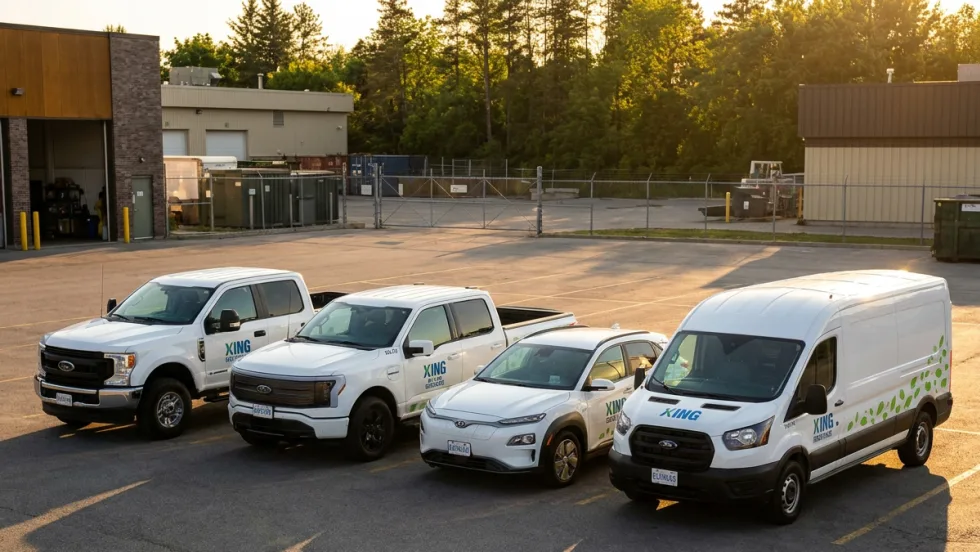
The Missing Link in Fleet Safety: Turning Data into Behaviour Change
Every municipal vehicle tells residents something about how their fleet is being managed. For King Township, Ontario, that visibility made speeding more than a driver performance issue.
Read More →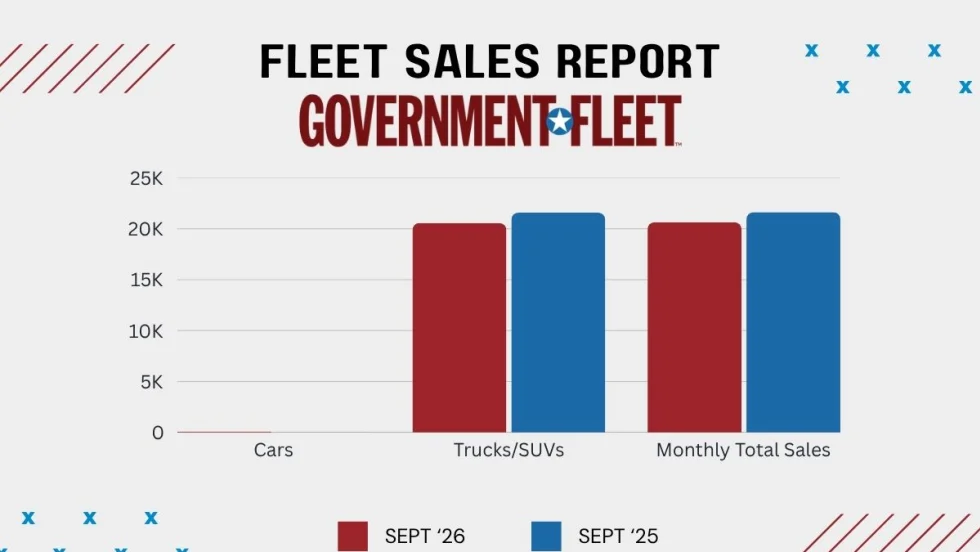
Government Fleet Car Sales More Than Double in September
Government fleet car sales rose 112.8% year over year in September, climbing from 39 to 83 units even as total monthly sales declined 4.5%.
Read More →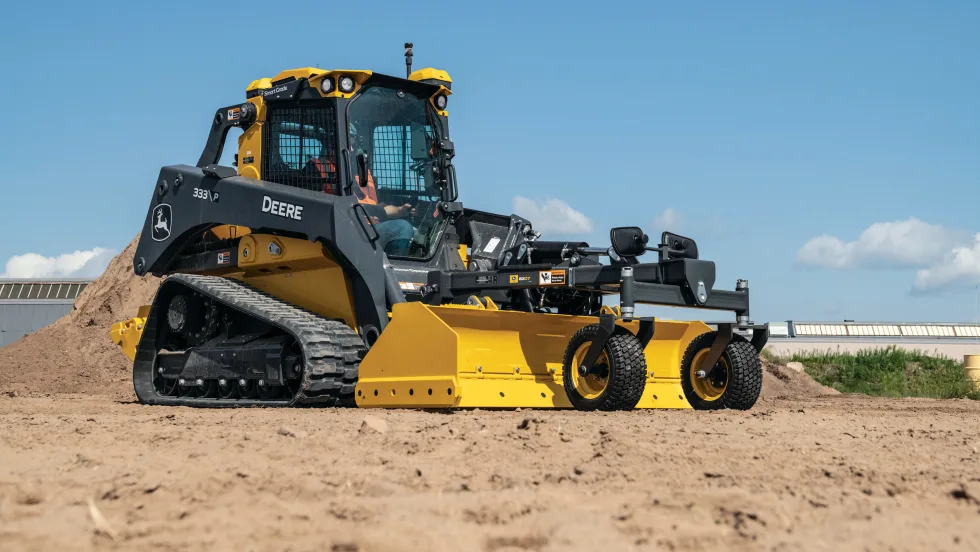
John Deere Adds SmartGrade Box Blades, Fire Suppression Option
John Deere is expanding the capabilities of its compact track loaders with new grading attachments and an equipment protection option. The additions include two SmartGrade box blades for the 333 and 335 P-Tier models and an integrated fire suppression system for large-frame machines.
Read More →
Fleet Forward Conference Introduces One-Day Passes for 2026
New one-day registration lets fleet professionals attend Tuesday, Wednesday, or Thursday, with passes available for $249.
Read More →
ENC Unveils its ZAVIR Medium-Duty Shuttle
Two variants of the concept shuttles were revealed: a low-floor configuration and a high-floor configuration.
Read More →
Could Your Next Fleet Technician Start as an Intern?
What if your next technician hasn’t worked in a fleet shop yet? What fleets are doing to free up time.
Read More →
How Phoenix Is Building Its Next Generation of Fleet Technicians
With more than 8,000 vehicles and pieces of equipment to maintain, the City of Phoenix could not afford to wait for fully trained technicians to walk through the door. Instead, they revamped their entire workforce strategy and showed how public fleets can create their own talent pipeline while preparing existing employees for increasingly complex vehicles.
Read More →
What’s Slowing Your Fleet Down?
Could a change in how work gets done help your fleet return vehicles to service sooner?
Read More →