




Internship Program Targets High School Students
The Napa County (Calif.) fleet team worked with management, the school district, and a local teacher to introduce government fleets to auto shop students.

Roselynne Reyes・Senior Editor
4 min to read
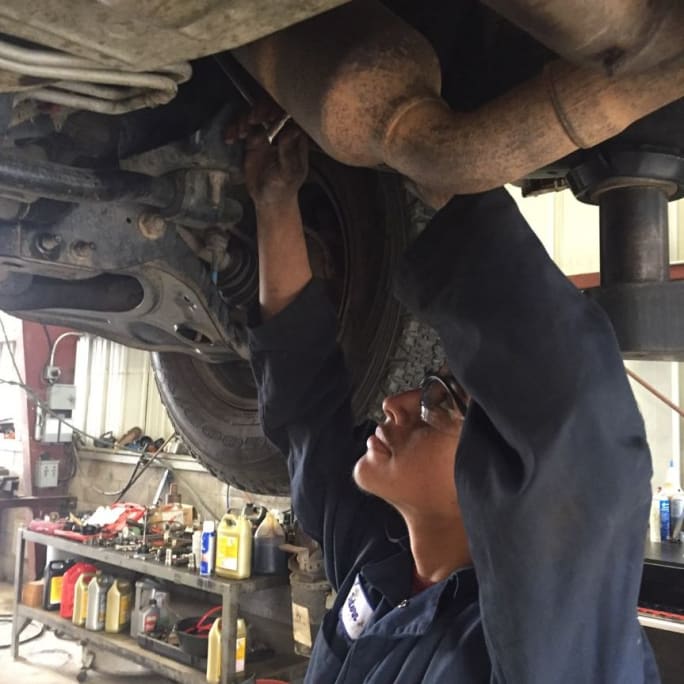 | 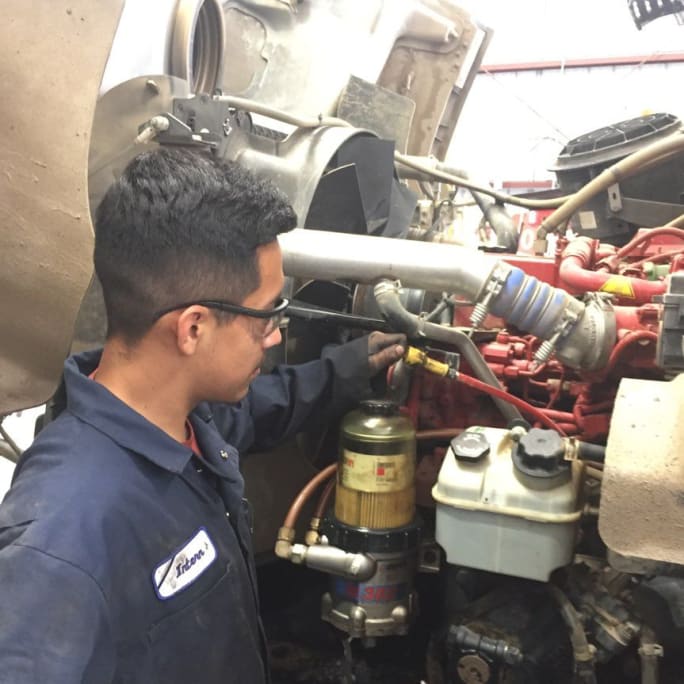 |
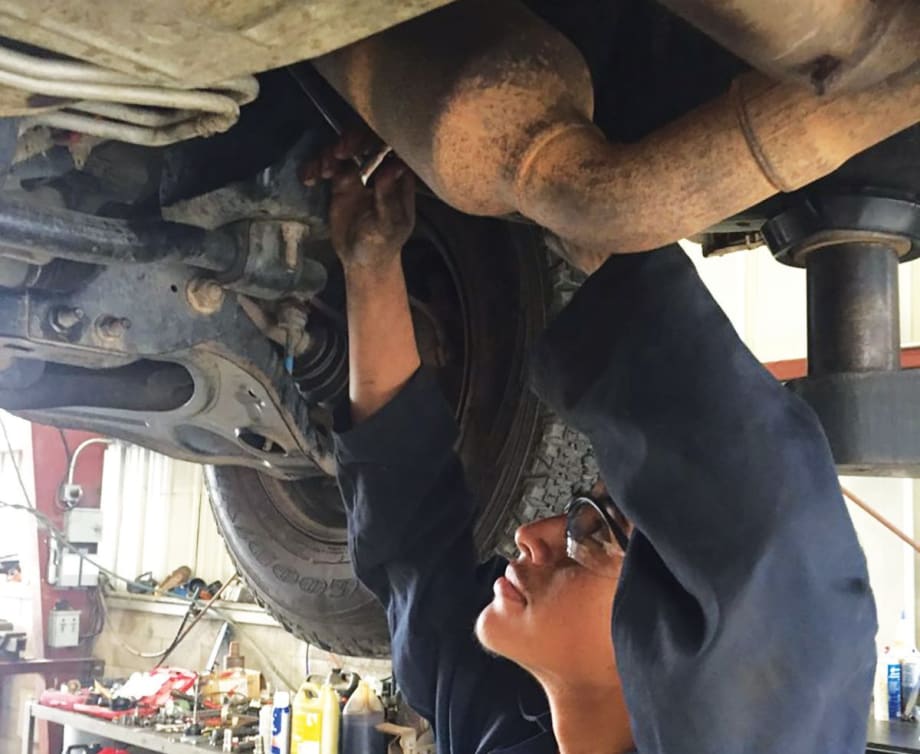
Intern Luis Mendoza learns a variety of jobs in the fleet, including (l-r) changing a starter on a Ford F-150 and performing a complete service on a Frieghtliner 114SD 10-wheeler. | |
In the Napa Valley Unified School District in California, the auto program is shrinking. Since 2011, only one high school in the district has offered an auto shop class — students from other high schools in the district interested in the program are welcome and must travel to this high school to take classes.
Jeff Oster, Napa County fleet manager, and several mechanics on his team had taken auto shop in high school, and decided a high school internship program would be a nice way to give back and offer hands-on experience to students in the program.
County departments have had interns in the past, but Oster explained that there is no classification for high school students. Oster worked with the county’s Human Resources Department to reword the specification for interns to accommade high school workers, keeping it general so other departments could use the same specs if they wanted to start a similar program. Oster also worked with the county’s Risk Management Department to determine how under-18 employees are covered (Are they paid? Are they eligible for workers’ compensation?) and the school district to ensure the internship was compatible with the school day.
Through this program, the students go to their internship instead of auto shop class, and their grade in auto shop is dependent on the feedback given by Oster and the fleet team.
Real World Experience
Oster noted that, for many automotive jobs, a technician may only learn to work with one type of vehicle. But in government fleets, the true benefit is working with many types of equipment and, for an intern, seeing where their interest lies.
“That’s one thing that all government fleets know – we’re a jack of all trades,” Oster explained. “It’s hard for people to get experience in that unless you’ve worked for maybe a rental company.”
Luis, one of the first interns in the program, said he didn’t know anything about the fleet industry until Oster came in and gave a presentation about the county fleet and its internship program. But this position has given him the opportunity to get hands-on experience on a variety of jobs with a variety of equipment. When the school year ended, the fleet team offered Luis the opportunity to stay on as an intern through the summer.
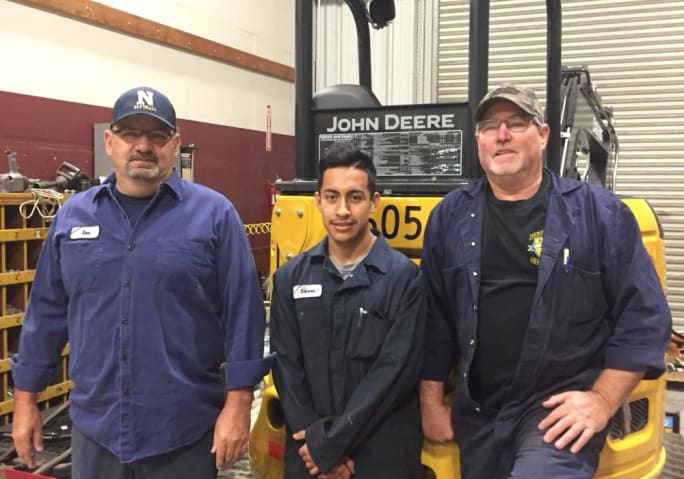
Intern Luis Mendoza (center) works with Mechanics Ron Walston (left) and Richard Stensby (right) to learn what it's like to work on a government fleet.
Photo courtesy of Napa County
“Luis could say ‘I like working on cars and the auto shop, I might change my own oil, but this is not for me, I need to look at something else.’ And that’s all we’re trying to do. I want to give them a little taste of the real world,” Oster explained. “You know, he might even find out that he might be a tractor guy, so he might work for an off-road company because he might not like working on cars. And he might not like any of it, he might go into a totally different direction. But we're just trying to give these students an opportunity to see what this world looks like. And also, if we find a good one like Luis, there’s a possibility of hanging on to him.”
When starting this program, Oster expected this to be these interns’ first real experience in the working world. But lessons about the real world extended beyond the shop. Luis, for example, didn’t have a bank account, so Oster had to walk him through the process of opening an account and setting up payment through direct deposit.
Getting the Team Involved
Oster noted that, without support from his team, the internship program never would have gotten off the ground. Mechanics Richard Stensby and Ronald Walston work directly with the interns, and without their support of the program it would not have been as successful as it is.
With fleets around the country facing a technician shortage and a whole generation of fleet professionals preparing for retirement, building up the next generation is important. Oster noted that him, Stensby, and Walston are around the same age, and will probably retire around the same time.
“Looking forward in the future, who’s going to fit the bill and come behind us to fill those gaps? I think they’re getting harder and harder to find,” he said. “We’re just trying to keep this industry alive.”
Subscribe to Our Newsletter
More Operations

Is Keeping Older Fleet Vehicles Really Saving Money?
Is keeping vehicles longer saving money, and what happens when a diagnostic test points to the wrong fix?
Read More →
How Smart Fleet Strategy Can Help Local Government Agencies Do More with Less
Keeping a vehicle longer may ease this year’s budget, but what does it cost the next one? A closer look at fleet decisions can reveal opportunities to reduce spending while protecting essential services.
Read More →
Connect with Government Fleet on LinkedIn
From industry news and fleet management strategies to conversations with peers, Government Fleet's LinkedIn page offers public-sector fleet professionals another way to stay informed and connected.
Read More →
Town of Queen Creek Named Most Successful Fleet Award Winner of Inaugural RTA Fleet Success Awards
Five fleets were honored at RTA Connect 2026 in Chicago for excellence across resource efficiency, intentional culture, risk management, and stakeholder satisfaction.
Read More →
Sponsored•October 14, 2026
A buyer's guide to fleet management software in 2027
Buying fleet management software in 2027 means looking beyond features and price. As fleet operations, technology and expectations evolve, this guide explores what today’s fleet professionals should consider when choosing a system that can deliver value now and adapt to what comes next.
Read More →
Hazard Alerts, Fleet Car Sales Rise and a New Shuttle Concept
Fleet car sales doubled, but the bigger picture tells a different story in this week’s roundup.
Read More →
How St. Johns County Turned Fleet Data Into Better Replacement Decisions
St. Johns County, Florida, had fleet data, but turning it into reliable decision guidance was another matter. Instead of starting over with a new fleet management system, the county connected existing tools and built a scoring system that gives managers an objective look at fleet health.
Read More →
Fleet Forward Conference Introduces One-Day Passes for 2026
New one-day registration lets fleet professionals attend Tuesday, Wednesday, or Thursday, with passes available for $249.
Read More →
ENC Unveils its ZAVIR Medium-Duty Shuttle
Two variants of the concept shuttles were revealed: a low-floor configuration and a high-floor configuration.
Read More →
Could Your Next Fleet Technician Start as an Intern?
What if your next technician hasn’t worked in a fleet shop yet? What fleets are doing to free up time.
Read More →