





Keep Reading: Navigating Lesser-Mentioned Challenges as a New Fleet Manager
Identifying New Opportunities in Fleet: Q&A with Craig Willingham
Only weeks after stepping into his new role as assistant director of General Services for Chesterfield County, Va., Craig Willingham spoke to GF about what he learned during his time as fleet manager and how he plans to continue supporting fleet services.
August 16, 2023
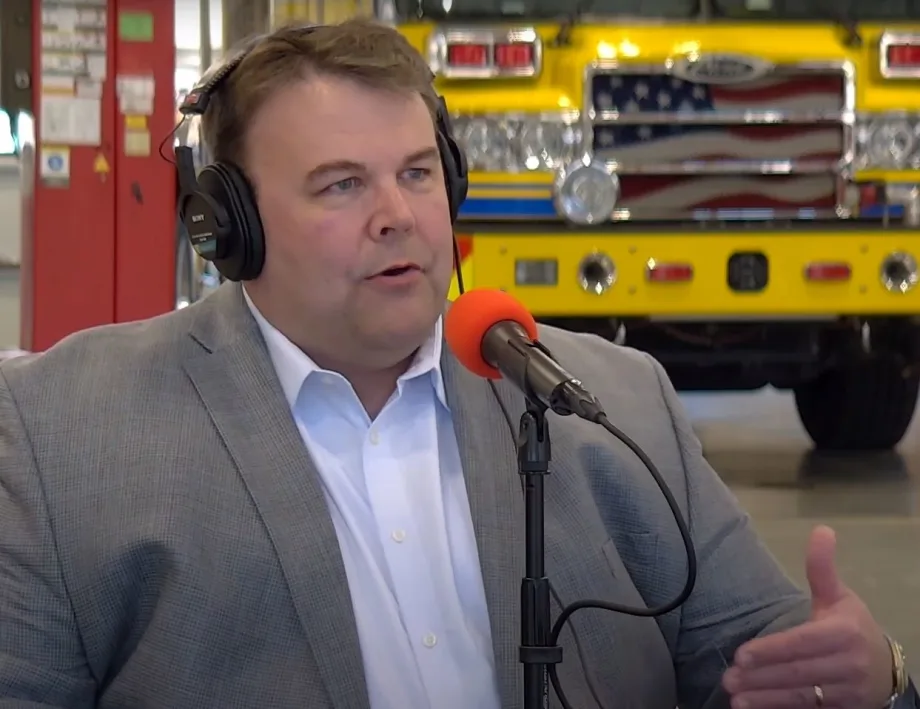
Craig Willingham advises new fleet managers to ask questions and learn as much as you can while also establishing connections with your team and customers.
Photo: Chesterfield County
4 min to read
Only weeks after stepping into his new role as assistant director of General Services for Chesterfield County, Va., Craig Willingham, CAFM, spoke to GF about what he learned during his time as fleet manager with the county and how he plans to continue supporting fleet services. Willingham will be guiding in the General Services Department by providing leadership, financial, strategic planning, and personnel management.
GF: First congratulations on your new role. What are some things you’ve learned from your time as fleet manager that you’ll be using to succeed in this new position?
Willingham: Thank you. I’m looking forward to serving my community from a different perspective and gaining new experiences while forging new relationships. I’ve learned so much since arriving at Chesterfield County in 2018, but establishing relationships with a variety of stakeholders and understanding the needs of our customer departments should help me be as successful as possible in my new role.
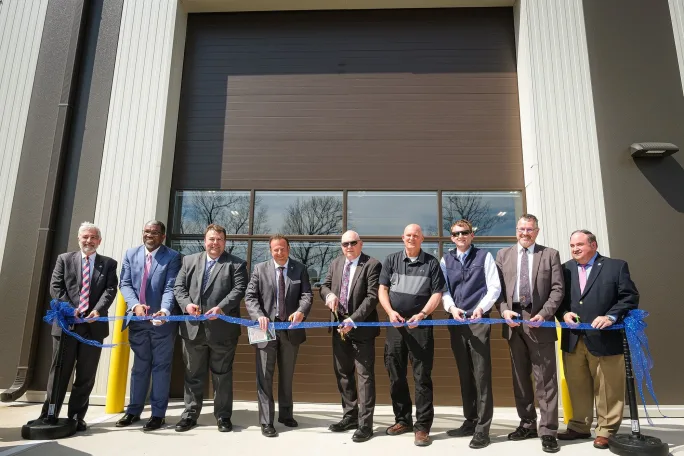
Willingham participates in the ribbon cutting for the 16-bay, roughly 34,000-square foot fleet services facility.
Photo: Chesterfield County
GF: What first attracted you to fleet management and what was one of the most surprising parts of the industry when you first started?
Willingham: I actually found fleet management by complete accident. In 1998, I was working at a paper mill while going back to college. Just before Thanksgiving, the mill was purchased by another company, and I found myself out of work. I got a lead from a mutual friend about an over-the-road trailer company that needed an operations assistant. I looked into it, got an interview, and was given a chance. Within two years, I was promoted to operations manager, and the experiences I gained there laid the foundation for me to seek future opportunities in the private sector, municipal, university, and county fleets. The most surprising part when I first started in this career was how much there is to learn, and even 25 years later, I’m continuing to learn new aspects about fleet management.
GF: What have been some of the biggest changes you’ve seen during your time as fleet manager?
Willingham: Three come to mind:
The increasing complexity of vehicles and their features.
Telematics.
Improvements in alternative-fueled vehicle technology. Not just EVs but LP and CNG.
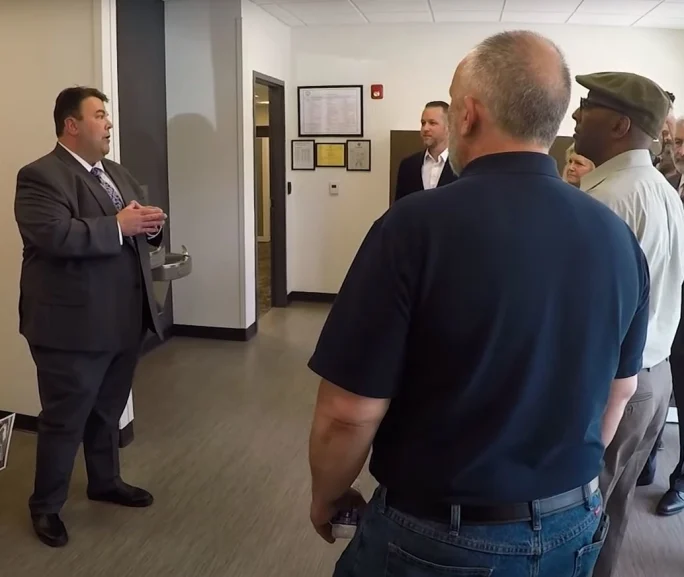
A tour through the fleet facilities.
Photo: Chesterfield County
GF: What were some of the biggest challenges you faced as a fleet manager?
Willingham: Before 2020, I would say managing through inclement weather events would have been the most challenging. However, the past three years of adapting to and working through a pandemic, navigating continued supply chain issues, managing various vehicle ordering windows that are narrowing and unpredictable, experiencing the effects of the Colonial Pipeline cyber-attack, adjusting to significant inflation, and trying to anticipate future costs have easily been the biggest challenges of my 25-year career.
GF: What is your advice to new fleet managers?
Willingham: Ask questions and learn as much as you can; network with your industry peers; establish connections with your team and customers; and communicate with leadership.
GF: What are you most proud of during your time as fleet manager for Chesterfield and how can other fleets achieve those same goals?
Willingham: There are so many things of which my team and I are proud. From expanding our fleet of liquid propane vehicles to getting the first dedicated electric buses in the Richmond, Virginia area, to earning industry recognition as a Top 20 leading fleet and a Top 50 green fleet for two of the past three years and a Top 100 fleet for the past five consecutive years, these are notable achievements.
However, building our new 16-bay, 34,000-square-foot heavy shop and administrative facility that opened earlier this year is what makes me most proud because it was a team effort to get this feat accomplished, and it is the first new fleet facility for our operation in over 40 years. In order to achieve similar goals, a fleet will need to identify new opportunities to explore, find success, and promote its accomplishments. Whether the accomplishments are small or large in terms of scale, each one is a precursor for the next one, and this is how you establish momentum for continued success.
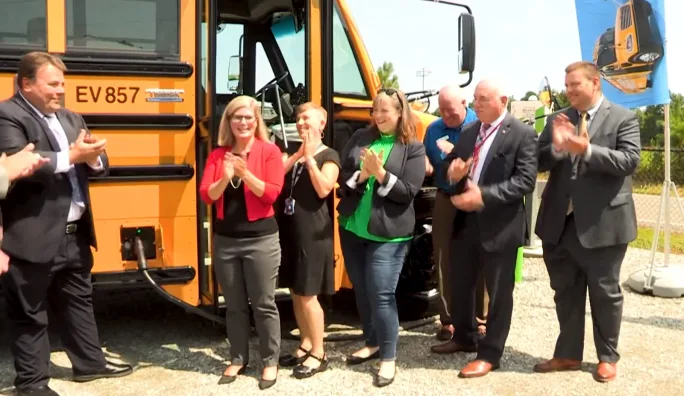
Chesterfield became the first school district in metro Richmond to receive electric school buses.
Photo: Chesterfield County
GF: What should a fleet manager never say to their team?
Willingham: A fleet manager should never say that he or she is not interested in their team’s opinion. It’s a certified recipe for failure.
GF: What do you think defines a good fleet?
Willingham: It takes having a great team of professionals who have a purpose and care about their work and their customers. It also takes strong support from leadership who backs you in the direction and initiatives you want your fleet to move toward. Most importantly, it takes the support of your customers, because if they can’t succeed in the field, your fleet can’t succeed.
GF: How will you still be supporting fleet services in your new role?
Willingham: Fleet Services will be one of several divisions I will be guiding in the General Services Department by providing leadership, financial, strategic planning, and personnel management.
Subscribe to Our Newsletter
More Operations

Is Keeping Older Fleet Vehicles Really Saving Money?
Is keeping vehicles longer saving money, and what happens when a diagnostic test points to the wrong fix?
Read More →
How Smart Fleet Strategy Can Help Local Government Agencies Do More with Less
Keeping a vehicle longer may ease this year’s budget, but what does it cost the next one? A closer look at fleet decisions can reveal opportunities to reduce spending while protecting essential services.
Read More →
Connect with Government Fleet on LinkedIn
From industry news and fleet management strategies to conversations with peers, Government Fleet's LinkedIn page offers public-sector fleet professionals another way to stay informed and connected.
Read More →
Town of Queen Creek Named Most Successful Fleet Award Winner of Inaugural RTA Fleet Success Awards
Five fleets were honored at RTA Connect 2026 in Chicago for excellence across resource efficiency, intentional culture, risk management, and stakeholder satisfaction.
Read More →
Sponsored•October 14, 2026
A buyer's guide to fleet management software in 2027
Buying fleet management software in 2027 means looking beyond features and price. As fleet operations, technology and expectations evolve, this guide explores what today’s fleet professionals should consider when choosing a system that can deliver value now and adapt to what comes next.
Read More →
Hazard Alerts, Fleet Car Sales Rise and a New Shuttle Concept
Fleet car sales doubled, but the bigger picture tells a different story in this week’s roundup.
Read More →
How St. Johns County Turned Fleet Data Into Better Replacement Decisions
St. Johns County, Florida, had fleet data, but turning it into reliable decision guidance was another matter. Instead of starting over with a new fleet management system, the county connected existing tools and built a scoring system that gives managers an objective look at fleet health.
Read More →
Fleet Forward Conference Introduces One-Day Passes for 2026
New one-day registration lets fleet professionals attend Tuesday, Wednesday, or Thursday, with passes available for $249.
Read More →
ENC Unveils its ZAVIR Medium-Duty Shuttle
Two variants of the concept shuttles were revealed: a low-floor configuration and a high-floor configuration.
Read More →
Could Your Next Fleet Technician Start as an Intern?
What if your next technician hasn’t worked in a fleet shop yet? What fleets are doing to free up time.
Read More →