




How to Develop an Accurate Shop Rate
Setting shop rates can be a delicate balancing act between charging prices adequate enough to cover shop expenses while remaining competative with local competition. The process requires careful data analysis and computation.

The large public sector fleets that operate maintenance shops actually run a business with a multi-million dollar operating cost. They serve as stewards of the equipment and funds required to maintain that equipment. To run a successful shop, the fleet or shop manager must understand the big picture.
The range of responsibilities includes budgeting, the purchase and disposal of equipment, technician supervision, shop layout, warranty recovery, safety, maintenance policies, and benchmarking standards. Within all of these areas are the costs of running a service shop operation. These costs also determine your shop's ability to compete with private automotive (light and heavy equipment) repair shops.
Determine Unique Services
The initial step in developing a shop budget and rate structure is determining the difference between your operation and that of the competition — private auto repair businesses. Public sector maintenance shops are compared constantly to these competitors. They are the benchmark to use to determine your efficiency. You must understand your unique services in order to define your core services and costs.
Some common services public sector shops offer include new equipment specification writing, vehicle fueling, equipment insurance, customer vehicle pick-up and delivery, storage and installation of studded tires and chains during inclement weather, and other issues that come with managing a government or non-commercial fleet department. The services that public sector and commercial shops perform in common are the government shop's core business practices. The services unique to public sector shops are non-core business practices and are performed as a customer service. They should be accounted for separately in your shop's financial records.
Detail Shop Expenses
The next step in setting an appropriate shop rate is detailing expenses. Chart 1 lists all the costs of running the City of Everett, Wash., and Everett Transit motor vehicle department shop. These costs include labor, fuel, parts, building rental, capital reserves, and support expenses such as fees to your public agency for legal, purchasing, accounting, and risk management services. Once assembled, the list is divided between core and non-core service costs. It is important to understand that not every government shop may incur all of these expenses, particularly in comparing one shop's fees to another's. If your costs are different, you need to look at the details of the costs. For example, one agency with a similar number of vehicles and in a similar climatic region has a rate of $40 per hour and yours is $70 per hour. The difference may be that you are paying a building rental, while the other does not. If you are required to perform a customer-requested service such as fueling, your staffing costs may be higher. When a shop states that it has had the same rate for several years, you can bet it is not accounting for all its costs. The costs of labor, parts, and fuel, for example, continue to rise and so must the shop rate. To fairly compare one operation to another, differences in expenses must be understood and separated out.
Recapture Your Costs
Now how do you recapture these costs? Chart 2 outlines three basic reimbursement methods:
Per hour or mile usage per vehicle.
Flat rate by vehicle class.
Hourly shop rate.
The costs of activities provided as a customer service (e.g. fuel, accidents, and rental vehicles), can be recaptured through other individual fees, surcharges, or mark-ups. The bottom line is recapturing the total amount of costs by one of the methods previously described. Less than that amount results in a budget shortfall; more than that and customers are being overcharged. In Everett, a combination of shop rate (to recapture core costs) and a separate fee for the additional (non-core) services not performed by the automotive shop down the street (such as fueling, spec writing, etc.) is used.
There are three cost centers at the Everett operation: vehicle maintenance/repair, parts operation, and electronic (radio) repair. All core costs are divided between these three operations. Non-core costs are recaptured by a fuel surcharge and a 9.767 percent per labor dollar that pays for the warranty, environmental management programs, equipment specification writing, and equipment disposal.
Calculate Billable Hours
To determine the rate charged to customers for technician services in the equipment repair shop, first calculate the total billable hours available. Shop operations in Everett will be used as an example.
The total possible technician hours per year in the shop are 29,120 (14 technicians x 2,008 hours). After deducting sick leave, vacation, meetings, clean up, training, etc., 23,438 billable hours remain. Divide this total by the equipment repair shop total operating cost of $1,676,235 to set a per hour technician shop rate of $71.52. Everett's electronic shop rates are determined by this process as well. Then, compare your rates to those of local commercial shops. The difference between the rates (average in Everett was $79.67) is profit. Since public sector shop rates are set to simply cover operating costs, and not to earn a profit, those rates must be lower than commercial shops. If the public sector shop rate is equal to or higher than its commercial competition, the government shop's operating costs are too high. Be sure to watch the billable hours per tech very closely, since only direct time spent on a maintenance function is billed to customers. If one or two techs are lost due to injury, temporary help must be secured. In those cases, Everett has hired local community college senior auto/diesel tech students for short periods of time. This practice was good for the student and helped the operation.
Everett's parts room operating costs total $239,497. These costs are reduced by a percentage of the markup taken on fuel management and sublet/accident services provided to customers. To recapture the operating costs, a mark-up is charged on parts used by the customer. A mark-up of 30 percent of the total parts cost of $797,121 covers the parts room operating costs. The benchmark average is between 25 and 35 percent.
Each Everett cost center pays a rental fee, based on local market values, for the space the center occupies. Each center staff is aware that added overhead may increase customer rates to the point of not being competitive, so they focus on being as efficient as possible and avoid requesting additional space or personnel.
Assemble Fee List
At the beginning of each year, create a list of shop fees and distribute it to each department. Surcharges, fees, and mark-ups for non-core value-added services are computed to cover administration and handling costs. Shop expenses for hazardous waste disposal, warranty, and spec writing are recaptured through a 9.767 percent fee included on every billable labor hour. To determine pool vehicle rental fees, the department surveyed local vendors and selected the lowest rate. Every year, each rental vehicle is evaluated for maintenance, insurance, and depreciation costs. The rental fee is adjusted accordingly.
These are the very basics of developing a shop rate. High shop rates can be reduced through increasing service intervals, as long as doing so does not increase maintenance costs. Increasing service intervals decreases the number of hours the equipment is in your shop. Everett benchmarks the number of hours every vehicle is in its shop against a Navy standard to determine if changes in service intervals have caused increased maintenance time in excess to the Navy standard.
An additional area to examine is staff size. Is the shop workload great enough to support the staff? The question to ask is: "Do I have enough work to keep the number of technicians I have billing out time?" If not, reducing the work force and/or not replacing retiring technicians should be considered.
Everett uses FASTER CS as its fleet management system. Monthly audits are performed on the amount billed to customers in relation to costs as recorded in the city's financial system and the income deposited in the department's account. These three amounts should be very close. This rate-setting process takes time, but is not difficult. The primary objectives are controlling costs, keeping equipment on the road, and ensuring equipment safety. If you are meeting those goals, your costs should be competitive.
More Operations

Hazard Alerts, Fleet Car Sales Rise and a New Shuttle Concept
Fleet car sales doubled, but the bigger picture tells a different story in this week’s roundup.
Read More →
How St. Johns County Turned Fleet Data Into Better Replacement Decisions
St. Johns County, Florida, had fleet data, but turning it into reliable decision guidance was another matter. Instead of starting over with a new fleet management system, the county connected existing tools and built a scoring system that gives managers an objective look at fleet health.
Read More →
Fleet Forward Conference Introduces One-Day Passes for 2026
New one-day registration lets fleet professionals attend Tuesday, Wednesday, or Thursday, with passes available for $249.
Read More →
ENC Unveils its ZAVIR Medium-Duty Shuttle
Two variants of the concept shuttles were revealed: a low-floor configuration and a high-floor configuration.
Read More →
Could Your Next Fleet Technician Start as an Intern?
What if your next technician hasn’t worked in a fleet shop yet? What fleets are doing to free up time.
Read More →
How Phoenix Is Building Its Next Generation of Fleet Technicians
With more than 8,000 vehicles and pieces of equipment to maintain, the City of Phoenix could not afford to wait for fully trained technicians to walk through the door. Instead, they revamped their entire workforce strategy and showed how public fleets can create their own talent pipeline while preparing existing employees for increasingly complex vehicles.
Read More →
What’s Slowing Your Fleet Down?
Could a change in how work gets done help your fleet return vehicles to service sooner?
Read More →
Can Public Fleets Trust the Data Driving Their Decisions?
Public fleets have more data than ever, but inconsistent records and missing information can still undermine maintenance, replacement, and cost decisions.
Read More →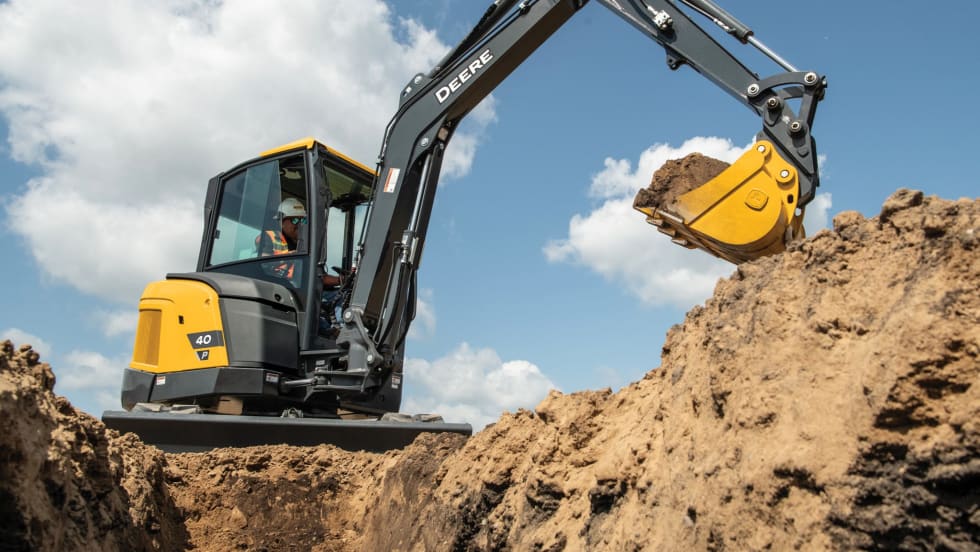
John Deere Introduces 40 P-Tier Compact Excavator
John Deere is adding a compact excavator designed for crews that need to move equipment between jobsites and handle multiple types of work with one machine. The 40 P-Tier weighs less than 10,000 pounds and offers configurable hydraulics, attachment options, and connected fleet-management capabilities.
Read More →
How Leading Fleets Improve and Why Business Plans Matter
This week, we look at what past Leading Fleet winners can teach us about making progress, plus how to build a business plan your fleet will actually use.
Read More →