





Up Next: The Future of Government Fleet Technicians with Mike Cleary
How Government Fleets Helped Build America
As the United States celebrates its 250th anniversary, this look back explores how government fleets evolved from horse-drawn wagons to specialized vehicles that keep communities running today.
July 2, 2026
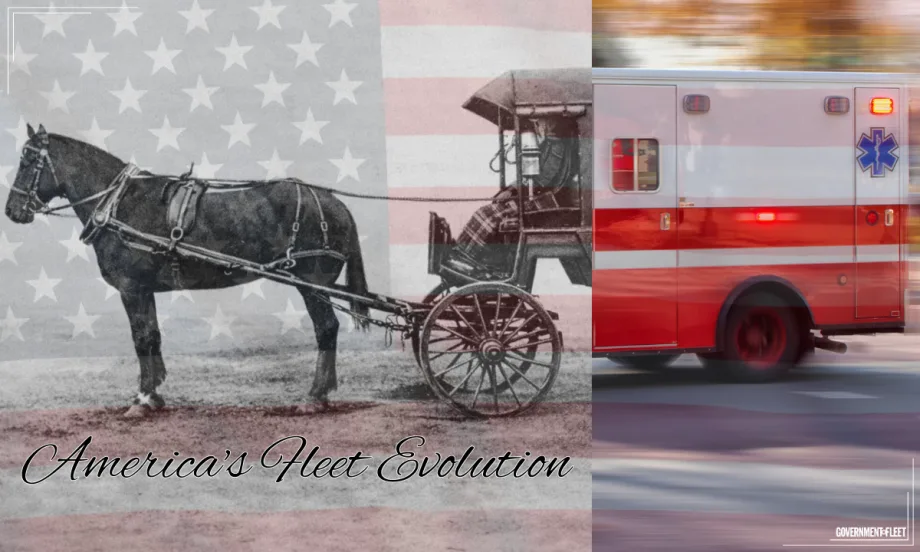
America's first motorized ambulance vehicle was electric-powered, carried a stretcher and medical supplies, and reached up to 16 mph.
Credit:
NYC Department of Records & Information Services/Government Fleet
3 min to read
Before telematics, data analytics, or motors, government fleets lived in stables.
For generations, government fleets have quietly supported the daily work of building, maintaining, and protecting communities. From horse-drawn wagons to modern public works trucks, fleet vehicles have helped shape the nation Americans know today.
As America turns 250, we are looking back at where government fleets began in the United States and celebrating how far we have come.
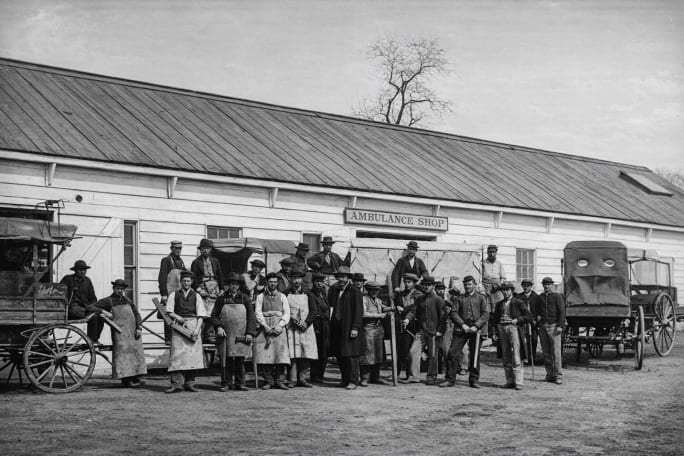
Pictured is a Civil War-era ambulance garage, circa 1865, where technicians repaired broken axles and wheels, restocked medical supplies, and provided care and feeding to the teams of horses.
"Washington, D.C. Workmen in front of the Ambulance Shop"
Credit:
Library of Congress, Call #LC-B817- 7834
Horse-Drawn Fleets and Emergency Response
Before the invention of the motor, humans had to transport items themselves or with the help of horses.
Fire horse fleets were America’s first firetrucks that helped pull steam-powered fire engines. Before the advent of the steam engine, fire engines were man-powered and required many volunteers to haul them to a fire and pump them.
In 1832, the New York Mutual Hook and Ladder Company No. 1 became the first municipal firehouse to purchase a horse to pull their engine.
The Great Chicago Fire of 1871 was fought using fire horse fleets. Retiring its last fire horses on February 5, 1923, Chicago became the first major U.S. city with a fully motorized firefighting fleet.
New York City was the first municipality in the United States to mount a policeman on a horse in 1858. The Boston Police Department followed suit in 1873, and San Francisco in 1874.
While many cities have since eliminated mounted patrols, some are still assigned to Federal Parks in Washington, DC, NYC, and San Francisco. The United States Park Police Horse Mounted Patrol is one of the oldest mounted police units in the country, established in 1934.
Making Way for Emergency Medical Services
In 1861, President Lincoln established the U.S. Sanitary Commission, paving the way for a structured, coordinated emergency medical response model.
After seeing success with triage and organization during the Civil War, Congress passed the Ambulance Act of 1864, which required the establishment of a “uniform system of ambulances in the armies of the United States.”
The first civilian ambulance service was launched the following year, in 1865, at Cincinnati's Commercial Hospital. This initiative would make EMS response a public responsibility for the first time in America’s history.
Chicago would become the first city in the United States to deploy a motorized ambulance in 1898 at the Michael Reese Hospital.
Today's ambulance fleets continue a tradition that began more than 160 years ago, bringing emergency medical care directly to people in need.
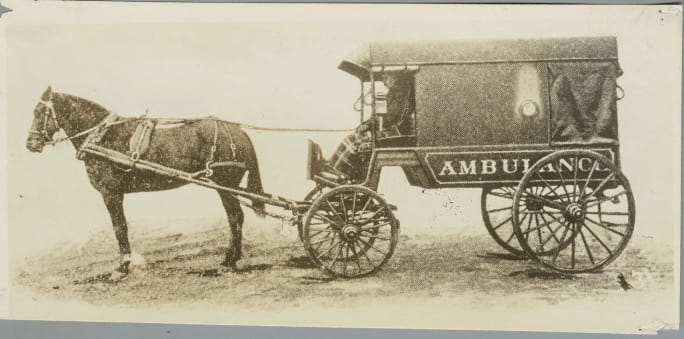
New York City would launch the first municipal ambulance service in 1869 at Bellevue Hospital.
Credit:
NYC Department of Records & Information Services
Welcome the Automobile: A New Era for Fleet
On October 1, 1908, the Ford Model T was introduced and famously “put the world on wheels.” At $850 a piece, the Model T would be the first mass-produced vehicle affordable enough for middle-class America to purchase.
Core Specifications for the Model T included:
- Engine: 20–22 horsepower, 177-cubic-inch, inline 4-cylinder engine
- Top Speed: 40–45 mph
- Weight: ~1,200 pounds
- Materials: Constructed with durable and lightweight vanadium alloy steel
- Controls: Utilized a unique pedal setup (left for forward, middle for reverse, right for brake) with the throttle controlled via a lever on the steering wheel [1, 2, 3, 4]
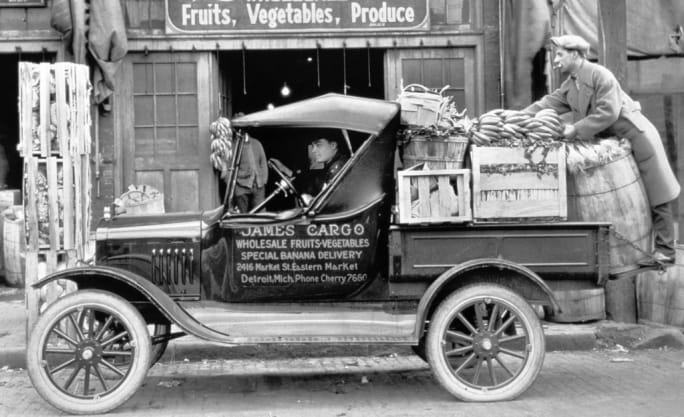
The Model TT is widely regarded as the world's first mass-produced work truck.
Credit:
Ford
The Akron Police Department of Ohio was the first to use a motorized, battery-powered paddy wagon in 1899.
While the Model T would change personal transportation for Americans, the Model TT would change the future of municipal fleets. The Model TT would be used as:
- Dump trucks
- Garbage trucks
- Utility trucks
- Street maintenance vehicles
- Water department trucks
- Snowplows (later adaptations)
This was the start of specialized municipal vehicles.
From horse-drawn wagons to connected vehicles equipped with AI and alternative fuel technologies, government fleets have continually evolved alongside the nation they serve. While the vehicles have changed dramatically over the past 250 years, the mission remains familiar: keeping communities safe, connected, and moving forward.
Subscribe to Our Newsletter
More Operations

Hazard Alerts, Fleet Car Sales Rise and a New Shuttle Concept
Fleet car sales doubled, but the bigger picture tells a different story in this week’s roundup.
Read More →
How St. Johns County Turned Fleet Data Into Better Replacement Decisions
St. Johns County, Florida, had fleet data, but turning it into reliable decision guidance was another matter. Instead of starting over with a new fleet management system, the county connected existing tools and built a scoring system that gives managers an objective look at fleet health.
Read More →
Fleet Forward Conference Introduces One-Day Passes for 2026
New one-day registration lets fleet professionals attend Tuesday, Wednesday, or Thursday, with passes available for $249.
Read More →
ENC Unveils its ZAVIR Medium-Duty Shuttle
Two variants of the concept shuttles were revealed: a low-floor configuration and a high-floor configuration.
Read More →
Could Your Next Fleet Technician Start as an Intern?
What if your next technician hasn’t worked in a fleet shop yet? What fleets are doing to free up time.
Read More →
How Phoenix Is Building Its Next Generation of Fleet Technicians
With more than 8,000 vehicles and pieces of equipment to maintain, the City of Phoenix could not afford to wait for fully trained technicians to walk through the door. Instead, they revamped their entire workforce strategy and showed how public fleets can create their own talent pipeline while preparing existing employees for increasingly complex vehicles.
Read More →
What’s Slowing Your Fleet Down?
Could a change in how work gets done help your fleet return vehicles to service sooner?
Read More →
Can Public Fleets Trust the Data Driving Their Decisions?
Public fleets have more data than ever, but inconsistent records and missing information can still undermine maintenance, replacement, and cost decisions.
Read More →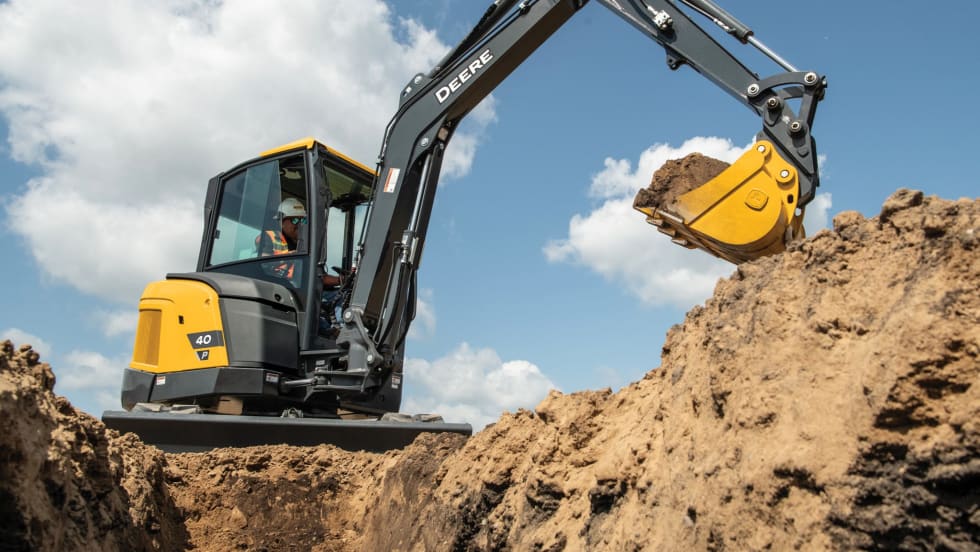
John Deere Introduces 40 P-Tier Compact Excavator
John Deere is adding a compact excavator designed for crews that need to move equipment between jobsites and handle multiple types of work with one machine. The 40 P-Tier weighs less than 10,000 pounds and offers configurable hydraulics, attachment options, and connected fleet-management capabilities.
Read More →
How Leading Fleets Improve and Why Business Plans Matter
This week, we look at what past Leading Fleet winners can teach us about making progress, plus how to build a business plan your fleet will actually use.
Read More →