



Fleets Find Benefits in Take-Home Programs
While some vehicle take-home programs are falling victim to cost-cutting measures, other law enforcement agencies find the practice offers valuable benefits, including greater public police presence and faster response times.

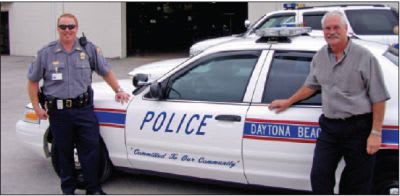
In addition to improved response rates, maintenance costs are reduced as part of a take-home vehicle program said Daytona Beach, Fla., Police Department Fleet Manager Jon Crull (right).
Take-home vehicle programs are growing in popularity among law enforcement agencies as departments have increasingly been able to justify the costs and benefits of such a fleet vehicle strategy.
In some communities, the battle over take-home vehicle use has become political. The reality is a take-home vehicle program can offer a sustained, measured financial value according to Hollywood Fla., Police Department Public Information Officer Carlos Negron. And the benefits go well beyond simple financial considerations.
Benefits Include Timely Response
According to Negron, a take-home program benefit eliminates the need for a deputy to drive his or her vehicle to the police station first to pick up a cruiser and then proceed to a call.
“You’re talking about responding to an immediate need, and the time it takes to pick up that vehicle could make the difference between life and death,” Negron said. “So if an officer is able to take the vehicle home, they can more quickly respond to a need.”
Beyond improved response rates is the benefit of reduced maintenance costs as part of a take-home vehicle program said Daytona Beach, Fla., Police Department Fleet Manager Jon Crull. Daytona Beach. Police Department’s take-home vehicle program was instituted in 1999 and since then maintenance costs have fallen by 40 percent.
The drop in maintenance costs is partially based on previous vehicle replacement demands. Before the take-home program was developed, fleet vehicles in Daytona Beach were utilized on a 24-hour per-day basis. Most vehicles were turned over every two years. Now, department vehicles are driven an average of seven to eight years as part of the fleet,Crull said.
Each qualified Daytona Beach officer and sergeant is assigned a particular vehicle, leading to a drop in maintenance costs, said Crull. “The staff takes personal ownership of their vehicles, maintenance, and the care and cleanliness of that vehicle.”
Police Group Issues Perspective
The International Association of Police Chiefs (IACP) developed a Perspective piece on take-home cruisers, published on its Web site and distributed to members in 2006. The document listed officer, agency, and community benefits while pointing out potential drawbacks.
The notable benefits listed included officers’ ability to keep equipment in one place without moving it from cruiser to cruiser, increased time efficiency, better response time to emergency calls, and increased officer visibility and levels of enforcement. Since a police radio must be activated while a take-home cruiser is used, officers are obligated to take additional enforcement actions when appropriate.
For some agencies, take-home vehicles provide a positive recruiting tool to attract top law enforcement talent to the community, given the competitive market for such personnel. The take-home vehicle program can also be a positive bargaining point with a police union and can be an added benefit to an office employment package.
Agencies Justify Additional Costs
Many departments have been successful in not only justifying additional costs related to take-home programs, but in many cases have decreased the overall costs. The Oxford (Ohio) Police Department implemented a take-home vehicle program for police cruisers in 1997. In a 2000 audit, the Ohio State Auditor’s Office determined the program was fiscally sound in management and implementation.
Officers living within the city and township limits are assigned a cruiser kept at the officer’s residence. The Oxford Police Department has achieved success in extending the cruiser’s life while reducing major mechanical maintenance with such a policy.
Fleet Manager Sgt. Matt Franke believes all parties following the state audit view the program favorably. That audit gave the department and its take-home vehicle program increased legitimacy.
“There are cost savings associated with this program that aren’t obvious to the untrained eye, but we have seen the benefits,” Franke said.“More miles may be put on the vehicles, but officers take better care of that vehicle when they have a personal stake in its performance.”
The Oxford Police Department does enforce a mileage cap while using such vehicles because the program is available only to officers living within city borders.
“When officers take their vehicles home, we know they aren’t driving from one side of the state to the other,”Franke said. “And there is an inherent benefit to having a police car sitting in a driveway in any given neighborhood. The neighbors appreciate it, and it helps to convey the message of safety and security. If you’re a family with two or three kids, you want to have a police officer living on your street.”
Officers must live within 10 miles of the Daytona Beach border to be eligible for a home take-home vehicle, Crull noted. Officers who live beyond the 10-miles limit can still use a specific fleet vehicle; however, they must leave it within the city’s borders while off-duty, such as in the parking lot of a retail shopping center.
“That vehicle sitting in a public area can be a deterrent to crime and it gives officers a chance to feel a part of the program,” Crull said.
The Florida department does not permit an officer’s family to ride in the fleet vehicle because administrators did not want to give the public the perception that the vehicles are driven for personal use or that they are considered family vehicles.
“It’s a strict one-officer-only policy when it comes to (fleet) vehicle use of a take-home unit,”Crull said.
According to Denver Police Chief Gerry Whitman, the main drawback of a takehome fleet program is the liability that results from officer use of vehicles to and from the department. He said illegitimate use of vehicles as part of the take-home program is not a serious consideration.
Positives Outweigh Drawbacks
Whitman believes the positives far outweigh the negatives because officers can respond faster during disaster situations. That capability, he said, trumps the liability issue.
Denver now incorporates 200 vehicles as part of its take-home program, compared to 325 a few years ago. Cost-cutting required keeping department vehicles for a longer time period. A handful of department personnel have “full use”of fleet vehicles 24 hours a day, including commanders and SWAT team members, while the rest have partial use, primarily comprised of driving to and from work and while on duty.
“Our overriding goal is to get more cops on the streets and to respond in a quicker manner, ”Whitman said. “That’s exactly what the take-home vehicle program promotes.”
Negron said the Hollywood Police Department assigns take-home vehicles to officers, allowing for increased police visibility on the streets.
“Our officers in Hollywood treat the vehicles as if they were their own, which keeps all vehicles in premium condition and gives the entire fleet a more professional look,”Negron said.
“Before the program was instituted, some fleet vehicles would be driven 24 hours a day during two or three different shifts. Now one officer drives the vehicle for eight hours a day, saving on wear and tear.”
The take-home fleet vehicle program has generated virtually no public scrutiny in Daytona Beach, Crull said. The program’s only disadvantage is that officers living outside a 10-mile radius of the city are not allowed to take a vehicle home, he noted.
Special Event Scheduling Easier
In addition to reducing capital costs and increasing convenience levels and officer satisfaction, the take-home strategy also allows the department to schedule staff more efficiently for major city events.
“We have more special events and community festivals than any other city in the country, and there are many times during the year when we have to double or tripleup on shifts,” Crull said. “That officers have their own take-home vehicles during these days is extremely beneficial because not only is our response time tremendous, it’s also easier for us to schedule shifts and increase visible presence.”
Hollywood’s fleet services unit is responsible for the condition, maintenance, and upgrading of the department’s vast vehicle fleet. That fleet includes 347 different vehicles from marked to unmarked automobiles, SUVs, trucks, boats, bicycles, motorcycles, vans, and several other vehicles that Hollywood Police utilizes for special events on a temporary basis.
Marked patrol units currently part of the take-home program include the Ford Crown Victoria and Chevy Caprice. Vehicle model-years range from 1997-99 and are well-maintained and still fit for duty on the road.
Officers who are not Hollywood residents must pay a $30 monthly fee. Negron said at no time have there been any negative features of the take-home program that threatened its existence. When managed properly, most fleet managers believe take-home vehicle programs work effectively and that longterm savings are realized.
We all have to be fiscally responsible, and the bottom-line is this program is fiscally-responsible,” Crull said.
More Operations
Is Keeping Older Fleet Vehicles Really Saving Money?
Is keeping vehicles longer saving money, and what happens when a diagnostic test points to the wrong fix?
Read More →
How Smart Fleet Strategy Can Help Local Government Agencies Do More with Less
Keeping a vehicle longer may ease this year’s budget, but what does it cost the next one? A closer look at fleet decisions can reveal opportunities to reduce spending while protecting essential services.
Read More →
Connect with Government Fleet on LinkedIn
From industry news and fleet management strategies to conversations with peers, Government Fleet's LinkedIn page offers public-sector fleet professionals another way to stay informed and connected.
Read More →
Town of Queen Creek Named Most Successful Fleet Award Winner of Inaugural RTA Fleet Success Awards
Five fleets were honored at RTA Connect 2026 in Chicago for excellence across resource efficiency, intentional culture, risk management, and stakeholder satisfaction.
Read More →
A buyer's guide to fleet management software in 2027
Buying fleet management software in 2027 means looking beyond features and price. As fleet operations, technology and expectations evolve, this guide explores what today’s fleet professionals should consider when choosing a system that can deliver value now and adapt to what comes next.
Read More →
Hazard Alerts, Fleet Car Sales Rise and a New Shuttle Concept
Fleet car sales doubled, but the bigger picture tells a different story in this week’s roundup.
Read More →
How St. Johns County Turned Fleet Data Into Better Replacement Decisions
St. Johns County, Florida, had fleet data, but turning it into reliable decision guidance was another matter. Instead of starting over with a new fleet management system, the county connected existing tools and built a scoring system that gives managers an objective look at fleet health.
Read More →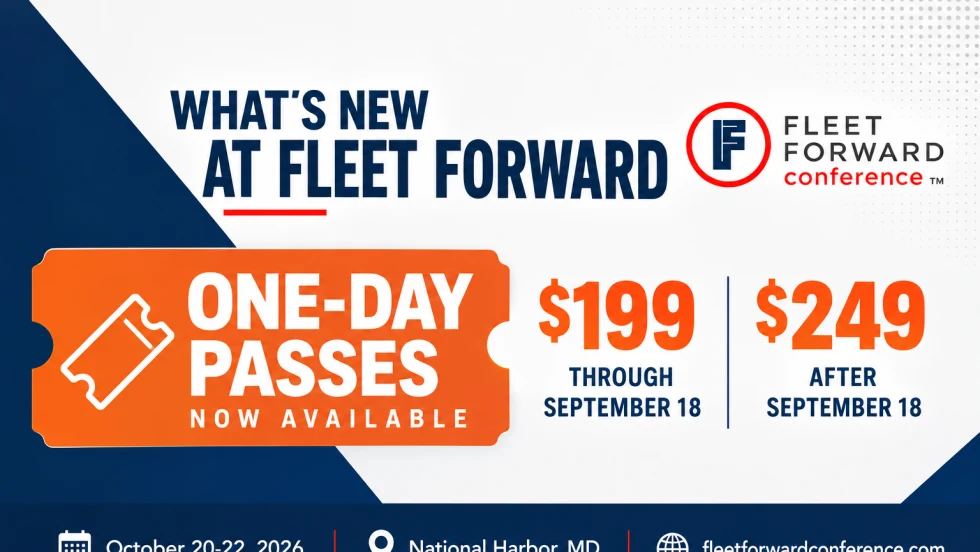
Fleet Forward Conference Introduces One-Day Passes for 2026
New one-day registration lets fleet professionals attend Tuesday, Wednesday, or Thursday, with passes available for $249.
Read More →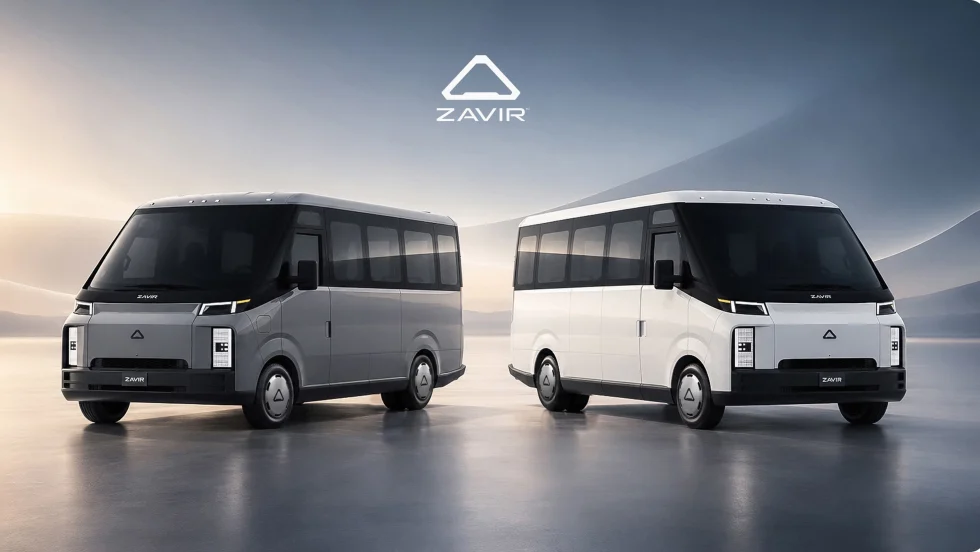
ENC Unveils its ZAVIR Medium-Duty Shuttle
Two variants of the concept shuttles were revealed: a low-floor configuration and a high-floor configuration.
Read More →
Could Your Next Fleet Technician Start as an Intern?
What if your next technician hasn’t worked in a fleet shop yet? What fleets are doing to free up time.
Read More →