




Fleet Sends Techs to School for EV Training
The City of Vancouver, B.C., Canada worked with a local technical institution to develop an electric vehicle maintenance program, with city technicians serving as the first students.

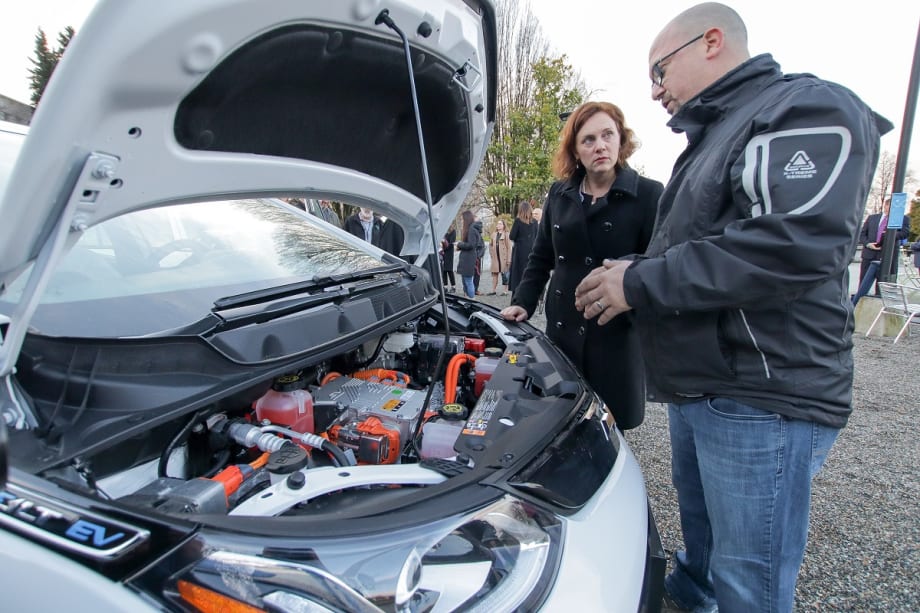
Honourable Michelle Mungall, minister of energy, mines and petroleum resources for the Province of British Columbia, and Manoli Paterakis, journeyperson mechanic for the City of Vancouver, look under the hood of a Chevrolet Bolt.
Photo courtesy of Province of BC
The British Columbia Institute of Technology (BCIT) in Canada has developed a new electric vehicle training program for mechanics. The curriculum was created in participation with the City of Vancouver’s fleet team, with city mechanics serving as the first class of students.
The Vancouver fleet team manages a fleet of nearly 2,000 vehicles and equipment. This includes one of the largest municipal fleets of electric vehicles in Canada. The city declared a climate emergency in 2019, and the city hopes that by 2030, 50% of the kilometers driven are driven by zero-emission vehicles. Expanding the EV fleet is a key component of the city's Climate Emergency Response plan.
“As we’ve grown our electric vehicle fleet, we have primarily been maintaining the vehicles at manufacturer dealerships because our technicians have not had had training in electric vehicle maintenance. To rectify this we approached BCIT to discuss developing a training program,” explained Amy Sidwell, manager, fleet and manufacturing services for the City of Vancouver.
By coincidence, BCIT had received $325,000 in funding through CleanBC, a regional program that aims to promote clean and renewable energy in the province, to develop training programs. During a pilot period, BCIT was able to develop and test an EV curriculum with 12 of the city's mechanics serving as the first class.
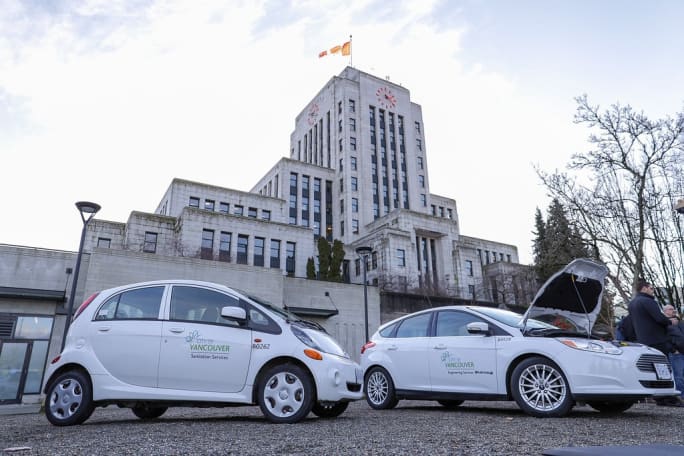
The City of Vancover owns one of the largest municipal EV fleets in Canada.
Photo courtesy of Province of BC
“Previously, technicians would need to get training from the manufacturer at the dealership that they work for, but if they ran their own garage they would not be able to access training. This new training will enable many more technicians in the province of British Columbia to provide maintenance support for people with electric vehicles,” Sidwell explained.
Next, Sidwell said BCIT is working with trade associations to determine what kind of certification will be given to people who complete the EV course. The training program specifically covered light-duty EVs, but the team hopes to train its technicians in battery-electric medium- and heavy-duty trucks and construction equipment.
BCIT’s new program will be available to the public as a part-time studies course in 2020.
“This training program is a game changer and part of where the world is going as we switch to zero-emission vehicles,” said Michelle Mungall, minister of energy, mines and petroleum resources. “B.C. has the fastest increase of EVs on the road, with 30,000 now. So we’re going to need mechanics, and B.C. is the first province to offer this kind of training. This is an example of the thousands of new jobs and opportunities we’ll see under our CleanBC plan to boost the economy, reduce air pollution and make life more affordable.”
More Green Fleet
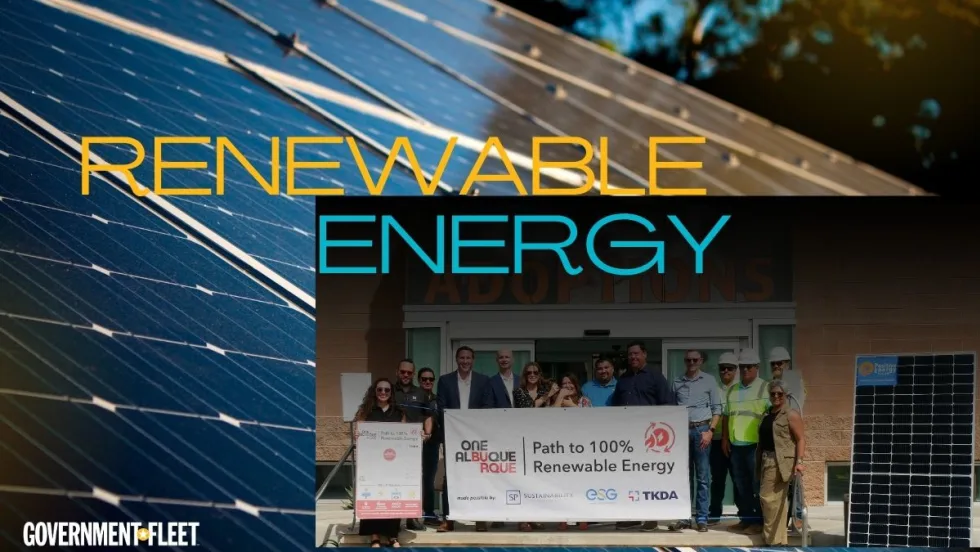
Sustainability Partners, Energy Systems Group Help Albuquerque Close the Gap on its 100% Renewable Energy Goal
The eight-site, 6 MW solar project has advanced the city toward 100% renewable energy for municipal operations.
Read More →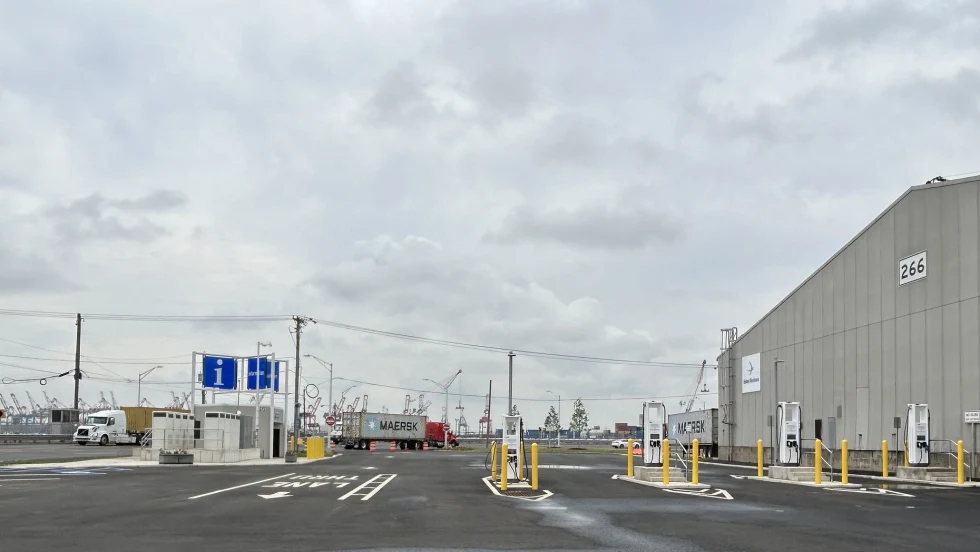
Port Authority and CALSTART Launch $45 Million Electric Truck and Charging Programs
The programs aim to boost sustainable operations across the East Coast's busiest seaport.
Read More →
Moving Government Fleets Beyond the Vehicle Purchase: EV as a Service
A discussion on how EVaaS is moving beyond pilot programs and what fleets should consider before beginning a larger deployment.
Read More →
Moving Government Fleets Beyond the Vehicle Purchase: EV as a Service
As fleets move beyond small EV pilots, Sustainability Partners CEO Adam Cain explains how EVaaS can address the infrastructure and long-term planning required for larger deployments.
Read More →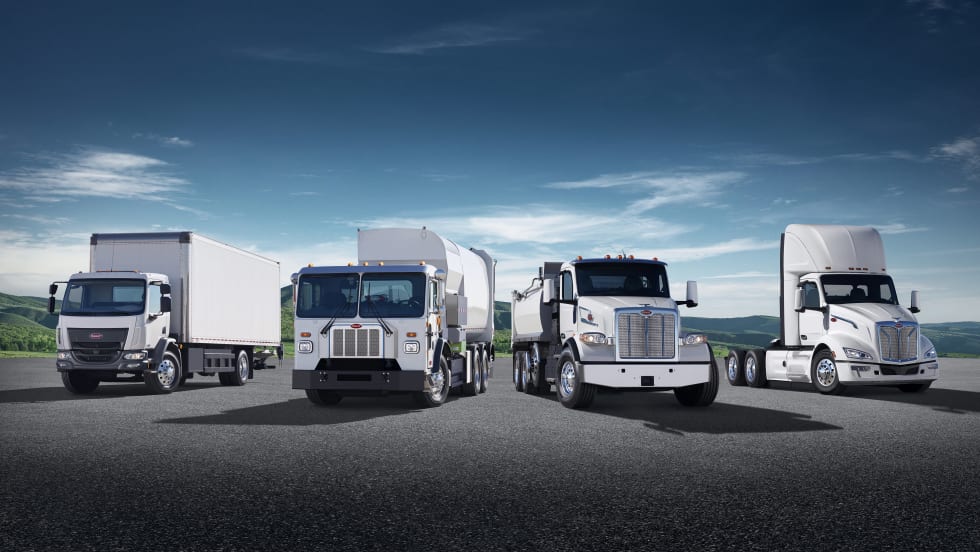
Peterbilt Expands Sourcewell Partnership with Electric Vehicle Lineup
The agreement aims to provide streamlined procurement of Peterbilt trucks for government, education, nonprofit and tribal organizations across the United States and Canada.
Read More →
EV Adoption & Charging Challenges
Where is your fleet in the journey of vehicle electrification? If you're still looking for answers to fleet electrification you've come to the right place.
Read More →
Hawaii Passes Clean Fuel Policy
Hawaii lawmakers passed clean fuel legislation that could support renewable natural gas production, biogas-powered transportation, and lower-carbon fueling options for public and commercial fleets.
Read More →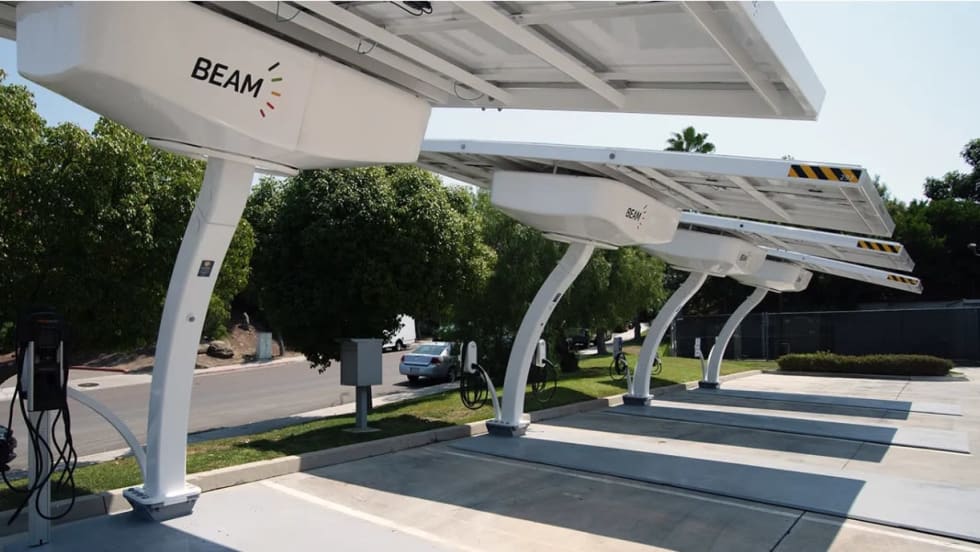
Stanislaus County Deploys Ten Beam Global EV ARC Systems to Support County Fleet Electrification
Stanislaus County deployed 10 off-grid solar-powered EV charging systems and a mobile charging trailer from Beam Global to support its electric fleet operations and emergency response flexibility.
Read More →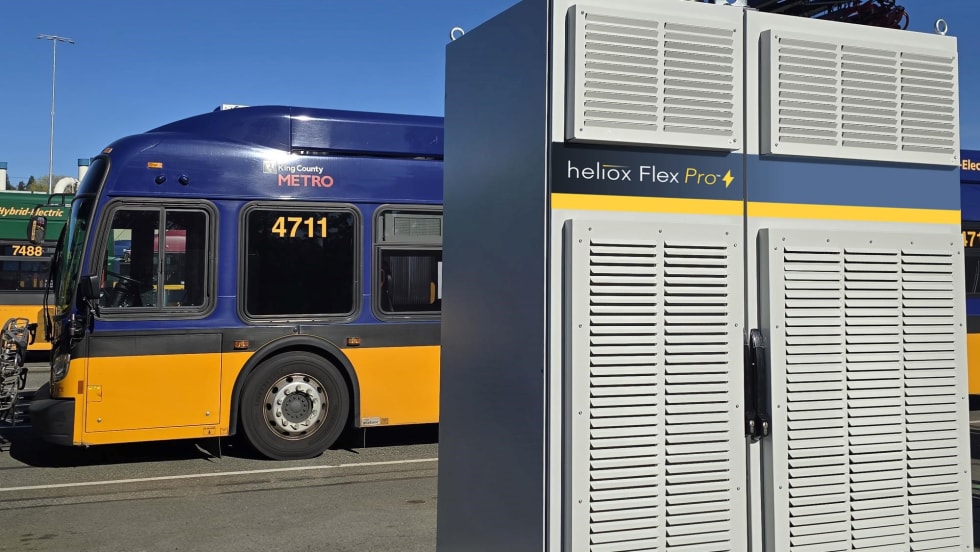
Heliox Pilots 480-kW Bus Charger with King County Metro
King County Metro is piloting Heliox’s new 480-kW Flex Pro charger to support expansion of its battery-electric bus fleet and depot charging infrastructure. The compact charging system supports pantograph and plug-in charging configurations for high-density transit operations.
Read More →