




First Privatized Fleet Achieves World-Class Certification
The City of Ft. Lauderdale, Fla., achieved Fleet Sentinel World-Class certification after 18 months of preparation. Its monthly PM completion rate now averages more than 99 percent, allowing the fleet to double its lifecycle.

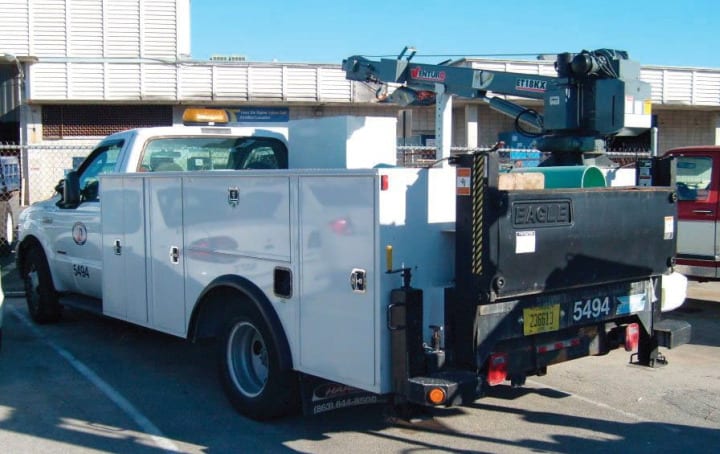
a utilization study prompted Ft. Lauderdale’s fleet operation to reassign this underutilized truck to another department in lieu of ordering another similar unit.
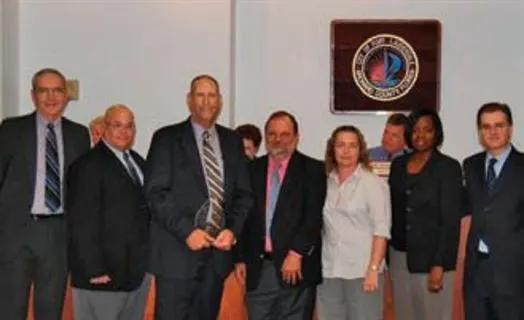
The City of Ft. Lauderdale, Fla., has become the first privatized U.S. fleet to receive Fleet Sentinel World-Class certification. Only 12 fleets across the country have attained this certification level.
"The entire Ft. Lauderdale Fleet Services staff, as well as that of our maintenance provider, First Vehicle Services (FVS), have a tremendous sense of accomplishment in light of our certification," said John Rencher, senior automotive and equipment engineer for the City of Ft. Lauderdale's Fleet Services department.
Fleet Sentinel is a Web-based analysis tool and advanced fleet management reporting system. Its certification process required the Ft. Lauderdale staff, as well as the city's maintenance provider, FVS, to pass 20 categories that align with industry best practices. The foundation categories included:
Employee goals, mission statement, and business plan.
Staffing and qualifications.
Policies and procedures.
Preventive maintenance program.
Utilization program.
Replacement program.
Customer service and performance contracting.
Parts inventory control.
The certification process, administered by Fleet Counselor Services Inc., took 18 months to complete. The City and FVS personnel spent hundreds of hours achieving the certification.
According to James Wright, president and CEO of Fleet Counselor Services, the length of time it takes to become certified depends on how well the fleet is managed.
"The real issue is support from upper management," Wright said. "When it comes to managing utilization, most upper-level managers will not begin to touch the subject, and as utilization management is a foundation category, the agency will not pass."
Privatization Allows City to Go to the Next Level
The Ft. Lauderdale fleet, which comprises 1,550 motorized vehicles, is an ASE Blue Seal of Excellence-recognized facility, one of the "100 Best Fleets" in America, and recipient of the Crystal Award for National Fleet Certification.
For the past 27 years, the City has privatized its maintenance operation to FVS.
"FVS has always been very responsive to our needs and wishes, and this certification process made that relationship even closer and more professional," Rencher said.
The stringent requirements of the implementation and performance standards produced a sense of camaraderie and mission among everyone involved in the certification process. The FVS staff, as well as individual technicians and support personnel, were challenged and enthusiastically pursued making national certification for the fleet a reality.
"FVS provides some of the essential credentials for our certification," Rencher said. "We believe this process has given us the training and tools to take our fleet to the next level of service excellence and beyond."
The certification process called for the city's Fleet Services department to carefully examine its utilization and preventive maintenance (PM) programs. This examination led to fine-tuning the lifecycle cost analysis and replacement program by using monthly fleet utilization reports and utilization committee oversight.
In addition, with departmental cooperation, Fleet Services overhauled its PM program, improving customer compliance to reporting and monitoring.
"Using the improved reporting procedures as a feedback system, the PM program became the driving force for our entire maintenance and repair structure," Rencher said.
This process allowed Fleet Services to achieve a completion rate on its vehicle PM program of 97.7 percent in October, 100 percent in November, and 99.5 percent in December. An average monthly completion rate of 95 percent is a Sentinel Certification Test standard.
Ft. Lauderdale realized cost savings in its PM program due to implemented improvements. Management initiated a synthetic oil pilot program for 20 K-9 vehicles. The synthetic oil allowed the City to extend vehicle PM intervals from 30 to 90 days.
"These vehicles were challenging to service due to shift assignments," Rencher said. "By lengthening the PM intervals, it minimized overdue PM services."
The program adjustment saved Ft. Lauderdale $8,600 in 2008. Upon verification of the program's success, remaining police fleet vehicles will be transitioned into the program, followed by general administrative vehicles and light-duty trucks.
"This program is about saving agency funding and becoming efficient," Wright said. "Some of our most successful clients have saved millions of dollars."
[PAGEBREAK]
Effective PM Programs Lead to Extended Lifecycle
In current fiscal-year 2008-2009, Fleet Services extended the lifecycle from one to two years for 121 vehicles using pre-certification methodology. This step produced a cost savings of more than $6.9 million. With the utilization program established during the Fleet Sentinel Certification process, Fleet Services anticipates an even greater savings for fiscal year 2009-2010.
Implementing PM program changes will eliminate 2,200 PM service appointments in 2009, saving approximately 4,000 technician hours and about $146,000 in labor costs, according to fleet estimates.
In addition, said Rencher, a garage improvement project will update three non-utilized service bays to accommodate servicing fire units, turf equipment, and small service vehicles.
"The calculators used in the Fleet Sentinel program were the impetus to make the necessary changes to fleet operations that would align Fleet Services with industry best practices," Rencher said.
The implementation plans from Fleet Sentinel were specific to the city's fleet needs. Working through the plans in each of the 20 certification categories enlightened the staff to the current state of the fleet's managerial effectiveness and performance. This heightened awareness allowed the City to make immediate and sustained improvements to needed areas.
"The implementation plans gave us focus on the critical areas that produced the most substantial improvements," said Rencher.
According to James Schwab, consultant and on-site inspector, 12 fleets have passed the certification testing. Of the 12 fleets, six are still actively certified.
"The certification is good for two years," Schwab said. "Thereafter, the agency must retest and pass again. The certification status is also suspended if there is a change in management. New fleet managers are required to retest after six months in the new position."
Rencher highly recommends the certification process to every professional fleet manager.
"It is an intense program, but the results are more than worth the effort," he said.
More Operations
Is Keeping Older Fleet Vehicles Really Saving Money?
Is keeping vehicles longer saving money, and what happens when a diagnostic test points to the wrong fix?
Read More →
How Smart Fleet Strategy Can Help Local Government Agencies Do More with Less
Keeping a vehicle longer may ease this year’s budget, but what does it cost the next one? A closer look at fleet decisions can reveal opportunities to reduce spending while protecting essential services.
Read More →
Connect with Government Fleet on LinkedIn
From industry news and fleet management strategies to conversations with peers, Government Fleet's LinkedIn page offers public-sector fleet professionals another way to stay informed and connected.
Read More →
Town of Queen Creek Named Most Successful Fleet Award Winner of Inaugural RTA Fleet Success Awards
Five fleets were honored at RTA Connect 2026 in Chicago for excellence across resource efficiency, intentional culture, risk management, and stakeholder satisfaction.
Read More →
A buyer's guide to fleet management software in 2027
Buying fleet management software in 2027 means looking beyond features and price. As fleet operations, technology and expectations evolve, this guide explores what today’s fleet professionals should consider when choosing a system that can deliver value now and adapt to what comes next.
Read More →
Hazard Alerts, Fleet Car Sales Rise and a New Shuttle Concept
Fleet car sales doubled, but the bigger picture tells a different story in this week’s roundup.
Read More →
How St. Johns County Turned Fleet Data Into Better Replacement Decisions
St. Johns County, Florida, had fleet data, but turning it into reliable decision guidance was another matter. Instead of starting over with a new fleet management system, the county connected existing tools and built a scoring system that gives managers an objective look at fleet health.
Read More →
Fleet Forward Conference Introduces One-Day Passes for 2026
New one-day registration lets fleet professionals attend Tuesday, Wednesday, or Thursday, with passes available for $249.
Read More →
ENC Unveils its ZAVIR Medium-Duty Shuttle
Two variants of the concept shuttles were revealed: a low-floor configuration and a high-floor configuration.
Read More →
Could Your Next Fleet Technician Start as an Intern?
What if your next technician hasn’t worked in a fleet shop yet? What fleets are doing to free up time.
Read More →