




Finding the Right Fuel Management Program
Supplementing fleet card services, fuel management programs are proven methods to reduce costs and improve fuel efficiency. Online data transmission provides timely tracking and reporting.
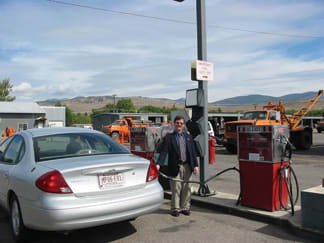
In a climate of budget cuts and staff reductions and seesawing fuel costs, government fleets cannot ignore the proven benefits of managed-fuel programs. Indeed, most state fleets have already turned to fuel management programs to control where and how fuel is purchased and to implement business practices that increase operational efficiency, saving time and money. A managed-fuel program supplements a fleet-card operation with the immediacy of Web-based reporting, offering account management, reporting tools, and real-time access to vehicle, drivers, and transaction data. No more waiting for monthly reports to obtain data for decision-making or track policy compliance. Fleets can be managed with pinpoint accuracy. A fuel management program allowed the state of Montana to “get out of the costly fuel dispensing business and privatize fleet fueling,” says Tom Gustin, fleet card manager for the state’s public vehicle fueling program. State agencies, local governments, municipalities, school and other special districts take part in the co-operative purchasing arrangement. Gustin praises the streamlined efficiency of managed fuel. “As the sole employee of Montana’s intergovernmental fueling program, I travel the state extensively. Our powerful, comprehensive online product allows me to manage 8,500 cards in more than 260 accounts wherever I connect to the Internet.” Before the state’s fuel program was established in 1993, Montana’s public agencies used either individual fuel company cards or a universal fleet card Ñ one without a magnetic strip, Gustin recalls. “There was no central control.” In 1993, new Environment Protection Agency (EPA) regulations covering fuel tank ownership and operations prompted Montana officials to examine the state’s fueling system. At the time, a dozen different agencies operated on-site fueling stations. “We decided to get rid of most of the government’s fuel tanks and stations. It made more sense for most state agencies to obtain fuel from the commercial side,” says Gustin. The state contracted with Wright Express in 1999 and public agency employees now use the WEX card at some 1,500 stations in more than 200 cities, purchasing nearly a half-million gallons of fuel per month. Customization is Key
The same fuel-management program is not for every fleet. Needs differ from one organization to another. Customization is essential, and successful managed-fuel providers work with each customer’s distinct requirements. Exception reports (documentation of purchases outside company policies) are especially important to customize individual fleet operations. Some red-flag issues are common to all fleets, e.g., a 30-gallon fill-up for a 16-gallon tank. For some fleets, Saturday transactions or midnight charges may be indicated as an exception. The fleet manager decides which exceptions to track, and the fuel-management technology does the rest. Gustin notes, “The state of Montana has been extremely pleased with the managed-fuel program for the four years that we have been under contract. The universal acceptance of the card has enabled us to discontinue many costly on-site fuel-dispensing operations and has offered us a one-card solution instead of having to carry multiple oil company cards.” {+PAGEBREAK+} Tax Exemptions Applied
In addition to the cost savings and fraud reduction offered by fuel management programs, government fleets gain an extra advantage as tax-exempt entities. The appropriate taxes are automatically deducted with every purchase of non-diesel fuel from participating marketers. The invoice itemizes taxes, but government fleet customers are not charged. No more lengthy filing process in order to receive a tax return. Ninety percent of fueling stations accept most fuel cards. In addition to the convenience of a single-card and automatically applied tax exemptions, software programs can provide valuable pricing information, including fuel price mapping and routing, indicating the lowest fuel prices in a given area or along a specific route. Reporting is Simplified
With online access to transaction data, managers who once spent hours to research and produce reports now can easily design and schedule automatic data reports. Fuel management companies offer the technology to track fleet activity and transfer the data immediately. Managers no longer must sort through receipts to track anomalies in driver purchasing, saving time. Drivers no longer fill out manual-use logs and payment-and-receipt paper exchanges. For on-site fueling facilities, the reports conveniently identify bulk purchases and individual sales. A steady inventory of the fuel that enters and leaves the on-site tank is always available. Reports identify purchases by driver and department, and can be transmitted by mail, fax, or online. Managed fuel helps staff members function efficiently, and no fleet is too large or too small to qualify for this growing approach to business. Starting a Program
Changing fleet operations can be a daunting prospect, but most fleet-card companies provide guidance for the transition period. A personal account manager, plus around-the-clock telephone and online customer service, are often part of a management package. Selecting a fuel-management provider requires up-front homework. Determine a fleet profile to identify needs and negotiate actual budget dollars. Ask fuel management company representatives about their services and policies, including:
Ready assistance during the transition period.
On-going communication with a personal account manager.
Customer-service availability, online and by telephone, 24/7.
A trial period.
Sign-up costs. Research the firm’s customer base and assess your fleet’s compatibility with the company’s programs. For example, examine:
The number of public-sector fleets already enrolled.
The percentage of accepting sites.
Authorization controls and automatic tax-exemption.
Accessibility to a comprehensive Web-based program. With specific facts and figures in place, fleet managers can exact a dollars-and-cents statement demonstrating the potential savings against the actual cost of a fuel management program.
More Operations
How Oil Analysis, Safety Technology, and Fleet Awards Drive Improvement
What happens when fleets let measured results guide their next decision?
Read More →
Emergency Response, Fleet Sales and New Technology
This week’s fleet news covers emergency preparedness, shifting vehicle sales, electric truck investments, and new tools for monitoring road conditions.
Read More →
NCDOT Adds Dash Cam Imagery to Statewide Traffic Monitoring
North Carolina transportation officials are adding another set of eyes to roads that aren't covered by fixed traffic cameras. A statewide deployment gives NCDOT access to on-vehicle imagery to verify conditions during work zones, severe weather, emergencies, and other traffic events.
Read More →
Turning a Bottleneck Into a Blueprint: How Tallahassee Rethought Police Fleet Readiness
For Tallahassee, finally receiving 87 delayed police cruisers created a new problem: how to get them on the road without creating a massive backlog. The solution would change more than the upfit process.
Read More →
AI, Police Fleet Readiness and Fire Apparatus News
See how AI, a reworked police-vehicle upfitting process, and a fire apparatus acquisition could affect public fleet operations.
Read More →
How AI and Automation Work Together to Reduce Government Fleet Downtime
As their assets age and their budgets’ purchasing power shrinks, government fleet managers are facing growing pressure to do more with less.
Read More →
Police Fleet Innovation, EV Strategy and AI
See how public fleets are rethinking police vehicle readiness, electrification, workplace culture, and driver workflows.
Read More →
From What He Inherited to What He’ll Leave Behind: David Renschler’s Lessons in Leadership
David Renschler walked into Fairfield with plenty to learn and no idea what awaited him. Twenty years later, the lessons from what came next are still shaping his approach to fleet.
Read More →
Have Fleets Changed Enough to Solve the Technician Shortage?
Are government fleets finally closing the gap on the technician shortage, or are critical challenges still holding them back?
Read More →
How Public Fleets Are Rethinking Vehicles, EVs, and Culture
From mission-specific vehicles to EV planning and culture change, this week’s stories show how public fleets are rethinking the way they operate.
Read More →