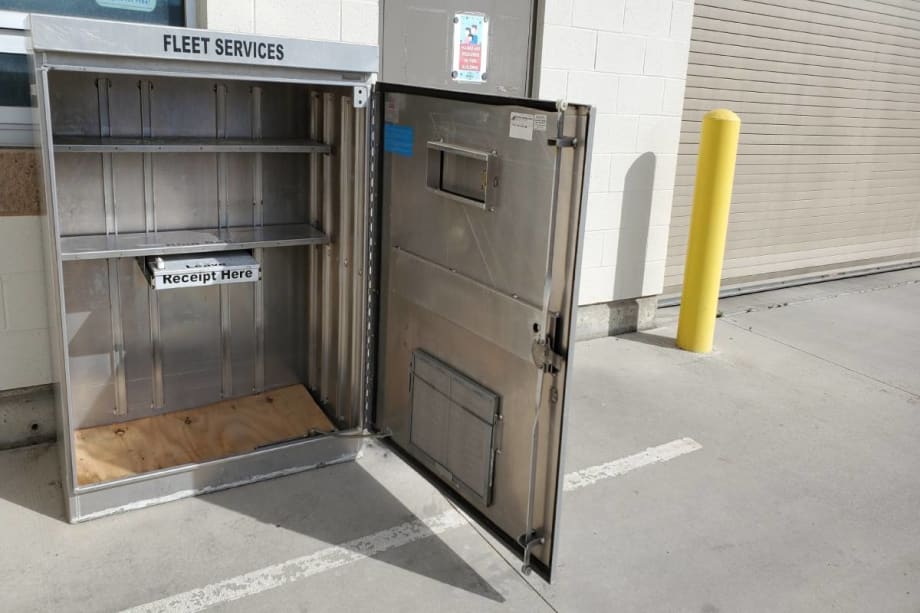
A parts cabinet streamlines deliveries and reduces interaction with delivery drivers.
Photo: City of Orem, Utah
6 min to read
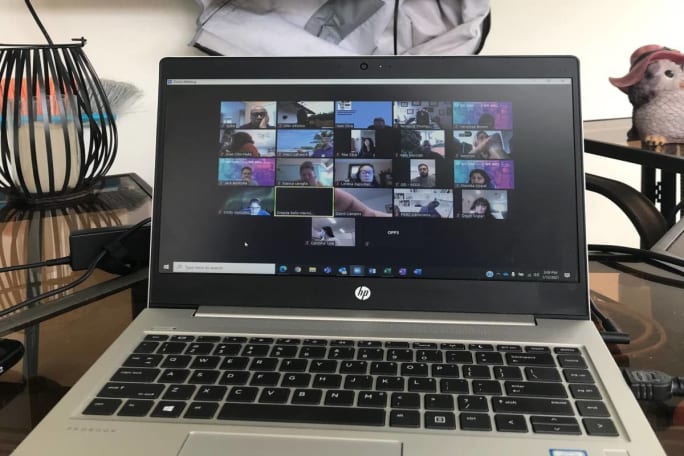
The Miami-Dade County fleet team has been successfully using Teams to communicate during the pandemic.
Photo: Miami-Dade County
Many fleet operational changes because of COVID-19 were a necessity — often hastily done to quickly protect employees and drivers. These include staggering shifts, reducing gatherings, cleaning and sanitizing vehicles, and sometimes temporarily closing maintenance shops.
At the same time, it has allowed fleet departments to make changes they couldn’t or wouldn’t have normally. From increasing digital communications to efficiencies in the parts room, here are seven improvements that are here to stay.
Ad Loading...
Virtual Work Opportunities
One indisputable change from the pandemic is how people communicate in the workplace, with virtual meetings now the norm.
“We can share documents, peer edit, hold presentations, sign documents electronically, and store documents in the cloud and the like with whatever technology is available,” said Alex Alfonso, division director for fleet management for Miami-Dade County, Florida.
The operation is in the process of rolling out webcams and headphones for all satellite shop supervisors so they can video chat with one another, primarily using Microsoft Teams. Additionally, fleet staff members are discussing establishing “hoteling” of office space once the pandemic is over — that is, a communal station setup to be used when a home-based worker comes into the office. While the ability to permanently work from home is yet to be determined, Alfonso thinks staff members will at least be able to periodically do so.
Jeff Tews, CPFP, retired fleet services manager for the City of Milwaukee, also believes virtual meetings will stay, saving time, wear and tear on vehicles, and fuel costs. With more resources online now due to the pandemic, 24/7 emergency operations can be administered easier from home or other remote locations, increasing the speed of response times, according to Danielle Rodriguez, the city’s director of operations.
Tews added the pandemic has proven some support roles can be done remotely.
Ad Loading...
“Now that the mechanism has been developed, some positions may be able to continue functioning remotely, part time,” he said.
In Ohio, Darryl Syler, CPFP, state fleet administrator, is looking at a hybrid on-site/remote work plan to lower office space costs since remote work has proven to be successful.
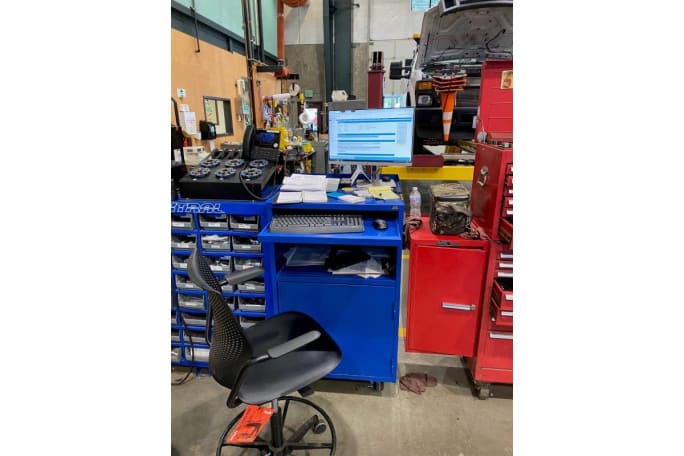
New workstations allow technicians to better distance from each other.
Photo: City of Issaquah, Washington
Workstation Upgrades
At the City of Issaquah, Washington, the need for physical distancing on the shop floor has led to workstation upgrades that will stick around. They include mobile workstation desks and adjustable height task chairs for mechanics so they can stay at their own stations.
“Our initial response to the pandemic [was to] split the crew in half, running what I called the home and away games (two weeks on, two weeks off). After several months, we started to look for processes that would satisfy the physical distancing requirements, facilitate staff safety, and allow the return to full staffing of the fleet shop,” said Kelly Kussman, fleet manager for the city.
Mobile workstations allow employees to keep their distance while the shop is at full capacity.
Ad Loading...
Parts Room Efficiencies
At the City of Orem, Utah, fleet parts delivery processes have changed for the better.
“Before COVID-19, part delivery drivers would come inside the shop and deliver the parts to the first technician they could find. Now we have a large traffic control cabinet outside our main fleet shop door,” said Thayne Carter, CPFP, fleet manager for the city.
Fleet management installed a cabinet with a doorbell switch inside, along with a drawer where the delivery driver could leave invoices. The driver leaves the part and invoice inside the box and rings the doorbell, and the technicians who ordered the part can go get it. Returns are also left in the box with a sticky note.
“Our fleet technicians are all in agreement that this is a better process than we had before. Part delivery drivers also like this process as it saves time and leads to less contact with others,” Carter said.
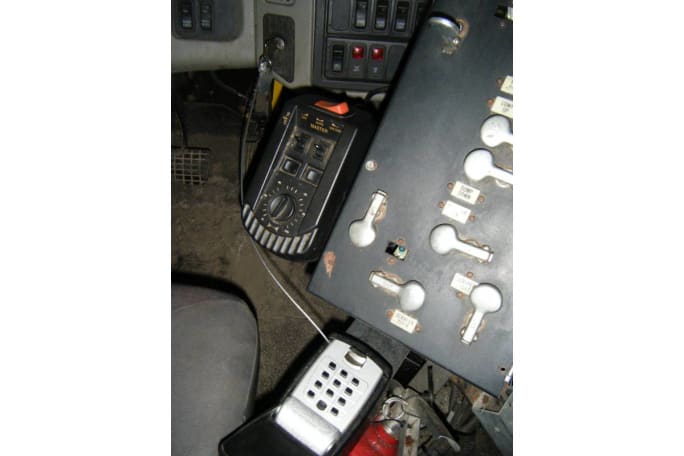
A lockbox and vehicle key tether prevents drivers from having to gather at a central location to pick up keys.
Photo: City of Milwaukee
Streamlined Vehicle Checkouts
To minimize contact between drivers, Milwaukee fleet management installed key tethers on vehicles that had plow duty. That means drivers can hop into vehicles directly rather than going to a central location to pick up keys. The driver enters the assigned vehicle and inputs a universal code into a combination-type lockbox in the cab, where the key is on a tether. The key remains in the vehicle and is locked back inside at the end of each shift for the next driver, Tews said.
Ad Loading...
Fleet management dealt with two concerns: that someone would hop onto a vehicle not assigned to that driver, such as a newer truck, and tether entanglement. But Tews said vehicles are tracked via GPS and there hasn’t been an entanglement issue. The tether also prevents drivers from accidentally ending the shift with keys in their pockets.
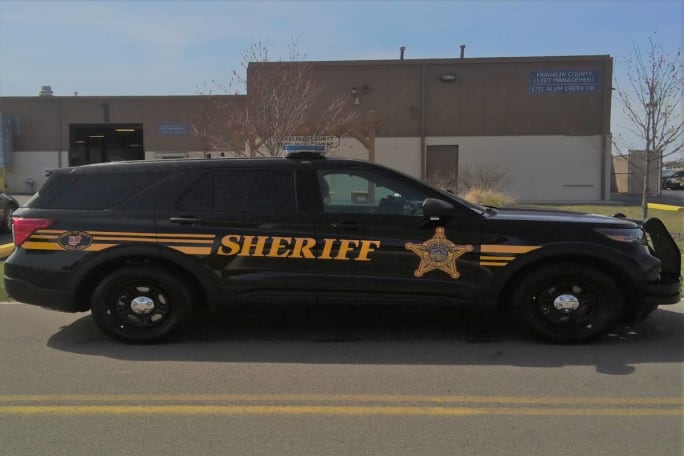
The pandemic led to more acceptance of telematics in patrol vehicles at Franklin County.
Photo: Franklin County, Ohio
Increased Telematics Acceptance
At Franklin County, Ohio, Charlotte Ashcraft, director of fleet management, said telematics had already been installed in more than 300 vehicles, including on law enforcement vehicles. However, use of the system wasn’t very high, and officers were resistant to being tracked.
“Before, they wouldn’t use it; they were worried about big brother,” she said. “But now, they’re concerned about their staff, especially when people don’t check in.”
That means more managers are now using it to see where their drivers are, a change that she expects will continue after things get back to normal.
“I don’t think that would have come about without what we went through in 2020,” Ashcraft said.
Ad Loading...
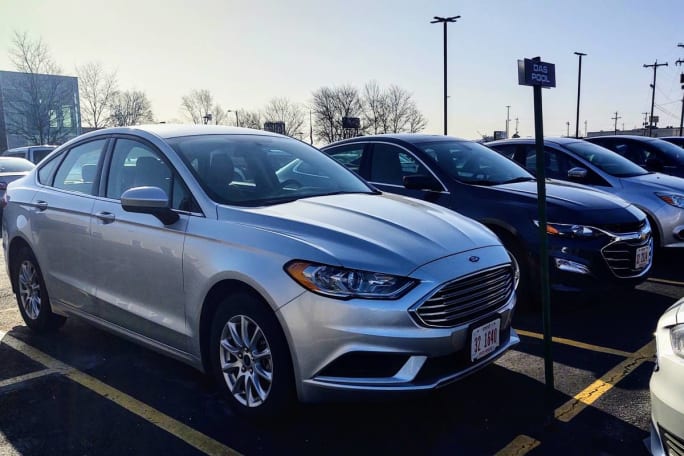
Successful remote working has meant more drivers are open to using motor pool cars.
Photo: State of Ohio
Reduced Fleet Size
Fleet managers with goals of reducing the number of units their public agency owns may have an easier time because of the pandemic. This was the case at the State of Ohio.
“With all agencies within the state having to change the way they do business, it has been a lot easier to reduce our size,” Syler said.
Syler’s goal was a 10% reduction of the state’s 3,400-unit centrally managed fleet, based on its utilization reports. The team has already succeeded in reducing about 5% of the fleet.
“Folks are finding that virtual meetings are more productive and [traveling] to locations is just not needed. And if they have to travel, it is more cost effective to use a motor pool vehicle,” he explained.
These reductions consist of sedans and small SUVs. Syler believes drivers will continue to use more virtual meetings once things get back to normal, and they’ll continue to use motor pool vehicles.
Ad Loading...
In the meantime, the fleet team is also looking at right-sizing into smaller vehicles when appropriate and replacing cars with hybrid or electric vehicles when possible, helping the state meet its fleet sustainability goals.
Improved Scheduling
The pandemic led some fleet operations to temporarily shut down, and many administrative staff members began working at home. The City of Long Beach, California, fleet operation decided to change its scheduling. “We put maintenance staff on 4/10 schedules to reduce the number of staff in the building and thus spread them out physically,” said Dan Berlenbach, CPFP, fleet services manager for the city. Previously, the shop was on a 9/80 schedule.
The new schedule will stay in place because fleet management found it improves employee morale and minimizes overtime.
“With staff being available for 10 hours as opposed to nine, work that would either be pushed off until the next day or have staff stay [late] to finish is minimized, and even eliminated for the most part,” Eric Winterset, superintendent of fleet maintenance, explained. “Also, when you work a 10-hour shift, the last thing an employee wants to do is work overtime, which was my feeling years ago when I was on a 10-hour shift. There is incentive there to finish up.”
Keeping a vehicle longer may ease this year’s budget, but what does it cost the next one? A closer look at fleet decisions can reveal opportunities to reduce spending while protecting essential services.
From industry news and fleet management strategies to conversations with peers, Government Fleet's LinkedIn page offers public-sector fleet professionals another way to stay informed and connected.
Five fleets were honored at RTA Connect 2026 in Chicago for excellence across resource efficiency, intentional culture, risk management, and stakeholder satisfaction.
Buying fleet management software in 2027 means looking beyond features and price. As fleet operations, technology and expectations evolve, this guide explores what today’s fleet professionals should consider when choosing a system that can deliver value now and adapt to what comes next.
St. Johns County, Florida, had fleet data, but turning it into reliable decision guidance was another matter. Instead of starting over with a new fleet management system, the county connected existing tools and built a scoring system that gives managers an objective look at fleet health.