




Compact Nova "Big" For Police
Documentation in several applications show that a compact can deliver economy.
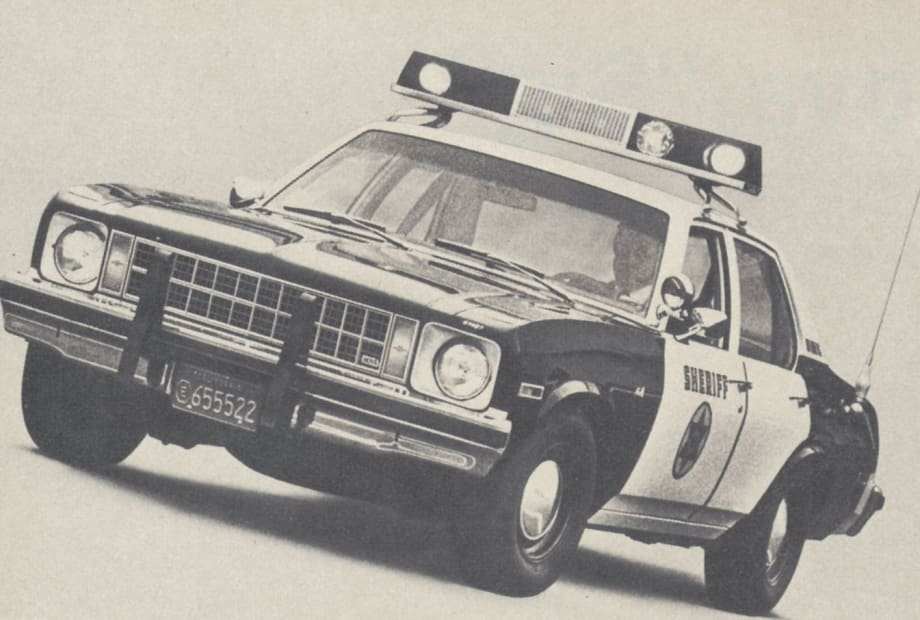
Similar in appearance to its civilian sister, the Nova with police package delivers economy and performance at a savings to tax payers, law officers assert.
Chevrolet's compact police car takes no back seat to intermediate and full size police cars. The result has been substantial savings in field service. Tests how lower fuel and maintenance costs have been realized, as well as better dollar return on used police cars.
Compact police car savings as high as 53-percent over the larger sized units have been documented in police agencies nationally in the past 24-month period.
Introduced for police patrol service in 1975 following the severe gasoline shortages of 1973-74, the compact patrol cars are gaining favor with law enforcement administrators in both large and small police departments.
A fleet representative for Chevrolet said the division has about 10-percent of the roughly 70,000 units per year police market. For the 1977 model year as of the end of May, Chevrolet has received orders for 3,531 Novas, 1,390 Chevelles and 1,348 Impalas.
The Los Angeles Sheriff's Department, the largest county policy organization in the country, was one of the first agencies to use compact police patrol cars in early 1975. Sheriff Peter J. Pitchess, head of the 7,500-man department, revealed in an official report that 75 Nova police cars it pilot service were an average of 30-percent more economical to operate, based on life cycle cost evaluation, than competitive makes of intermediate and standard-size patrol cars during the same period.
As a result of this performance, the LASD ordered 222 additional Nova police cars for further evaluation. The most recent evaluation of these units at one sheriff's department station near Los Angeles uncovered a total operating cost of 7.8 cents per mile during a five-month monitoring period with a combined total of 208,000 service miles. This figure represents a 53-percent savings in total operating cost favoring the compact police car over the previous group of competitive intermediate and full-size police cars in operation at the station over a comparable period.
The St. Louis city police department, another first volume buyer of compact police cars, began taking delivery of Nova patrol cars in March 1975, and currently has 200 marked units in service.
"During the first twelve months of operation, we reduced our fleet fuel consumption by 239,000 gallons of gasoline, and during the latest 12-month period, reduced it a second time by 151,000 gallons for a total two year conservation of 390,000 gallons," said Hugh Donnelly, director, bureau of service, St. Louis Police Department, Donnelly also pointed out that resale value of the compact car is significantly greater than the intermediate of full-size unit.
"St. Louis is suffering decreases in its financial tax base, along with 25 other major cities and urban areas in the United States. We simply can't afford the predominant use of larger police cars any longer that have much lower fuel economy and significantly lower resale value after two or two-and-one-half years of service," Donnelly emphasized.
"We really have no other choice but the vehicle that will provide us and the taxpayer with the most cost beneficial police usage, and that is the compact police vehicle. The total operating budget for the motor service division of the St. Louis Police Department is $2.7-million annually. Since the compact police car saves us approximately $164,000, it is easy to understand our switch to compacts.
"During the 1975-76 period the Novas have been in service, we realized a total savings of approximately 16.4-percent over the operation of our previous intermediate and full-size fleet." Donnelly said.
Large city policy fleet operations like those of Los Angeles County and St. Louis are not alone in gaining police vehicle fleet savings. The medium-sized city of Garden Grove, California and small suburban town of Sylvania, Ohio are typical of smaller communities that have posted impressive savings from their compact police fleets.
The Garden Grove city police department put 23 Nova compacts into service and showed a 26.2-percent improvement during the first three months of operation over comparable intermediate size police cars they replaced. This was based on total fleet mileage of more than 460,000 miles. Improvements were shown in every major service category including fuel consumption (38-percent); engine oil (21-percent); and maintenance (30-percent).
On a life cycle cost projection over an 18-month period, the Novas will save an estimated $59,000 over the previous intermediate size cars.
In the small Toledo, Ohio suburban Sylvania (pop. 20,000), the police department ordered four compact Nova units "simply because they are a superior law enforcement tools." Richard Haggerty, Sylvania city councilman, said, "the Nova police car is a better handling vehicle with better evasive capability and acceleration than our previous intermediate and full size cars.
"In critical pursuit speeds of 30 to 65 mph the Nova succeeds in 7.2 seconds, while its counterpart full sized police car takes 9.3 seconds. Shorter duration in pursuit time means less officer exposure to potentially dangerous traffic situations," Haggerty said. According to Haggerty, recent tests in California and Washington state have established "that the preventable accident rate for compact police cruisers is significantly below that of the 'old breed' larger cars, due to the compact's evasive capabilities, excellent visibility and drivability.
"We are also extremely satisfied with the Nova's initial cost performance," Haggerty said. With aggregate mileage of some 89,285 miles for our four compacts, the Nova is operating on an average of $52 less per month than the intermediate size units, and $133 less per month than the full size police car.
"Based on a 40,000 mile life cycle and a fleet of eight police cruisers, the Novas will produce savings of $4,924 over the intermediate units, or the equivalent of one new cruiser.
"Compared to the intermediate size police car, a fleet of eight Novas will save enough in operating expenses to pay for a ninth car," Haggerty explained. Comparing the Novas to previous model full size units, "the Novas will produce total savings of $12,480 over those models or the approximate equivalent of two-and-one-half new full size police cruisers," said Haggerty.
Those savings in operating costs were cited as a key factor leading to the largest police order yet for the Nova, 246 units to the sheriff's office in Jacksonville, Florida.
In addition to those savings, Sheriff Dale Carson said the low original price figured into the decision to go with the compact.
"Bidding from all vendors on our current police car fleet indicated that we could purchase about ten extra Nova police units for the same money. At the same time, field operating figures from other law enforcement agencies nationwide indicate the Nova operating costs range from 30 to 53-percent less in maintenance, fuel, tire and resale price than previous intermediate and full size units in service over a comparable time interval," Carson said.
More Articles

New Partnership Aims to Expand Public Digital Hazard Alert System Statewide
The Hawai’i Department of Transportation (HDOT) is expanding advance digital hazard alerts for the public statewide.
Read More →
How St. Johns County Turned Fleet Data Into Better Replacement Decisions
St. Johns County, Florida, had fleet data, but turning it into reliable decision guidance was another matter. Instead of starting over with a new fleet management system, the county connected existing tools and built a scoring system that gives managers an objective look at fleet health.
Read More →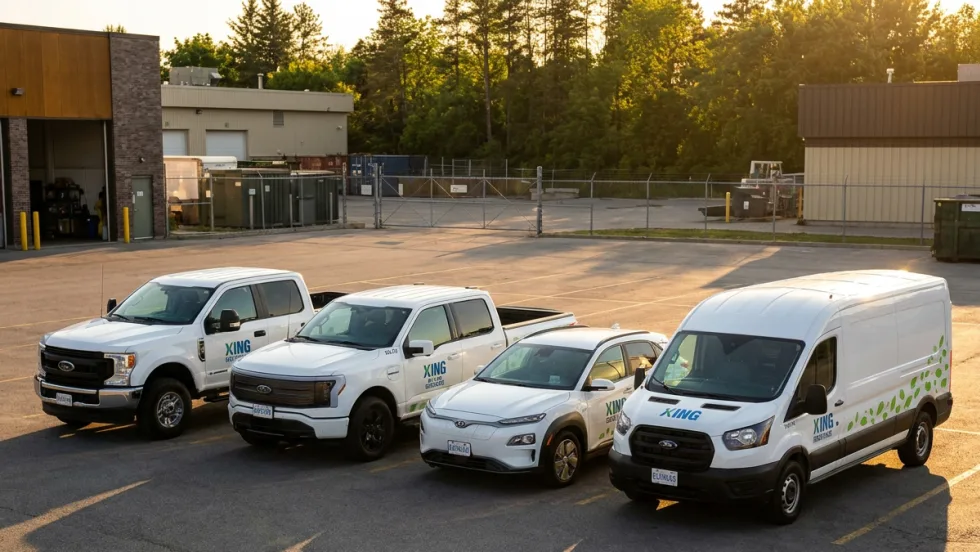
The Missing Link in Fleet Safety: Turning Data into Behaviour Change
Every municipal vehicle tells residents something about how their fleet is being managed. For King Township, Ontario, that visibility made speeding more than a driver performance issue.
Read More →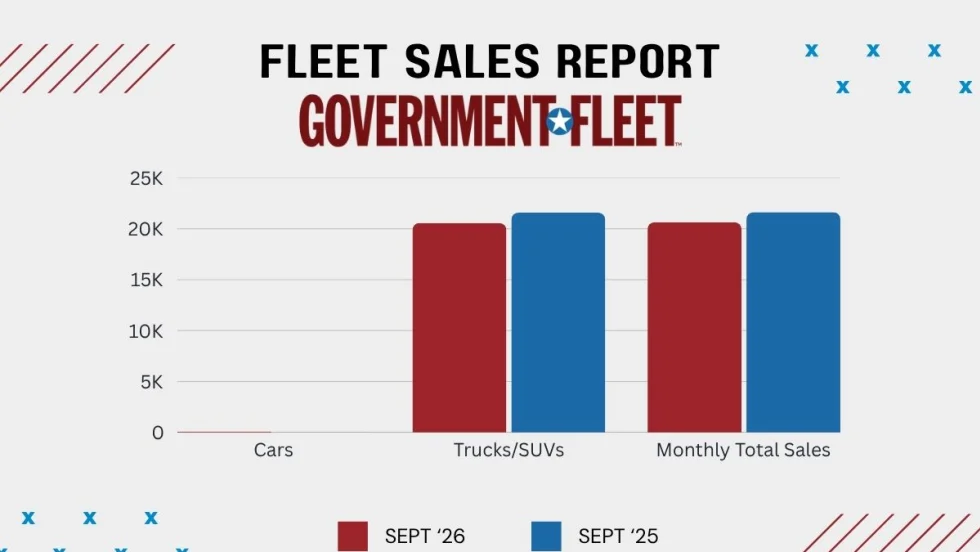
Government Fleet Car Sales More Than Double in September
Government fleet car sales rose 112.8% year over year in September, climbing from 39 to 83 units even as total monthly sales declined 4.5%.
Read More →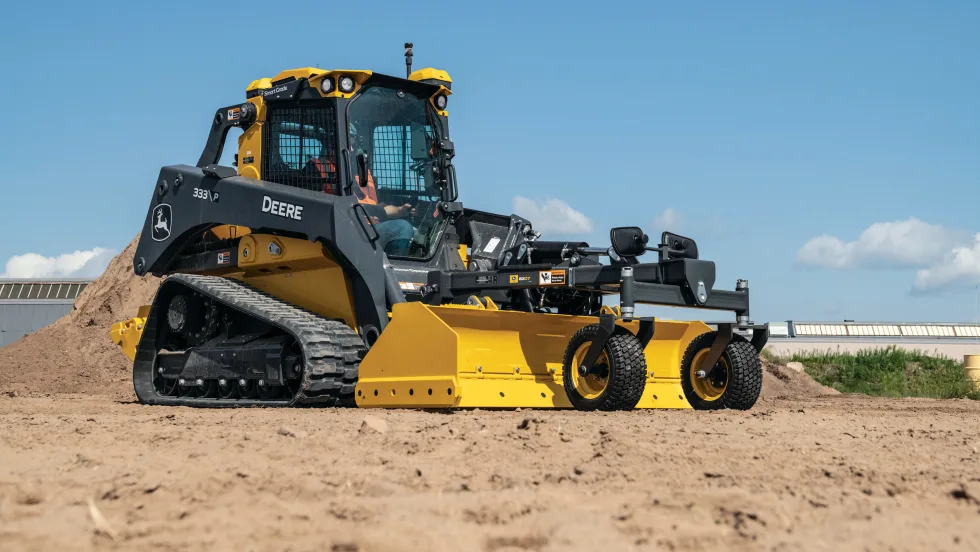
John Deere Adds SmartGrade Box Blades, Fire Suppression Option
John Deere is expanding the capabilities of its compact track loaders with new grading attachments and an equipment protection option. The additions include two SmartGrade box blades for the 333 and 335 P-Tier models and an integrated fire suppression system for large-frame machines.
Read More →
Fleet Forward Conference Introduces One-Day Passes for 2026
New one-day registration lets fleet professionals attend Tuesday, Wednesday, or Thursday, with passes available for $249.
Read More →
ENC Unveils its ZAVIR Medium-Duty Shuttle
Two variants of the concept shuttles were revealed: a low-floor configuration and a high-floor configuration.
Read More →
Could Your Next Fleet Technician Start as an Intern?
What if your next technician hasn’t worked in a fleet shop yet? What fleets are doing to free up time.
Read More →
How Phoenix Is Building Its Next Generation of Fleet Technicians
With more than 8,000 vehicles and pieces of equipment to maintain, the City of Phoenix could not afford to wait for fully trained technicians to walk through the door. Instead, they revamped their entire workforce strategy and showed how public fleets can create their own talent pipeline while preparing existing employees for increasingly complex vehicles.
Read More →
What’s Slowing Your Fleet Down?
Could a change in how work gets done help your fleet return vehicles to service sooner?
Read More →