Central Florida’s Population Boom & Its Impact on Fleets
Central Florida is growing, with new developments, businesses, and housing being constructed. All this leads to an increase in public services. How are fleets affected by the population boom?
Central Florida is growing, with new developments, businesses, and housing being constructed. All this leads to an increase in public services. How are fleets affected by the population boom?
Image: Getty Images
7 min to read
Central Florida is booming. About a decade after the recession, construction has risen and the population continues to grow as more people move into the area.
Orange County, with its Orlando seat, and neighboring Osceola County are two regions affected by population growth. Public agencies must provide more services — from emergency services to road work and social services. How are fleets in these counties affected by the population boom?
Ad Loading...
Increased Services in Osceola County
Osceola County is the second fastest growing county in the state and the 10th fastest growing in the nation, its property appraiser said in July. New construction has increased by 140% since 2014.
This means increased service levels. Hector Sierra Morales, fleet manager for Osceola County, said road maintenance has seen a 21% increase in calls from 2014 to the end of 2017. Fire Station 62’s rescue ambulance normally gets a preventive maintenance (PM) service twice a year — that has gone up to five times a year, based on usage.
“We are reaching 6,000 miles in two and a half months,” he said.
The brand new ambulance has been in service just eight months and it already has 30,000 miles on it — compared to the average of 12,000 or 13,000 miles annually. A one-and-a-half-year-old fire engine has more than 23,000 miles on it, far more than the average 9,000 to 10,000 annual miles.
More utilization and more PMs mean more overtime for fleet technicians, who maintain and repair heavy-duty units. The fleet also added one mobile mechanic for fire rescue, fully funded by the Fire Department.
Ad Loading...
Sierra Morales said his replacement budget — $3 million annually — has remained steady since he first started working at the county a few years ago. But the county has been able to add some new vehicles to its fleet. The Fire Department approved the purchase of a new service truck as well as a rescue ambulance.
For fiscal-year 2020, Sierra Morales is asking for a larger consolidated fleet facility so he can begin maintaining light-duty vehicles as well as the increased needs of heavy-duty vehicles.
Refurbishing Vehicles in Kissimmee
The Osceola County seat of Kissimmee has also been affected by population growth.
“We have developers building houses, entire communities, in the area,” said Fleet Maintenance Manager Mauricio Suarez. “We are still going with the budgeted amount of vehicles, but what we have to do to accommodate an increase [in services] is repurpose vehicles.”
Suarez explained that vehicles that would normally be retired and are in good enough condition may be repurposed. For example, the Streets Division needed new spray trucks to treat weeds on the sides of roads and canals. They cost about $60,000-$70,000 each, and the department had budgeted for one. Around the same time, the Fire Department was retiring a low-mileage vehicle — a four-wheel-drive flatbed truck used for forestry. As the city is becoming less rural, the vehicle was no longer needed. Fleet technicians refurbished it, spending less than $20,000 and allowing the Streets Division to have two spray trucks.
Ad Loading...
“The main goal is to save as much money as we can for the city and always explore our options,” Suarez said.
More Fire Department Needs in Orange County
By 2030, neighboring Orange County is projected to grow by 21%, or 900,000 more people than today, according to the University of Florida’s Bureau of Economic and Business Research. Residential permits increased 23% in FY-18 in comparison to the prior year, and growth from FY-16 to FY-17 was 12.2%. Structure inspections have grown as well. According to Bryan Lucas, fleet manager for the county, growth in these areas affects departments such as the Building Division and the Utilities Department.
“There is a huge amount of growth,” Lucas said. “There is so much construction, road projects, transportation projects, the theme parks are all building like crazy, and there are so many housing developments going up.”
Population growth isn’t the only factor affecting services. Orange County is a tourist destination — Disney World is located there, and it’s a popular convention destination. Visitors are using roads and emergency response services even if they don’t live there, Lucas said.
The Fire Department continues to see growth in the number of alarms, directly attributable to the population growth.
Ad Loading...
In response, the county is adding select vehicles to its fleet. It is adding three new rescue vehicles this fiscal year and three more by the end of next fiscal year, Lucas reported. It has also added a seventh battalion unit and associated vehicles. Fleet Management, which maintains rescue, battalion, and administrative vehicles for the Fire Department (but not fire apparatus), added an equipment mechanic position to support the growth, as well as a parts specialist, Lucas said.
Lucas added that fleet growth has been small since 2009. He attributes this to a utilization committee with representatives from all county departments — the committee must approve new and replacement vehicle purchases.
More Vehicles for Orlando
Jonathan Ford, CAFS, fleet manager for the City of Orlando — the Orange County seat — said the population increase has been a topic of discussion at department meetings. There are constantly new developments, an increase in visitors, and businesses opening, leading to an increased need for city services.
“The Fire Department is changing the way they’re running their routes. Orlando Police Department, they’re boosting staff. Solid Waste, they’re extending their routes further out as the city continues to grow. All our major departments and services that we offer to citizens are increasing,” Ford said.
In one year, the fleet grew by 11% — to 2,561 units.
Ad Loading...
Fleet management has made adjustments to the PM program for fire rescue vehicles, changing PM criteria from mileage to hours to account for idling time. That, in addition to vehicles being used on longer routes as the city expands, means vehicles are coming in more often.
“We’ve asked our folks to work on overtime now to help them meet demand, as well as work with our local vendors to help take the burden off our technicians,” Ford said of the increased workload.
In the fiscal year ending in September 2018, the fleet had a 4% increase in work orders and a 10% increase in overtime hours from the previous year.
Ford is also looking to hire technicians, which means a larger operating budget in the near future.
“The best thing that we can do is strategically plan, work closely with our vendors to assist with repairs, and co-utilize assets among departments where we can,” Ford said.
Ad Loading...
Hurricane Maria displaced much of the population of Puerto Rico in 2017.
Photo: Getty Images
Hurricane Maria Evacuees Head to Florida
At least some of the growth in central Florida is attributable to Puerto Ricans who moved there after Hurricane Maria hit the island in September 2017. Maria led to widespread flooding, extensive damages, and nearly 3,000 deaths on the island.
Migration estimates vary, but the Center for Puerto Rican Studies at Hunter College reported that one year after Hurricane Maria made landfall, nearly 160,000 residents of the island have relocated to the United States. The center cited data from the Federal Emergency Management Agency (FEMA) showing that Florida received the most evacuees. According to the City of Orlando, between 50,000 and 75,000 Puerto Ricans have permanently settled in Florida since Maria.
Even before the hurricane, Osceola and Orange counties were among the fastest growing counties in Florida, and they led the U.S. in growth of residents coming from Puerto Rico, according to the Orlando Sentinel.
An established base of Puerto Rican families and businesses makes it easier for newer residents who move there, said Hector Sierra Morales, fleet manager for Osceola County. The county has a large Hispanic population, accounting for more than 50% of its residents, according to the U.S. Census Bureau. Sierra Morales added that calls to Fire Station 62 have increased significantly — the station is located in the heart of the county’s Puerto Rican community.
Orlando’s Hispanic Office for Local Assistance has helped more than 6,800 people between October 2017 and August 2018, and more than 34,700 people were assisted at the Disaster Relief Center, according to the mayor’s office.
Ad Loading...
It's Personal
Hurricane Maria displaced much of the population of Puerto Rico. For Sierra Morales, the impact is not just work-related, but also personal. He was born and raised in San Juan, Puerto Rico, and his family still lives there.
“My sister lost her house. Everything got flooded. She said she has never seen anything like it in her life,” he said.
He went to Puerto Rico to help. The roof of his sister’s house had blown off, but she was able to get it repaired. She considered moving to the U.S., but decided against it. His mom, however, did move temporarily to Florida before heading back home.
Bryan Lucas, fleet manager for Orange County, noted that the effect of Hurricane Maria has been felt by many.
“One of my employees here, he took in his mother-in-law and his grandmother-in-law. They’re living with him still. Everybody knows someone with that type of family situation,” he said.
St. Johns County, Florida, had fleet data, but turning it into reliable decision guidance was another matter. Instead of starting over with a new fleet management system, the county connected existing tools and built a scoring system that gives managers an objective look at fleet health.
With more than 8,000 vehicles and pieces of equipment to maintain, the City of Phoenix could not afford to wait for fully trained technicians to walk through the door. Instead, they revamped their entire workforce strategy and showed how public fleets can create their own talent pipeline while preparing existing employees for increasingly complex vehicles.
Public fleets have more data than ever, but inconsistent records and missing information can still undermine maintenance, replacement, and cost decisions.
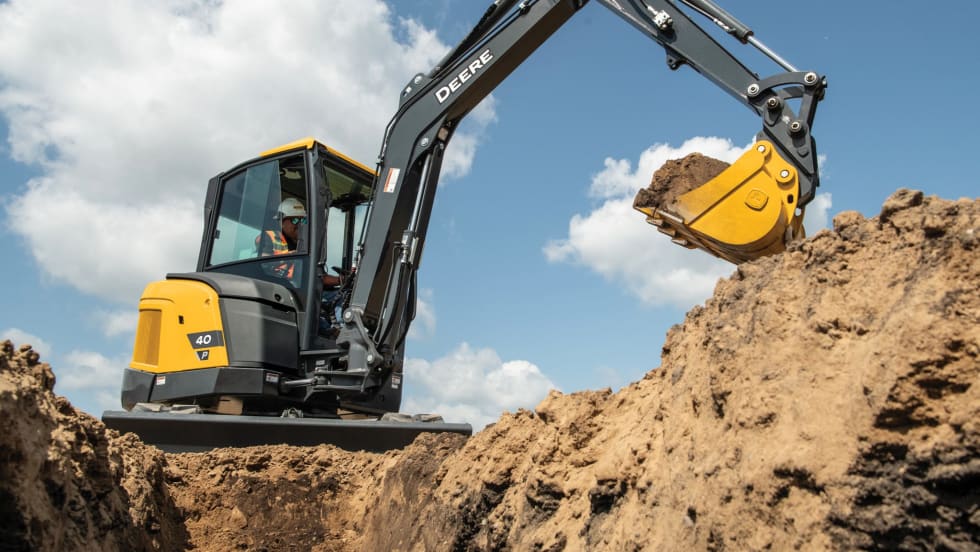
John Deere is adding a compact excavator designed for crews that need to move equipment between jobsites and handle multiple types of work with one machine. The 40 P-Tier weighs less than 10,000 pounds and offers configurable hydraulics, attachment options, and connected fleet-management capabilities.
This week, we look at what past Leading Fleet winners can teach us about making progress, plus how to build a business plan your fleet will actually use.