Fleet managers from 11 fleets across the country share the ways they have increased efficiency, productivity, and customer satisfaction through small changes to their operation.
Roselynne Reyes・Senior Editor
September 1, 2017
Photo: Getty Images
9 min to read
Small, simple changes can make a big difference. This is why fleets should regularly evaluate and update their processes to ensure they are working as efficiently as possible.
This article highlights a few of the small changes fleets have made to their operations that made a large impact. Fleet managers share details on what influenced the changes, how they were implemented, and any advice for fleets hoping to achieve similar results.
Ad Loading...
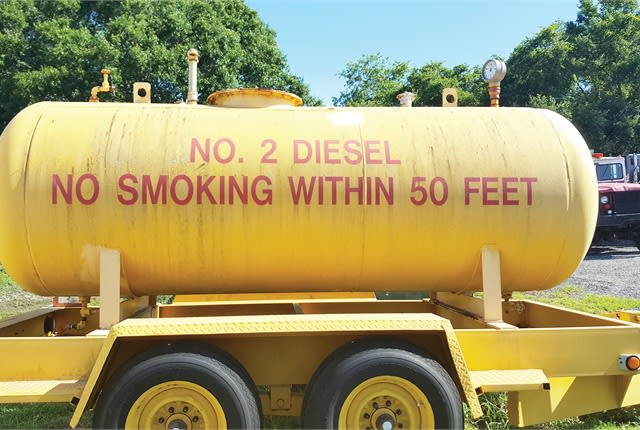
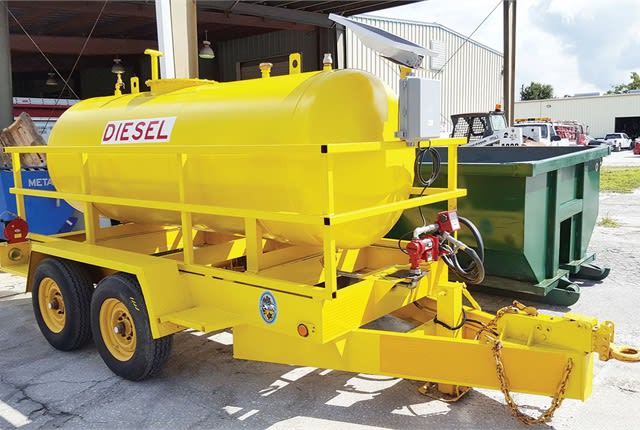
Fleet team members acquired a used fuel tank (right) and refurbished it (below) instead of purchasing a new one. Photos courtesy of Osceola County
Repurpose Equipment Instead of Buying New
Often, purchasing budgets are not sufficient to meet a fleet’s needs. However, refurbishing used equipment can save thousands. Osceola County, Fla., needed a new fuel trailer and decided to repurpose a used one instead of buying new. The end result: a solar-powered fuel trailer with an attached fuel pump. The fleet only spent about $1,400, according to Hector Sierra Morales, fleet manager. A new 1,000-gallon fuel trailer without a fuel pump or solar-powered battery would have cost approximately $10,000.
The fleet acquired a fuel trailer through a federal surplus warehouse for a $450 service fee, and spent about $960 on a solar panel, pump, and batteries. The paint and metal used to refurbish it were already kept in stock, and fleet employees installed a fuel pump, solar panel, and batteries and built the necessary brackets. When seeking used equipment to repurpose, Sierra Morales recommends looking into state and federal surplus programs.
“You would be surprised by the quality of equipment you can get for just a service fee,” he said.
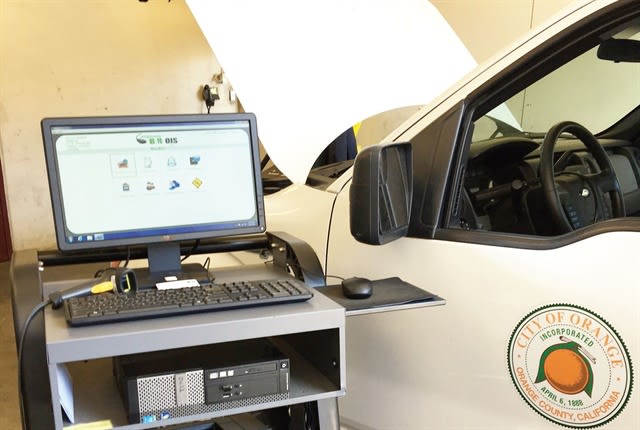
The City of Orange, Calif., was able to bring smog services in house after the state changed its program, requiring less-costly equipment. Photo courtesy of City of Orange
Bring Services In House
As part of its efforts to achieve continuous improvement, the City of Orange (Calif.) Fleet Services Division decided it could save time and money by conducting state-mandated smog checks in house. About 85 light-duty vehicles were tested every year, and the agency paid $40 per smog test, or about $285 per month, not including the labor cost of transporting vehicles to and from a smog test facility.
Ad Loading...
In order to become a State Certified Smog Facility, an area of the shop was designated as the smog station, one technician obtained a smog certification, and the fleet purchased test equipment for about $4,600 that uploads results to the state’s database. Keeping vehicles in house saved sub-letting costs while improving efficiency. Keith Marian, fleet superintendent, said the return on investment is estimated at 16-17 months.
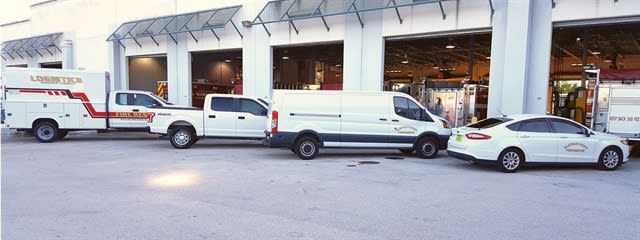
In order to maintain its level of vehicle care, Palm Beach County Fire Rescue (Fla.) requires service providers to follow its preventive maintenance checklist. Photo: Palm Beach County Fire Rescue
Outsource Services (Without Sacrificing Service Levels)
For Palm Beach County (Fla.) Fire Rescue, the fire apparatus is the star of the fleet. Tim Calhoun, CAFM, fleet director, said the agency focuses on making sure its heavy-duty trucks are ready when needed, and even insources apparatus maintenance for five other agencies. Accomplishing this requires a team of technicians with an expertise in heavy-duty trucks.
Instead of diluting its focus or assigning technicians away from its trucks, Fire Rescue decided to send light-duty vehicles still covered under warranty back to the dealer for maintenance.
The dealers pick up and drop off at the county shop and are required to follow the fleet’s preventive maintenance (PM) checklist, which means the fleet’s maintenance standards are being upheld without taking attention away from its heavy-duty fleet.
In order to outsource effectively, it is important for a fleet manager to pay attention to the services being provided.
Ad Loading...
“Quality inspect the vehicles each time they return and make sure that campaigns, recalls, and customer concerns are addressed before putting the vehicle back in service,” Calhoun said.
Expand Your Network of Contractors
When Rick Morris took over as director of fleet and facilities for Greene County, Va., he wanted to change the narrative that “you have to know someone” to get a government contract.
Morris decided to expand the division’s network of contractors. He reached out to a reporter from the local newspaper, which published an article calling for local businesses to contact the county. In addition to attracting local businesses, Morris said this effort helped educate taxpayers on the county’s procurement processes.
Maintaining a larger database of contractors is expected to save time when a job is available, as the division would ordinarily have to track down potential companies. Morris also expects to find better pricing by consulting a variety of sources instead of the same one or two companies.
Getting the word out was tougher than Morris realized. He hoped to hear from a wider range of contractors.
Ad Loading...
“I’ve been able to build a good list of the people who do carpet work and the plumbers and the painters, but there’s so many other potential jobs for people here in the county,” he said.
In addition, Morris said he received more responses through word of mouth and sharing the news on social media than he did from the original article. He recommends fleets take advantage of these networks to find the best candidates.
Install a Monitoring System for Lone Workers
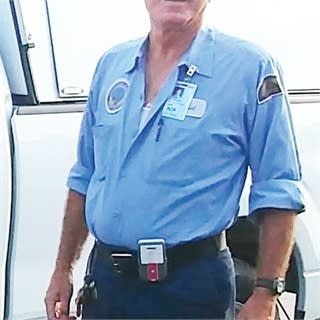
Workers in the field or in small shops wear a device that tracks their location in the event of an emergency. Photo: City of Long Beach
Managing employees in multiple locations can be a challenge, especially when employees work alone. The City of Long Beach, Calif., Fleet Services assigns lone workers to small shops and service trucks in the field, which can be a liability if an employee is injured while alone.
To ensure they are kept safe, Fleet Services uses a monitoring system. Employees wear pager-sized devices that sense if they fall too quickly, do not move for a set amount of time, or press the panic button. The main shop or monitoring company is alerted with the employee’s location.
Dan Berlenbach, CPFP, fleet services manager, recommends that fleets research purchase costs, monthly service fees, training, communication capabilities, and features. The fleet chose a company that offers live web training twice a week.
Ad Loading...
Purchase Uniforms that Increase Visibility
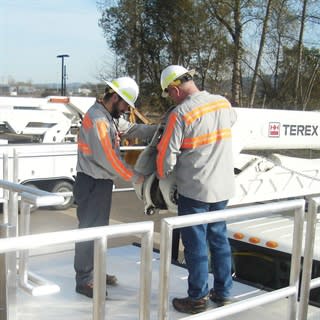
The Eugene (Ore.) Water & Electric Board’s reflective work shirts and helmets help technicians be seen, especially during swing or night shifts. Photo: Eugene Water & Electric Board
The Eugene Water & Electric Board in Oregon adopted enhanced visibility uniforms after a request from technicians. The uniforms feature reflective materials that increase worker visibility in low light and dark conditions.
The new uniform does not meet the American National Standards Institute’s requirement for high-visibility uniforms — the fleet tested work shirts that do meet standards but the chemicals used to remove oil and grease stains also removed the reflective material. For now, the fleet is sticking to enhanced visibility uniforms, which are sufficient for the technicians’ duties while offering higher level of safety and long life.
Promote Safe Driving
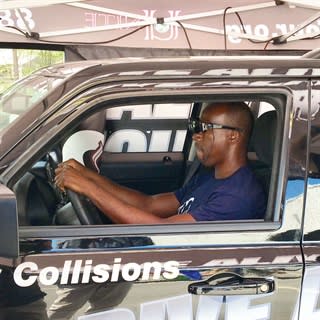
Cobb County (Ga.) Fleet Director Al Curtis tries out virtual reality goggles that mimic distracted driving. Photo courtesy of Cobb County
Cobb County (Ga.) Fleet Management worked with the IT Department to create an online “pledge” to not text and drive, and agencies competed to collect the most signatures. In total, 700 drivers from 21 departments signed the pledge.
At the end of the month, Fleet Management hosted an event where participants wore virtual reality goggles that simulated texting and driving. Fleet staff also placed decals in all county vehicles (except public safety vehicles) warning against distracted driving.
Al Curtis, director of fleet management, encouraged all fleets to get involved in educating drivers and the community through similar campaigns.
Ad Loading...
“Whether it be through an event like we hosted or simply making flyers, distracted driving is something that affects all of us in some way,” he said.
Photo: Getty Images
Set SMART Goals for Employees at Every Skill Level
Chris Means, CAFM, fleet superintendent for the City of Fort Worth, Texas, wanted to implement a system in which all employees in the same classification are held to the same standard. Coming from the private sector, he was familiar with SMART goals — specific, measureable, achievable, realistic, and timely goals. He adapted the concept to the city fleet, setting SMART goals for each role in the shop.
These goals are used to measure employees’ performance against the shop’s values. Section leaders, for example, must attend at least two fleet association meetings, obtain a certain number of certifications, meet specific key performance indicators, and identify and coach at least two future leaders. This also makes annual performance reviews easier.
Means said communication is critical to enforce these goals. Regular meetings are held to track progress, and at the end of every fiscal year, the goals are re-evaluated and changed when necessary.
Change Shifts to Increase Productivity
The City of West Palm Beach, Fla., fleet used to run two shifts: half of the technicians would arrive early, and the other half would stay late. This meant the shop operated with lower staff levels for the first and last few hours of the work day. It also made monitoring hours difficult as employees came in for work at different times.
Ad Loading...
The fleet switched to a 4-10 work schedule, in which all technicians work 10 hours a day and get Friday or Monday off. This increased productivity, allowing the shop to take on more work Tuesday through Thursday, and the initiative did not make any budgetary impact. The three-day weekend acts as a benefit, which keeps the fleet comparable with the private sector and has helped with employee retention.
With half the team missing two days a week, communication is key. Technicians are responsible for keeping each other informed on the vehicles they’re working on before they leave for the weekend.
Supervisors from each team within the City of Durham (N.C.) Fleet Management meet once a month to discuss performance. Photo courtesy of City of Durham
Hold Regular Performance Meetings
Like most fleets, the City of Durham, N.C., keeps track of important statistics such as vehicle availability and downtime. But it wanted to learn more about how each team (light-duty, medium-duty, heavy-duty, fire, and parts) performed and whether resources were allocated correctly.
Josh Edwards, business analyst, fleet management, pulled five years of fleet data to compile team profiles, and team supervisors began meeting monthly to share updates and determine whether more training or tools were needed.
In addition to improving communication between teams, the meetings have increased overall productivity. After three months of meetings, overall availability for the fleet has risen by 5%. Edwards stressed that this initiative is meant to look at how each team is working rather than individual performance.
Ad Loading...
In order to improve the fleet operation, supervisors should analyze and update fleet processes and policies on a regular basis to ensure goals are being met.
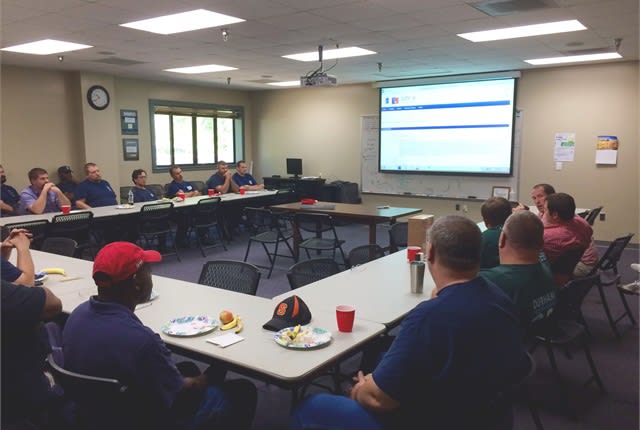
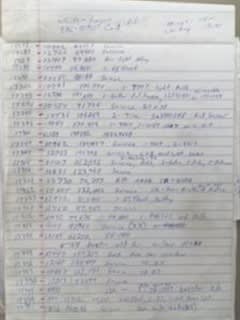
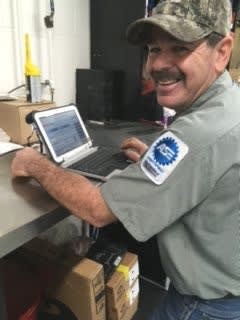
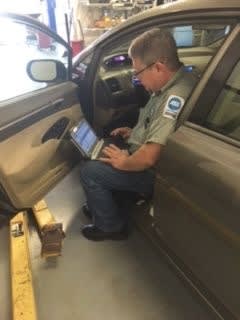
In the past, the Leon County (Fla.) Sheriff's Office fleet technicians maintained notes and records on paper. When making the transition to a new fleet software, the fleet closed down the shop and made sure everyone was trained on the new system. Photos courtesy of Leon County Sheriff's Office
Take the Time to Train Technicians
Learning new software can be daunting. When making the switch to a web-based fleet management software, Tim Coxwell, fleet manager for the Leon County Sheriff’s Office in Florida, wanted to take advantage of the system’s new features and modules.
Previously, Coxwell was the only one who input data into the fleet software, but he wanted the rest of the team to input fleet tasks on their own. In order to ensure technicians fully understood the new system, Coxwell closed down the shop for three days.
The fleet partnered with the agency’s IT department to develop a training program for technicians. Closing down shop operations allowed technicians to focus solely on learning the software rather than getting pulled away to work.
Ad Loading...
With these new skills, technicians are able to accomplish more on their own — such as managing appointments online instead of over the phone and filing work orders, which used to sit on Coxwell’s desk until he had time to input them himself.
Keeping a vehicle longer may ease this year’s budget, but what does it cost the next one? A closer look at fleet decisions can reveal opportunities to reduce spending while protecting essential services.
From industry news and fleet management strategies to conversations with peers, Government Fleet's LinkedIn page offers public-sector fleet professionals another way to stay informed and connected.
Five fleets were honored at RTA Connect 2026 in Chicago for excellence across resource efficiency, intentional culture, risk management, and stakeholder satisfaction.
Buying fleet management software in 2027 means looking beyond features and price. As fleet operations, technology and expectations evolve, this guide explores what today’s fleet professionals should consider when choosing a system that can deliver value now and adapt to what comes next.
St. Johns County, Florida, had fleet data, but turning it into reliable decision guidance was another matter. Instead of starting over with a new fleet management system, the county connected existing tools and built a scoring system that gives managers an objective look at fleet health.