




Bright Ideas: Productivity/Staffing
San Antonio Water Systems completed quality of life initiatives to increase staff productivity. Other government fleets used a training matrix, created learning and networking opportunities, installed internet in shop waiting areas, and started a youth internship program.

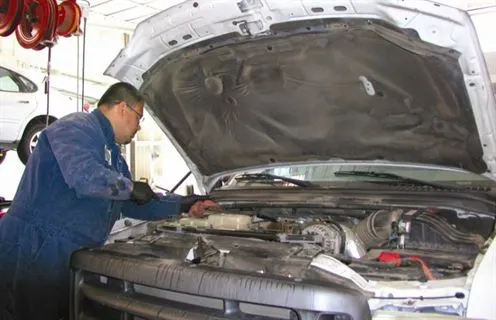
Productivity Attacked from Three Angles
The San Antonio Water Systems fleet "attacks" staff productivity from three angles: quality of life, quality of training, and quality of tools. Several quality of life initiatives were completed in 2009. The parts office and parts storage increased in size by a factor of 10. The office was completely rebuilt and a 4-ton HVAC unit was installed. All fleet personnel were provided with either custom "polo shirts" (office personnel) or new uniforms (shop personnel). Each technician also was provided a heated vest, adjustable to personal preferences, and a personal Porta-Cool. Training was provided to all technicians, including welding, hydraulics, pneumatics, braking systems, and welding. Each technician was given a new toolbox, technician carts, and complete set of tools. According to David Kilbourne, fleet director for the Texas agency, "The synergistic effect of all of our efforts reduced the average turn-time from an 11-day average in 2007 to a 0.75 day average in 2009."
Kilbourne also offers a variety of work shifts to meet as many personal needs as possible. "I offered a choice of 5-8s, 4-10s, or a 'to the gate-plus-eight,' for those who wanted to ride a bus to work. I didn't want them not to ride a bus over concern of the bus arriving on time," he said.
Contra Costa County Utilizes Training Matrix
Contra Costa County, Calif., employs a training matrix that identifies employees and records the dates and training completed. "Each technician's target training schedule is 10 hours per quarter, although many double that goal easily," said Rick Ranger, fleet manager for the County.
A core group of regularly offered training topics are available locally, as well as special offerings throughout the year. The official County technician training program, a three-year, modular, and completely elective training program, is offered through an automotive program. "The program is fully funded by the County and consists of classroom training combined with actual hands-on work," said Ranger.
ASE certification is strongly encouraged and funded by County informal study groups. To prep staff and train for ASE certification, coaching sessions are led by staff members, "one of whom is also an automotive instructor at a local college," said Ranger. ASE certifications are announced and presented at staff meetings, and technician certificates are displayed at the shop entrance.
Shop personnel are given information about available classes during a weekly "tailgate meeting." Personnel are encouraged to sign up; the cost is paid for by the County, and most classes are on County time.
Networking Creates Learning & Sharing Opportunities
Most fleet professionals relish the opportunity to meet face-to-face in an informal forum for gainful knowledge and skills sharing, as well as solution brainstorming. Recognizing the value of networking to promote individual growth and industry innovation, George Hrichak, CEM, CPFP, director of fleet services, City of Chesapeake, Va., resurrected the Tidewater Area Fleet Manager's Association (TAFMA) seven years ago to create a regional learning and networking opportunity. The group's monthly luncheon meetings of public and private fleets and fleet vendors average 40-60 members.
TAFMA recently turned its attention to fostering a future resource of well-trained and knowledgeable technicians. The group established a scholarship fund to financially aid local community college automotive students.
Waiting Areas Equipped with Internet Access
Four shops in Riverside County, Calif., now have visitor waiting areas equipped with Internet access, allowing employees to continue County work online while waiting for service.
City of Glendale Internship Program
The City of Glendale, Calif., brings in young talent with the help of an internship program arranged with a local college, and the in-house Glendale Youth Alliance. The City also requires all technicians complete a minimum of 8-24 hours of new training annually.
More Operations
What Can Disappear After a Fleet Crash?
This week, we look at drone footage, what fleets should document before repairs begin, and share a quick poll.
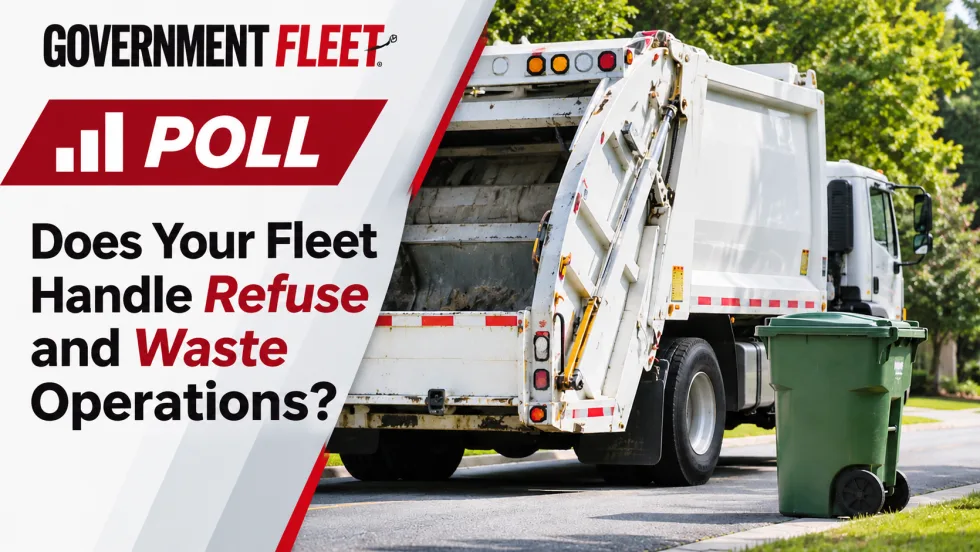
Does Your Government Fleet Handle Refuse and Waste Operations? Take Our Poll
Government Fleet wants to hear from public-sector fleet professionals about their responsibilities for refuse collection and waste management equipment.
Fleet Replacement Decisions, Waste Fleet Technology and the GFX Deadline
Is your next vehicle the right fit, can your records settle a missed pickup dispute, and what could your fleet teach others at GFX 2027?
Is Delaying Fleet Replacement Really Saving Money?
Could delaying replacement cost your fleet more than it saves? This week’s recap takes a closer look, plus an update on GFX 2027.

What Government Fleets Are Missing About Their True Costs
What are fleet budgets missing, and how can agencies use the data they already collect to make a stronger case for change?
Rethinking Fleet Decisions From the Budget Office to the Shop
This October we looked back at how public fleets are reconsidering familiar processes and using what they learn to make better decisions.
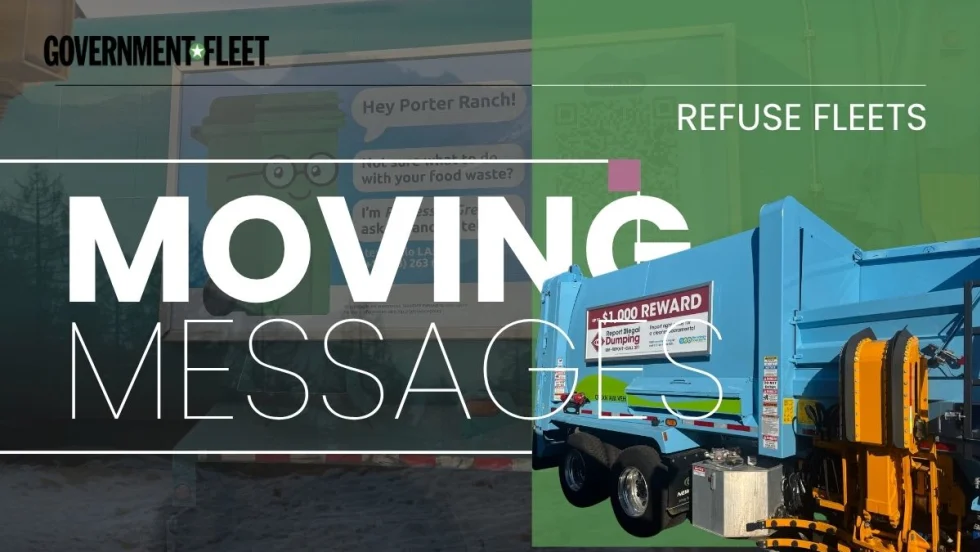
Who Owns the Message on a Refuse Truck?
Refuse trucks can carry public messages into neighborhoods, but keeping those messages current takes planning and clear responsibility.
Who Deserves Fleet Recognition and What Could You Teach at GFX?
Who helped shape your fleet career, and what have you learned that could help someone else?

What’s Haunting Public Sector Fleets?
Public sector fleet challenges rarely happen in isolation, and addressing one often means understanding how it connects to another.
Is Keeping Older Fleet Vehicles Really Saving Money?
Is keeping vehicles longer saving money, and what happens when a diagnostic test points to the wrong fix?