




Bridging the Technician Gap with Military Partnerships
The Department of Defense SkillBridge program gives fleets the opportunity to recruit technicians from the military and provide up to six months of training, all at no cost.

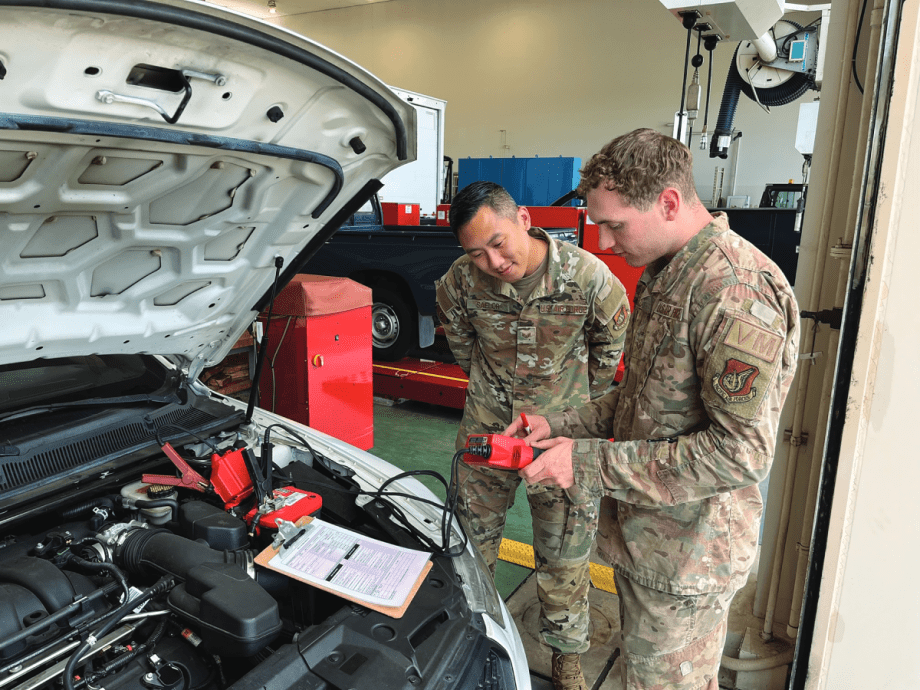
During their last 180 days of service, service members can participate in on-the-job training, apprenticeships, or internships with civilian organizations. Here, Air Force Vehicle Management Airmen are performing a battery test.
Photo: Yokota AB, Japan
Unless you solely outsource fleet maintenance and repairs, you’re likely quite familiar with how difficult it is to recruit technicians. Between skilled technicians retiring and competition with dealerships and other commercial shops, it can be hard for fleets to bring on new talent.
But what if government fleets could recruit technicians from the government? MSgt Steffan Gray, vehicle management superintendent for the U.S. Air Force stationed at Yokota AB, Japan, explains how the military can be a wellspring of potential technician talent.
Trying Out Talent for Free
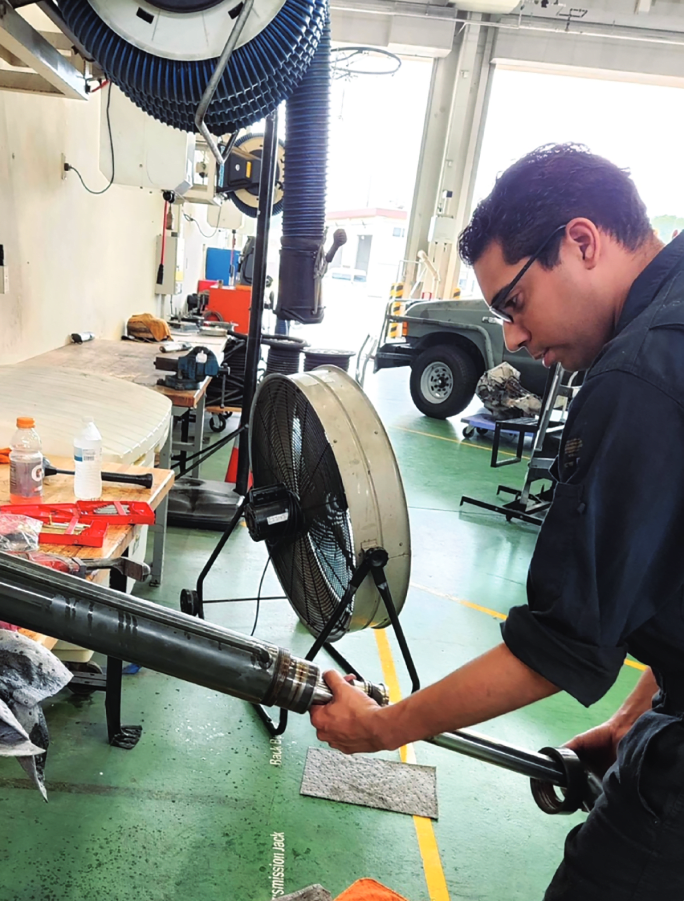
Service members participating in SkillBridge continue to receive their military compensation and benefits, and industry partners provide the training and work experience. Here, an Air Force Vehicle Management Airman in the program works on a hydraulic cylinder rebuild.
Photo: Yokota AB, Japan
Each year, roughly 200,000 members of the U.S. Armed Forces, stationed in more than 140 military installations in the U.S. and overseas, will leave active duty and re-enter the civilian workforce or pursue higher education. Civilian organizations, including fleets, have the opportunity to access this talent pool through the Department of Defense SkillBridge program.
To ease service members’ return to civilian life, SkillBridge connects them with industry partners in real-world job experiences. During their last 180 days of service, service members can participate in on-the-job training, apprenticeships, or internships with civilian organizations. Employers can craft SkillBridge programs to meet their specific workforce needs while benefiting from the skills, experience, and work ethic service members bring to the table.
Even better, service members participating in SkillBridge continue to receive their military compensation and benefits, and industry partners provide the training and work experience. For fleets, that means military personnel can train to be shop technicians for up to six months at no cost to the fleet. After the training period ends, SkillBridge industry partners have the option to hire the service member.
“U.S. military members are considered some of the most highly trained, disciplined, and motivated members in our society,” Gray says. “Most military members enter the service with zero knowledge in the skill the military needs them to perform, but they are willing to learn and perform at the highest level. This commitment can also be harnessed by fleet managers to gain amazing employees after the SkillBridge program has ended.”
Why Military Recruits Are a Good Fit for Fleets
In addition to the drive and work ethic the military instills in service members, Gray says the specific training SkillBridge participants receive during service equips them with the skills needed to learn a new trade quickly.
“Members that are eligible for SkillBridge have been in the military for at least a few years. Each service branch is different in when members start to become leaders, but every member, regardless of their position, is taught to be a follower,” Gray explains. “Depending on how long the service member has been in the military, they will have received continuing education in leadership, quality control/improvement, as well as communication skills/concepts.”
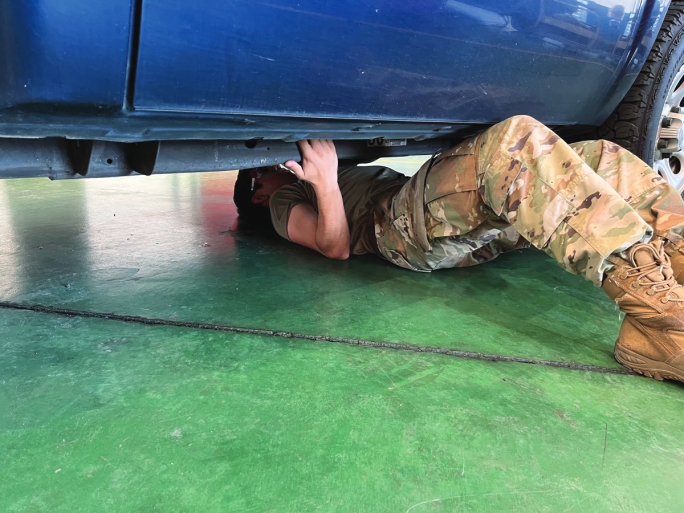
The training SkillBridge participants receive during service equips them with the skills needed to learn a new trade quickly. Here, an Air Force Vehicle Management Airman is about to perform a scheduled maintenance service on a pickup truck.
Photo: Yokota AB, Japan
Although SkillBridge participants may not have any automotive training, Gray said service members still have great potential to be valuable additions to a shop.
“Every branch has an automotive type of job, but just because a military member didn’t work on vehicles doesn’t mean they can’t become amazing technicians,” he said. “Military members requesting to do their SkillBridge with a particular place may not have a background in that field, but the drive and dedication they have will allow them to learn the job.”
How to Participate in SkillBridge
According to the SkillBridge Provider Handbook, SkillBridge programs come in all shapes and sizes, but most industry partners share the following characteristics:
Have clearly defined job training and career development programs designed to enhance opportunities for participating service members.
Can demonstrate a high probability of a job placement for service members at the program’s end.
Support “in demand” industries or occupations with opportunities for professional advancement beyond initial employment.
Fleets that would like to develop a SkillBridge program as an industry partner should visit skillbridge.osd.mil and complete the information in the “How to Participate” section of the Interested Industry Employer or Agency page. Fleets can also visit the Contact Us page to ask questions and request more detailed information, and a member of the SkillBridge program will provide further details.
Once a fleet joins the program as an industry partner, its SkillBridge opportunity is posted on the SkillBridge website. Industry partners can also work with local installation support offices to spread the word about opportunities with their fleet.
Gray encourages fleets to participate, as the risk is low, but the potential reward is high. “Take the time and effort to apply for the SkillBridge program,” he says. “Take a chance on a military member for free, and if it doesn’t work out after 180 days, everyone can part ways. Eligible SkillBridge members have dedicated their lives to our nation. I challenge you to provide them with an ability to transition from military service to the civilian workforce.”
More Operations
Is Keeping Older Fleet Vehicles Really Saving Money?
Is keeping vehicles longer saving money, and what happens when a diagnostic test points to the wrong fix?
Read More →
How Smart Fleet Strategy Can Help Local Government Agencies Do More with Less
Keeping a vehicle longer may ease this year’s budget, but what does it cost the next one? A closer look at fleet decisions can reveal opportunities to reduce spending while protecting essential services.
Read More →
Connect with Government Fleet on LinkedIn
From industry news and fleet management strategies to conversations with peers, Government Fleet's LinkedIn page offers public-sector fleet professionals another way to stay informed and connected.
Read More →
Town of Queen Creek Named Most Successful Fleet Award Winner of Inaugural RTA Fleet Success Awards
Five fleets were honored at RTA Connect 2026 in Chicago for excellence across resource efficiency, intentional culture, risk management, and stakeholder satisfaction.
Read More →
A buyer's guide to fleet management software in 2027
Buying fleet management software in 2027 means looking beyond features and price. As fleet operations, technology and expectations evolve, this guide explores what today’s fleet professionals should consider when choosing a system that can deliver value now and adapt to what comes next.
Read More →
Hazard Alerts, Fleet Car Sales Rise and a New Shuttle Concept
Fleet car sales doubled, but the bigger picture tells a different story in this week’s roundup.
Read More →
How St. Johns County Turned Fleet Data Into Better Replacement Decisions
St. Johns County, Florida, had fleet data, but turning it into reliable decision guidance was another matter. Instead of starting over with a new fleet management system, the county connected existing tools and built a scoring system that gives managers an objective look at fleet health.
Read More →
Fleet Forward Conference Introduces One-Day Passes for 2026
New one-day registration lets fleet professionals attend Tuesday, Wednesday, or Thursday, with passes available for $249.
Read More →
ENC Unveils its ZAVIR Medium-Duty Shuttle
Two variants of the concept shuttles were revealed: a low-floor configuration and a high-floor configuration.
Read More →
Could Your Next Fleet Technician Start as an Intern?
What if your next technician hasn’t worked in a fleet shop yet? What fleets are doing to free up time.
Read More →