




Best Practices in Disaster Recovery Planning
Lessons learned from the past helped fleet managers in southern Texas cope with the devastating Hurricane Ike, which made landfall at Galveston. Three Texas fleets that felt the hurricane’s impact share best practices.

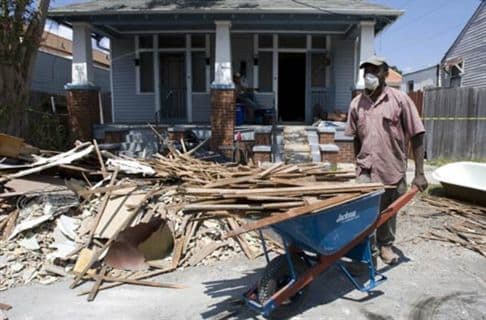
Hurricane Ike destroyed much of what was in its path.
What can government fleet managers do to protect vehicles and equipment when a hurricane looms?
Lessons learned from past hurricanes helped some fleet managers cope with Hurricane Ike, which struck Sept. 13, making landfall at Galveston, Texas. Some government fleet managers in the area said the protective measures they took helped their fleets come through in good condition, able to resume operations rapidly once the storm had passed.
What steps did these fleet managers take?

The fleet in League City, Texas, consisting of some 220 vehicles, including dump trucks, pickups, and police cars, came through unscathed, said Larry Herbert, public works director, because of “extremely good” preparation.
League City is about 20 miles inland from Galveston.
“We housed our vehicles in non-storm-prone areas, put them on high ground, and kept them out of harm’s way,” Herbert said. The safe sites included school district properties, he explained.
The plan to store fleet vehicles in places likely to stay high and dry was formulated after Hurricanes Katrina and Rita, Herbert said. Katrina hit the Gulf Coast, including New Orleans, Aug. 29, 2005, and Rita struck about a month later, Sept. 24.
As for the effects of Ike on League City itself, Herbert said in mid October, “We’ve got quite a bit of storm damage but it’s mainly wind-related.” Flooding occurred in some areas close to the city’s Clear Lake and Clear Creek at the time of the storm, he added.

Trees and tree limbs downed by high winds knocked out power, Herbert said, but the utility company serving the area, Texas-New Mexico Power, restored service to almost 100 percent of customers within about four days.
He added that government fleet managers in the area meet on a quarterly basis to update each other and coordinate mutual assistance plans.
Also well-prepared for Hurricane Ike was the Harris County fleet, said Keith Branner, director of fleet services.
Harris County includes the city of Houston, but the county fleet, consisting of some 2,500 police vehicles, as well as pickup trucks and vans used for building and property management, serves only the unincorporated areas of the county, not the city itself. The fleet’s central maintenance facility is on the east side of Houston, and four satellite maintenance sites are located around the county; 21 mechanics work on the equipment.
Branner’s experience of Hurricane Rita prompted a change in supply arrangements to secure fuel availability, as much as possible, in future storms.
“With Rita we couldn’t get fuel ahead of time,” Branner recalled, “so our tanks were depleted of fuel before the event even happened.”
In addition, relying on a fuel card network at retail stations left the fleet in the same position as the regular motoring public: trying to get fuel at stations without power to run their pumps.

“The fuel racks were shut down, and the stations supplying fuel were shut down,” Branner said of Rita’s impact. “We had to get fuel trucks through an emergency contract to come from out of town to help us. That caused us to put some big changes in our contracts here locally.”
Harris County now spells out contingency plans in all fuel contracts, Branner said, specifying that the fuel supplier will provide service in case of an emergency.
The County awarded the contract to a vendor “who has total control over the tanks, the fuel racks, the drivers, and the tank trucks — they own it all,” Branner said. “That worked out really well this time,” he said, referring to Hurricane Ike. “We had no problem getting the deliveries.” Without that contract, he said, “We would have had some very severe problems.”
Harris County had “quite a bit” to contend with at the time Hurricane Ike hit, Branner reported, but there were saving graces.
“We were out of the surge up here in Harris County,” he said. “We didn’t have a lot of flooding because there wasn’t a whole lot of rain, initially, and so we didn’t lose that many vehicles due to flooding.”
About a half-dozen vehicles, some submerged, had to be written off — a tally Branner judged not so bad. “That happens every time there’s a flood in this area,” he said. “We’ve had worse in some severe thunderstorms.”
In the City of Webster, about 20 miles inland from Galveston, the regular fuel supplier couldn’t get fuel to deliver to the fleet, said Shannon Hicks, director of public works in Webster. The City contacted another supplier that could deliver the following day, Hicks said.
Pumping fuel at its own facility was not a problem, Hicks noted, “We have back-up generators and back-up pumps if we need them.”
Tire damage was rampant during and after the storm, Hicks said, caused by debris in the streets, including tree limbs and roof shingles bristling with roof nails. The tires typically would lose air steadily, rather than blow out, so crews that detected leaks promptly drove to the maintenance shop for repairs, Hicks said.
The City of Webster’s fleet numbers some 230 vehicles, including cars, trucks, and heavy equipment.
We’re back to normal with our fleet,” Hicks said in mid October.
Webster itself suffered some wind damage. “The city had some tornadoes, we suspect,” Hicks said. “You can see a swath here and there where a roof was torn off, and places where a tree fell onto a house or another building.
“But we’ve got almost all of our debris picked up,” Hicks said. “The City infrastructure came through pretty well. We were pretty well prepared and fortunate — and we’re glad it’s over. The places hardest hit had the tidal surge. We didn’t have any tidal surge to speak of here.”
More Operations

Is Keeping Older Fleet Vehicles Really Saving Money?
Is keeping vehicles longer saving money, and what happens when a diagnostic test points to the wrong fix?
Read More →
How Smart Fleet Strategy Can Help Local Government Agencies Do More with Less
Keeping a vehicle longer may ease this year’s budget, but what does it cost the next one? A closer look at fleet decisions can reveal opportunities to reduce spending while protecting essential services.
Read More →
Connect with Government Fleet on LinkedIn
From industry news and fleet management strategies to conversations with peers, Government Fleet's LinkedIn page offers public-sector fleet professionals another way to stay informed and connected.
Read More →
Town of Queen Creek Named Most Successful Fleet Award Winner of Inaugural RTA Fleet Success Awards
Five fleets were honored at RTA Connect 2026 in Chicago for excellence across resource efficiency, intentional culture, risk management, and stakeholder satisfaction.
Read More →
A buyer's guide to fleet management software in 2027
Buying fleet management software in 2027 means looking beyond features and price. As fleet operations, technology and expectations evolve, this guide explores what today’s fleet professionals should consider when choosing a system that can deliver value now and adapt to what comes next.
Read More →
Hazard Alerts, Fleet Car Sales Rise and a New Shuttle Concept
Fleet car sales doubled, but the bigger picture tells a different story in this week’s roundup.
Read More →
How St. Johns County Turned Fleet Data Into Better Replacement Decisions
St. Johns County, Florida, had fleet data, but turning it into reliable decision guidance was another matter. Instead of starting over with a new fleet management system, the county connected existing tools and built a scoring system that gives managers an objective look at fleet health.
Read More →
Fleet Forward Conference Introduces One-Day Passes for 2026
New one-day registration lets fleet professionals attend Tuesday, Wednesday, or Thursday, with passes available for $249.
Read More →
ENC Unveils its ZAVIR Medium-Duty Shuttle
Two variants of the concept shuttles were revealed: a low-floor configuration and a high-floor configuration.
Read More →
Could Your Next Fleet Technician Start as an Intern?
What if your next technician hasn’t worked in a fleet shop yet? What fleets are doing to free up time.
Read More →