





Related: Achieving Green Fleet Goals
Adsorbed Natural Gas: A New Option for Light-Duty Trucks
A new natural gas vehicle technology aims to lower the cost of adopting compressed natural gas.
January 9, 2019
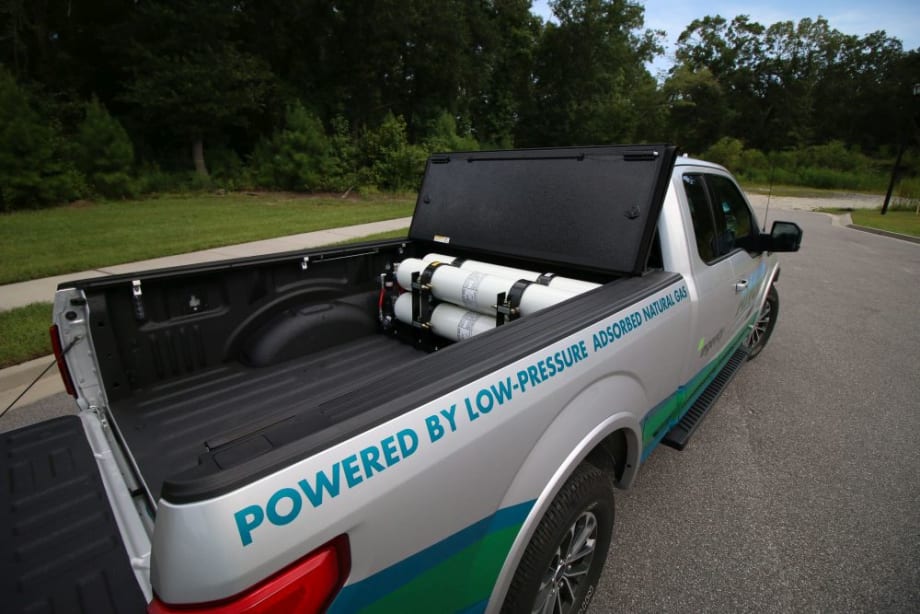
This F-150 plug-in hybrid adsorbed natural gas bi-fuel vehicle has a compressed natural gas range of about 80 miles before switching to gasoline.
Photo courtesy of Ingevity
2 min to read
Compressed natural gas (CNG) is most commonly used to fuel medium- and heavy-duty vehicles that consume large amounts of fuel because of the high cost of building fueling infrastructure and vehicle conversions. With lighter vehicles, the cost is harder to recoup. However, a new natural gas vehicle technology aims to change this.
Ingevity produces activated carbon adsorbents for adsorbed natural gas (ANG) that allows more natural gas to be stored at lower pressures compared to traditional CNG, without adsorbents, at the same pressure. The operating pressure for ANG technology is 900 PSI instead of the traditional 3,600 PSI. That means there is significant savings when it comes to fueling because lower pressure tanks don’t need the expensive compressors found at traditional CNG fueling stations.
“We’re storing more than half the amount of natural gas in the same space as high-pressure CNG tanks, but at only 25% of the pressure,” said Matt Bonelli, vice president of Adsorbed Natural Gas Products, which sells the PHANGV (plug-in hybrid adsorbed natural gas vehicle) storage system and engine calibration package. The ANG conversion is commercially available on 2018 and 2019 Ford F-150 5L V-8 trucks through Altech Eco, a Ford Qualified Vehicle Modifier (QVM). The F-150 upfit costs $10,950.
“We’re also talking about a low-pressure fueling appliance that’s going to be much more affordable when used for convenient, daily refueling at homes and businesses,” said Brad Reed, director of business development, Performance Materials, Ingevity. The bi-fuel F-150 provides about 4.5 gasoline gallons equivalent (GGEs) of natural gas, providing a range of about 80 alt-fuel miles before switching to gasoline.
Ingevity is testing five time-fill refueling appliances from four different manufacturers at the Gas Technology Institute. Appliance fueling takes about six to nine hours, but the ANG tanks can also be fast-filled.
Subscribe to Our Newsletter
More Green Fleet
Sustainability Partners, Energy Systems Group Help Albuquerque Close the Gap on its 100% Renewable Energy Goal
The eight-site, 6 MW solar project has advanced the city toward 100% renewable energy for municipal operations.
Read More →
Port Authority and CALSTART Launch $45 Million Electric Truck and Charging Programs
The programs aim to boost sustainable operations across the East Coast's busiest seaport.
Read More →
Moving Government Fleets Beyond the Vehicle Purchase: EV as a Service
A discussion on how EVaaS is moving beyond pilot programs and what fleets should consider before beginning a larger deployment.
Read More →
Moving Government Fleets Beyond the Vehicle Purchase: EV as a Service
As fleets move beyond small EV pilots, Sustainability Partners CEO Adam Cain explains how EVaaS can address the infrastructure and long-term planning required for larger deployments.
Read More →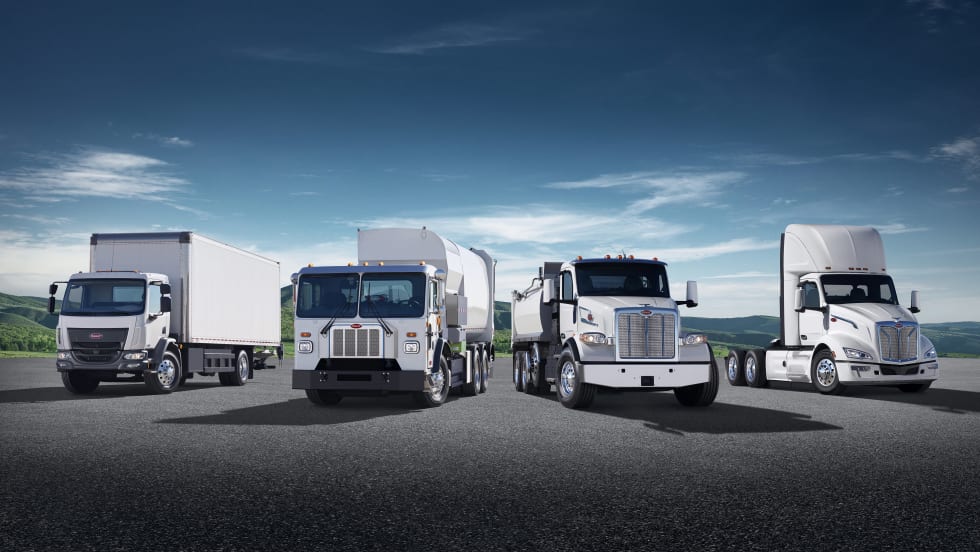
Peterbilt Expands Sourcewell Partnership with Electric Vehicle Lineup
The agreement aims to provide streamlined procurement of Peterbilt trucks for government, education, nonprofit and tribal organizations across the United States and Canada.
Read More →

EV Adoption & Charging Challenges
Where is your fleet in the journey of vehicle electrification? If you're still looking for answers to fleet electrification you've come to the right place.
Read More →
Hawaii Passes Clean Fuel Policy
Hawaii lawmakers passed clean fuel legislation that could support renewable natural gas production, biogas-powered transportation, and lower-carbon fueling options for public and commercial fleets.
Read More →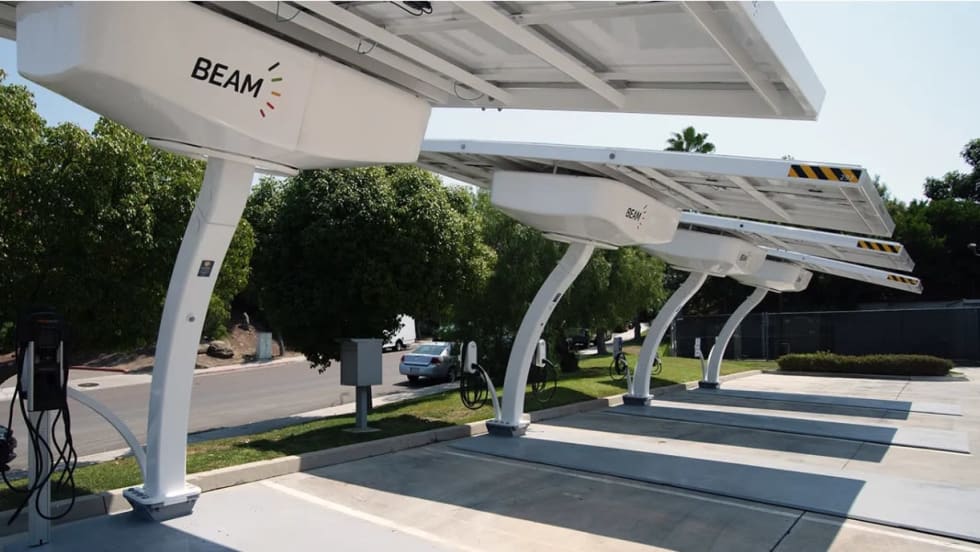
Stanislaus County Deploys Ten Beam Global EV ARC Systems to Support County Fleet Electrification
Stanislaus County deployed 10 off-grid solar-powered EV charging systems and a mobile charging trailer from Beam Global to support its electric fleet operations and emergency response flexibility.
Read More →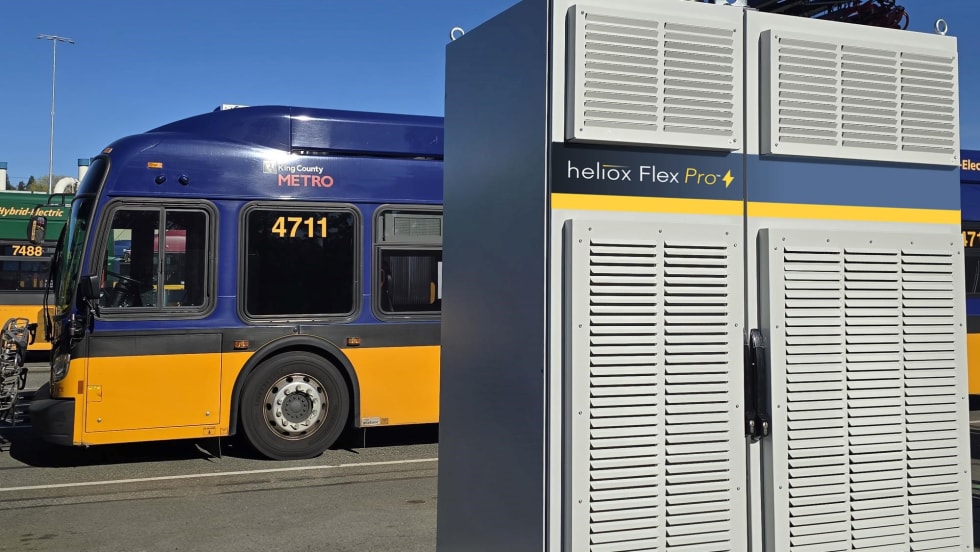
Heliox Pilots 480-kW Bus Charger with King County Metro
King County Metro is piloting Heliox’s new 480-kW Flex Pro charger to support expansion of its battery-electric bus fleet and depot charging infrastructure. The compact charging system supports pantograph and plug-in charging configurations for high-density transit operations.
Read More →