




Accurate Mileage: The Lifeblood of Good Fleet Management
Nearly every function of fleet vehicle management requires a decision dependent upon accurate odometer reporting. Utah's Division of Fleet Operations employs a proactive approach to ensuring correct mileage data.
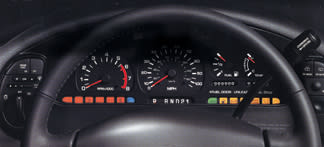
It is often said throughout the fleet management business that accurate mileage is the “lifeblood of good fleet management.” Virtually every function dealing with fleet vehicle management requires a decision dependent upon accurate vehicle odometer mileage. Major fleet tasks, including vehicle replacement/lifecycling, proper vehicle maintenance and repair intervals, and efficiently analyzing data all require accurate mileage. Taking this maxim to heart, the state of Utah’s Division of Fleet Operations (DFO) decided to proactively handle errant odometer readings that routinely disrupt fleet decisions. DFO set out on a quest to ensure accurate vehicle mileage data by identifying and correcting the situation. DFO estimated that prior to 2000, approximately 15-20 percent of odometer readings entered into the fleet management information system (FMIS) were inaccurate. A small task force in the division was assembled to recommend corrective measures for the data problems. The task force identified the following key factors that play critical roles in mileage accuracy, responsibility, and accountability.
Each vehicle operator inputs odometer readings using the fuel card system. Some operators enter incorrect mileage at the source.
The state partners with a maintenance provider, who acquires mileage when repairs are initiated on vehicles.
A portion of the mileage is omitted or inputted manually.
FMIS downloads odometer readings from fuel card and maintenance repair providers on a routine basis.
FMIS validates the current odometer reading each time the vehicle is repaired using a work order.
PM compliance, routine repairs, and vehicle replacement are dependent on accurate vehicle mileage.
Vehicle statistical analysis, forecasting, benchmarking, reporting, and continuous improvement depend highly on accurate cost per mile data. The State of Utah operates the country’s most sophisticated, comprehensive, and award-winning fuel network system wherein the vehicle operator inputs vehicle mileage electronically each time the vehicle is fueled. This data is downloaded from the state’s fuel provider on a next-day basis and uploaded into the state’s FMIS. During edit checks, the FMIS provides an automated report of all invalid odometer readings, including incorrect data via transposed numbers to blatant number combinations like “999999,” “123456,” or all zeroes (“000000”). Since the vehicle operator controls most of the data input, DFO decided this was the first place to start the effort to increase odometer accountability. DFO introduced a “Bad Odometer Fee” of $50 per incident, i.e., the vehicle operator or agency entered mileage incorrectly. Moreover, DFO created a fee assessment policy and procedure, allowing the agency the benefit of the doubt on minor input errors. The fee would only be assessed for blatant errors. DFO also gave each agency contact three business days to provide the correct mileage odometer reading before assessing the fee. This policy sent the message that DFO was more interested in accurate mileage than penalty fee revenue. DFO also allocated a full-time employee to reconcile the errant meter readings on a daily basis using an in-house application created by the division’s MIS team. The application provides several interactive user-defined modules to reconcile odometer readings. Below is a brief description of each module and its purpose: {+PAGEBREAK+} Excessive Mileage Report. This automated program allows DFO employees to input a user-defined mileage parameter to review readings that may be out of range. The default number is 500 miles, meaning that any vehicle that travels more than 500 miles (approximately one tank of fuel) without a meter reading is flagged and analyzed. For example, the “Excessive Mileage Report” may reveal that vehicle number FO7766 traveled 60,629 miles since its last meter reading update. This may indicate several problems. Nevertheless, proactively equipped with this knowledge, the formal investigation process can begin to discover exactly what transpired. We investigate by asking a list of questions:
Did the operator enter the wrong odometer reading?
Is the vehicle using the automated fuel card system?
Did the operator use a card assigned to another agency vehicle?
Is the vehicle equipment functioning properly?
Did the repair vendor obtain the correct meter reading?
Is this vehicle being maintained at proper intervals?
Is there a fraud, use, neglect, or abuse issue? Obtaining this information is integral to maintaining a proper maintenance management and replacement program. Even the slightest deviation in the odometer reading can seriously affect the fuel, repair, and preventative maintenance (PM) program. Moreover, mileage error can skew benchmarks and statistics, making it difficult to implement continuous improvement programs. DFO Operations Manager Sam Lee says, “The meter control programs we have implemented in fleet operations have made a tremendous improvement in the mileage information collected about each state vehicle. I now have confidence that the current mileage shown in our fleet management information system is the actual mileage of the vehicle. With this confidence, I can make sound management decisions about vehicle replacement cycles and preventive maintenance programs, and I can see accurate cost-per-mile trends over time in the State of Utah fleet. “Our customers also benefit greatly from the quality of our mileage data because we don’t waste time trying to verify the correct mileage of a vehicle when it comes to replacement or preventive maintenance compliance issues.” Zero Miles Report (No Miles Billed). With this report, the division can view all vehicles that have recorded “zero” mileage during the month. The following important questions can be asked to determine why the vehicle is not accumulating appropriate mileage.
Is the vehicle utilized properly?
Is the speedometer broken?
Is the fuel card being used?
Is the vehicle properly maintained?
Is this vehicle needed?
Should this vehicle be sold?
Is this the correct vehicle application for its intended purpose?
Is the vehicle lost or stolen?
Is there a data management problem? Armed with the answers to these questions, the DFO can manage a large fleet at a glance. The state of Utah operates more than 10,000 pieces of equipment, and these automated tools allow the state to manage each asset more efficiently. Since the implementation of this module, the blatant meter reading errors have dropped from 372 in calendar year 2002 to 251 in 2003. This year, no incidents relating to blatant errors have been recorded. Reducing blatant mileage errors has helped strengthen every program within the division. Programs like PM are easier to manage, validate, and reconcile. The vehicle recall and maintenance safety program and the replacement program are both much easier to manage. “The implementation of the meter control programs in the State of Utah fleet has been a slow process because we had to literally research the mileage of each vehicle in the fleet and verify with department contacts the true mileage of all state vehicles,” says Lee. “However, once we had an accurate mileage figure and a regular history to compare mileage updates, we refined the process to be monitored by a single employee working part time.” According to Lee, “The other challenge we faced up front in the implementation of this meter control program was educating our department contacts and drivers about the importance of correct mileage. Once they understood how serious we were in the collection of good mileage data through fines charged for incorrect meters, most departments and agencies have taken it upon themselves to provide regular training and reminders to drivers about the importance of accurate mileage updates in the fleet management information system. Our partnership now with the customers leasing vehicles from fleet operations as it relates to mileage updates is a great success.” {+PAGEBREAK+} Billing Exception Report. This report allows DFO to review a list of vehicles not billed properly due to incorrect mileage. Run prior to the monthly agency billing process, this report provides a detailed list of exceptions and allows time to investigate and correct problems before the actual bill is presented to the customer. The report has enabled DFO to improve “miles billed” dramatically over the past four years. “Miles billed” is used to benchmark many of the cost-per-mile and performance measurements throughout the fleet. Proper benchmarking allows DFO to set realistic objectives and goals to achieve continual improvement relating to fleet management ideals. Meter “Out-of-Range” Report. This report is tied to the division’s automated fuel network system, which analyzes each individual transaction as it actually occurs. With the “meter out-of-range” report, the division monitors actual odometer readings downloaded from the previous day’s fuel transactions. The module’s functionality allows fleet employees to comment when operators or agencies are contacted and features a “click” button to indicate that the bad mileage incident has been resolved. The report also shows detailed information about each transaction and the nature of the problem to be investigated. These electronic tools have allowed DFO to demonstrate continuous improvement the last four years. This improvement comes by properly maintaining and replacing vehicles in a timely manner. Maintenance costs in the division have been reduced by more than $1 million since 2000. As a result, every DFO statistical benchmark indicates significant improvement, which ultimately results in cost reductions and savings passed on to customers. One of the biggest problems in managing fleet vehicle assets has virtually been eliminated. This process improvement has also increased driver awareness/responsibility, agency accountability, and overall efficiency relating to maintaining accurate mileage fleet-wide. Figure 5 demonstrates the effectiveness of this customer process and its effect on the overall reductions in errant meter readings. Bad odometer readings have been reduced by 46 percent in the past two years. This aids the division in maintaining proper PM schedules while further reducing vehicle costs. The past few years have seen a 25-percent decrease in PM maintenance costs. Judy Wilkins, lead programmer on the project, says “the biggest challenge in the programming has been to provide as much data as possible to make the job straightforward, but not too much that the process gets convoluted. Also, to provide the amount of data in an easy-to-read, workable format was quite a challenge.” Understanding actual vehicle mileage has allowed DFO to maintain more realistic and accurate lifecycles. The state’s average fleet vehicle age has been reduced, and the average utilization for each vehicle increased. The overall efficiency of the fleet managed by DFO is improving in proportion to the accuracy of the fleet mileage. Providing an incentive for each operator and agency to become more accountable greatly enhances the ability to improve the process. Figure 7 demonstrates the net effect of charging a fee to improve mileage-reporting accountability. Once you control fleet mileage, you can better control the entire fleet management process. Fleet management control effectively reduces costs and provides a greater level of fleet efficiency. Proper mileage, resulting from accurate odometer readings, is truly the “lifeblood” of properly managing and maintaining a fleet.
More Operations

Town of Queen Creek Named Most Successful Fleet Award Winner of Inaugural RTA Fleet Success Awards
Five fleets were honored at RTA Connect 2026 in Chicago for excellence across resource efficiency, intentional culture, risk management, and stakeholder satisfaction.
Read More →
A buyer's guide to fleet management software in 2027
Buying fleet management software in 2027 means looking beyond features and price. As fleet operations, technology and expectations evolve, this guide explores what today’s fleet professionals should consider when choosing a system that can deliver value now and adapt to what comes next.
Read More →
Hazard Alerts, Fleet Car Sales Rise and a New Shuttle Concept
Fleet car sales doubled, but the bigger picture tells a different story in this week’s roundup.
Read More →
How St. Johns County Turned Fleet Data Into Better Replacement Decisions
St. Johns County, Florida, had fleet data, but turning it into reliable decision guidance was another matter. Instead of starting over with a new fleet management system, the county connected existing tools and built a scoring system that gives managers an objective look at fleet health.
Read More →
Fleet Forward Conference Introduces One-Day Passes for 2026
New one-day registration lets fleet professionals attend Tuesday, Wednesday, or Thursday, with passes available for $249.
Read More →
ENC Unveils its ZAVIR Medium-Duty Shuttle
Two variants of the concept shuttles were revealed: a low-floor configuration and a high-floor configuration.
Read More →
Could Your Next Fleet Technician Start as an Intern?
What if your next technician hasn’t worked in a fleet shop yet? What fleets are doing to free up time.
Read More →
How Phoenix Is Building Its Next Generation of Fleet Technicians
With more than 8,000 vehicles and pieces of equipment to maintain, the City of Phoenix could not afford to wait for fully trained technicians to walk through the door. Instead, they revamped their entire workforce strategy and showed how public fleets can create their own talent pipeline while preparing existing employees for increasingly complex vehicles.
Read More →
What’s Slowing Your Fleet Down?
Could a change in how work gets done help your fleet return vehicles to service sooner?
Read More →
Can Public Fleets Trust the Data Driving Their Decisions?
Public fleets have more data than ever, but inconsistent records and missing information can still undermine maintenance, replacement, and cost decisions.
Read More →