




A New Facility & Outlook For City of Columbus Fleet
The City of Columbus, Ohio, demonstrates how updating facilities results in more than a new appearance.

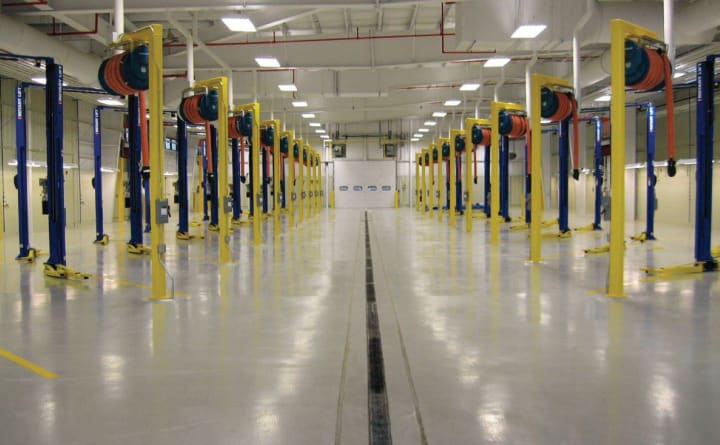
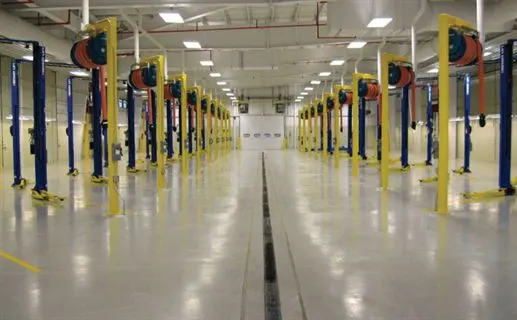
This year, the City of Columbus, Ohio, made major strides toward accomplishing its mission: to provide state-of-the-art total fleet maintenance services and help city departments and divisions operate vehicles in a cost-effective manner.
The City’s most notable effort in revolutionizing fleet operations has been consolidating five fleet sites into one new, state-of-the-art facility. Previous facilities were simply out of date. Some could not accommodate larger modern equipment.
"Equipment size increased over time, leading to insufficient space to properly service vehicles, barely any space to walk between vehicles, insufficient overhead clearance, and significant age issues with the entire building," said Kelly Reagan, fleet administrator for the City of Columbus. "Before the new facility was constructed, there were no lifts for heavy trucks and equipment. All work had to be performed under vehicles on creepers. At our fire maintenance repair facility, there was only room to work on one aerial ladder at a time and it had to be put in a specific location so the cab could be tilted between the ceiling trusses."
At the old facilities, fluids were handled in 55-gallon drums, labor intensive to manage and inefficient in price. These sites also suffered from age, with unsafe and deteriorating roofs, flooding problems, inadequate space, poor lighting, poor ventilation, and out-of-date service equipment. Also, none of the facilities had adequate security in place.
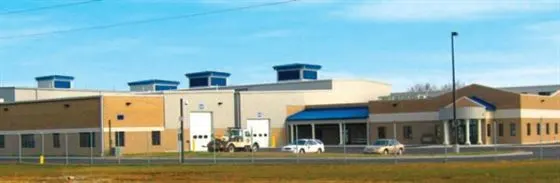
At the new $27 million, 150,000 square-foot facility, technicians have ample space and overhead to properly service vehicles. Security for vehicles being serviced has improved significantly. Furthermore, the facility provides additional parking, eliminating repeated shuffling of vehicles. Other perks include high-output fluorescent lighting in each of its 77 service bays, updated equipment, an updated efficient HVAC system, and several "green" elements.
In addition, physical improvements greatly enhance safety, efficiency, and performance. These include state-of-the-art vehicle lifts, automated fluid dispensing, and environmentally friendly spill clean-up and containment.
"Employees are no longer required to manually move heavy 55-gallon drums of fluid throughout the facility. Now, all fluids are dispensed from a centrally controlled, as well as a centrally ‘contained,’ bulk storage room," Reagan said. "These latest technological advances have been implemented in an effort to inform and alert technicians (via administration computers) of a spill and/or any issues related to maintaining the bulk systems. Environmentally friendly spill clean-up reduces slip and fall injuries."
[PAGEBREAK]
On any given day, the city’s fleet department touches approximately 100 vehicles and annually processes approximately 34,000 work orders. Fleet services anything from a police cruiser, fire apparatus or rescue unit to transportation snow plows, recreation and parks bucket trucks, and refuse heavy-duty collection trucks. Fleet also services all light-duty vehicles and motorized equipment. The city’s 60 motorized boats are used by fire, police, and recreation and parks divisions.
The new facility is open 24 hours-a-day, seven days-a-week to accommodate both the fire and police divisions. By centralizing facilities, vehicle availability has increased by nearly 50 percent in most divisions and the parts department centralization enabled the fleet division to reduce inventories by a staggering 40 percent in 2008.
Reagan said a good example of fleet’s improved service to citizens is during a "snow emergency." Fleet now dedicates more resources to keeping snow plow and salt trucks on the roads helping keep Columbus citizens safe.
The new facility is also capable of operating off the electricity grid. Equipped with a 12-cylinder Cummins generator with an underground storage tank of 10,000 gallons of fuel, the facility can run independently for 100 hours during an emergency.
In all, the new facility demonstrates a major step in fleet operations. "These improvements mean increased efficiencies for city taxpayers. It also shows the entire community that the Mayor, City Council, and administration have made a paradigm shift in thinking from so many other cities in the U.S.," according to Reagan.
[PAGEBREAK]
Columbus citizens aren’t the only people who have noticed the positive results of a new facility. Technicians clearly benefit as well. The facility’s specially designed training facility provides technicians professional development. Technicians logged more than 2,400 hours of training in the facility’s first six months.
However, the most notable improvement, Reagan said, is a shift in the overall culture. Moving to a new building allowed everyone — management and technicians — to take a fresh approach to their work. For instance, employees are now encouraged to offer suggestions and solutions about safety concerns on the floor. In essence, employees now police themselves, with little involvement from management.
"Many employees have stated it is a pleasure to work in such a technologically advanced facility," Reagan said. "There is an unparalleled sense of pride and self-worth glaringly apparent that radiates from all the men on the shop floor."
Reagan said another good example of the culture shift was the parking set-up. At the old facility, each parking spot had a job title and name, with the administrator and management garnering the spots closest to the door.
"This practice was intentionally not followed in the new facility, in an attempt to equalize privileges," Reagan said. "Now, the earlier one arrives to work, the better the spot one receives. We believe that this, along with our open door policy, encourages open communication and helps break down the walls between management and labor."
Fleet management also reviewed its investment in technicians. "The City of Columbus has shifted from fleet maintenance to truly fleet management, and in doing so, enabled fleet management to attract and retain a better, stronger, and safer work force," Reagan said. "The City of Columbus continues to raise the bar of its employees through continued education and consistent training for all mechanics on the floor."
With the move, fleet has reevaluated outdated classifications and adopted performance-based classifications that reward technicians for training and testing accomplishments. "In the end, as the City invests in its employees, we see marked improvements in employee retention and morale, and higher quality repairs going out the back door," Reagan said.
[PAGEBREAK]
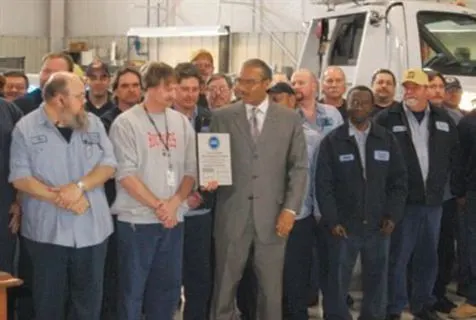
Columbus’ investment in technicians shows. In January 2008, fleet became a Blue Seal Facility. Columbus is now the largest city in the city — and one of only two Ohio municipalities — to receive ASE Blue Seal certification. At least 75 percent of all technicians hold at least one ASE. Currently, 60 employees hold more than 320 ASE certifications and 16 employees hold 32 emergency vehicle technician (EVT) certifications in specialized areas. Fleet technicians on the floor hold 14 Master certifications and more than 30 employees have specialized training and certifications through EVT for servicing both ambulances and heavy fire apparatus.
The City pays registration fees and overtime wages for technicians in the ASE program. "Blue Seal is recognition of the pride of both the union they represent and the management they work with, all geared toward the citizens of Columbus who are ultimately served by these dedicated employees," Reagan said.
More Operations
Is Keeping Older Fleet Vehicles Really Saving Money?
Is keeping vehicles longer saving money, and what happens when a diagnostic test points to the wrong fix?
Read More →
How Smart Fleet Strategy Can Help Local Government Agencies Do More with Less
Keeping a vehicle longer may ease this year’s budget, but what does it cost the next one? A closer look at fleet decisions can reveal opportunities to reduce spending while protecting essential services.
Read More →
Connect with Government Fleet on LinkedIn
From industry news and fleet management strategies to conversations with peers, Government Fleet's LinkedIn page offers public-sector fleet professionals another way to stay informed and connected.
Read More →
Town of Queen Creek Named Most Successful Fleet Award Winner of Inaugural RTA Fleet Success Awards
Five fleets were honored at RTA Connect 2026 in Chicago for excellence across resource efficiency, intentional culture, risk management, and stakeholder satisfaction.
Read More →
A buyer's guide to fleet management software in 2027
Buying fleet management software in 2027 means looking beyond features and price. As fleet operations, technology and expectations evolve, this guide explores what today’s fleet professionals should consider when choosing a system that can deliver value now and adapt to what comes next.
Read More →
Hazard Alerts, Fleet Car Sales Rise and a New Shuttle Concept
Fleet car sales doubled, but the bigger picture tells a different story in this week’s roundup.
Read More →
How St. Johns County Turned Fleet Data Into Better Replacement Decisions
St. Johns County, Florida, had fleet data, but turning it into reliable decision guidance was another matter. Instead of starting over with a new fleet management system, the county connected existing tools and built a scoring system that gives managers an objective look at fleet health.
Read More →
Fleet Forward Conference Introduces One-Day Passes for 2026
New one-day registration lets fleet professionals attend Tuesday, Wednesday, or Thursday, with passes available for $249.
Read More →
ENC Unveils its ZAVIR Medium-Duty Shuttle
Two variants of the concept shuttles were revealed: a low-floor configuration and a high-floor configuration.
Read More →
Could Your Next Fleet Technician Start as an Intern?
What if your next technician hasn’t worked in a fleet shop yet? What fleets are doing to free up time.
Read More →