




FMCSA Releases Final New Hours of Service Rule
WASHINGTON - U.S. Transportation Secretary Ray LaHood on Dec 22 announced a final rule that employs the latest research in driver fatigue to make sure truck drivers can get the rest they need to operate safely when on the road.
WASHINGTON - U.S. Transportation Secretary Ray LaHood today announced a final rule that employs the latest research in driver fatigue to make sure truck drivers can get the rest they need to operate safely when on the road.
The new rule by the U.S. Department of Transportation's Federal Motor Carrier Safety Administration (FMCSA) revises the hours-of-service (HOS) safety requirements for commercial truck drivers.
"Trucking is a difficult job, and a big rig can be deadly when a driver is tired and overworked," said Transportation Secretary Ray LaHood. "This final rule will help prevent fatigue-related truck crashes and save lives. Truck drivers deserve a work environment that allows them to perform their jobs safely."
FMCSA's new HOS final rule reduces by 12 hours the maximum number of hours a truck driver can work within a week. Under the old rule, truck drivers could work on average up to 82 hours within a seven-day period. The new HOS final rule limits a driver's work week to 70 hours.
In addition, truck drivers cannot drive after working eight hours without first taking a break of at least 30 minutes. Drivers can take the 30-minute break whenever they need rest during the eight-hour window.
The final rule retains the current 11-hour daily driving limit. FMCSA will continue to conduct data analysis and research to further examine any risks associated with the 11 hours of driving time.
The rule requires truck drivers who maximize their weekly work hours to take at least two nights' rest when their 24-hour body clock demands sleep the most - from 1 a.m. to 5 a.m.
This rest requirement is part of the rule's "34-hour restart" provision that allows drivers to restart the clock on their work week by taking at least 34 consecutive hours off-duty. The final rule allows drivers to use the restart provision only once during a seven-day period
Companies and drivers that commit egregious violations of the rule could face the maximum penalties for each offense. Trucking companies that allow drivers to exceed the 11-hour driving limit by 3 or more hours could be fined $11,000 per offense, and the drivers themselves could face civil penalties of up to $2,750 for each offense.
Commercial truck drivers and companies must comply with the HOS final rule by July 1, 2013. The rule is being sent to the Federal Register today and is currently available on FMCSA's Web site at http://www.fmcsa.dot.gov/HOSFinalRule.
As part of the HOS rulemaking process, FMCSA stated it held six public listening sessions across the country and encouraged safety advocates, drivers, truck company owners, law enforcement and the public to share their input on HOS requirements. The listening sessions were live webcast on the FMCSA Web site.
Related Content:
Changes Proposed for Driver Hours-of-Service Rules
More Operations
Rethinking Fleet Decisions From the Budget Office to the Shop
This October we looked back at how public fleets are reconsidering familiar processes and using what they learn to make better decisions.
Read More →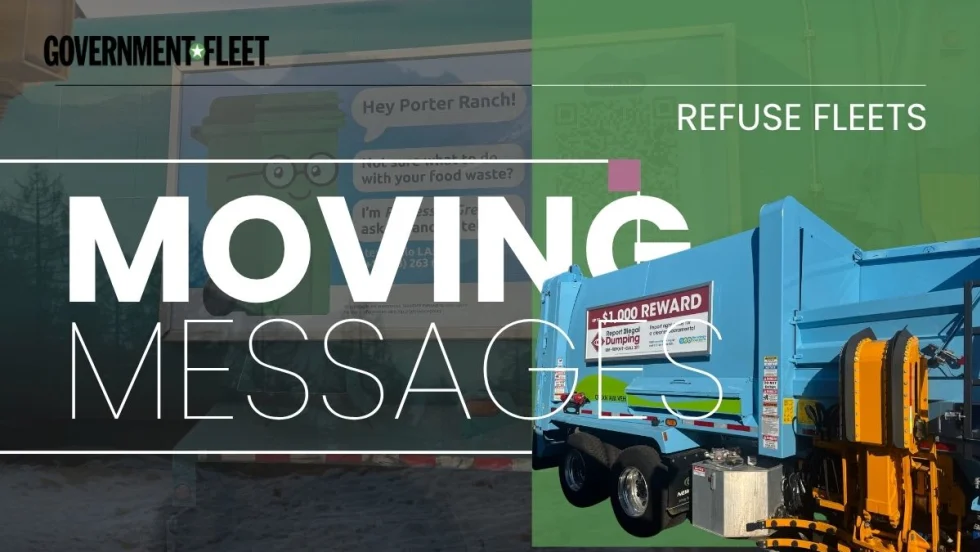
Who Owns the Message on a Refuse Truck?
Refuse trucks can carry public messages into neighborhoods, but keeping those messages current takes planning and clear responsibility.
Read More →
Who Deserves Fleet Recognition and What Could You Teach at GFX?
Who helped shape your fleet career, and what have you learned that could help someone else?
Read More →
What’s Haunting Public Sector Fleets?
Public sector fleet challenges rarely happen in isolation, and addressing one often means understanding how it connects to another.
Read More →
Is Keeping Older Fleet Vehicles Really Saving Money?
Is keeping vehicles longer saving money, and what happens when a diagnostic test points to the wrong fix?
Read More →
How Smart Fleet Strategy Can Help Local Government Agencies Do More with Less
Keeping a vehicle longer may ease this year’s budget, but what does it cost the next one? A closer look at fleet decisions can reveal opportunities to reduce spending while protecting essential services.
Read More →
Connect with Government Fleet on LinkedIn
From industry news and fleet management strategies to conversations with peers, Government Fleet's LinkedIn page offers public-sector fleet professionals another way to stay informed and connected.
Read More →
Town of Queen Creek Named Most Successful Fleet Award Winner of Inaugural RTA Fleet Success Awards
Five fleets were honored at RTA Connect 2026 in Chicago for excellence across resource efficiency, intentional culture, risk management, and stakeholder satisfaction.
Read More →
A buyer's guide to fleet management software in 2027
Buying fleet management software in 2027 means looking beyond features and price. As fleet operations, technology and expectations evolve, this guide explores what today’s fleet professionals should consider when choosing a system that can deliver value now and adapt to what comes next.
Read More →
Hazard Alerts, Fleet Car Sales Rise and a New Shuttle Concept
Fleet car sales doubled, but the bigger picture tells a different story in this week’s roundup.
Read More →