





Related: Training for Keeps: How to Retain Fleet Technicians
ASE Updates Electronic Diesel Engine Diagnosis Specialist (L2) Test
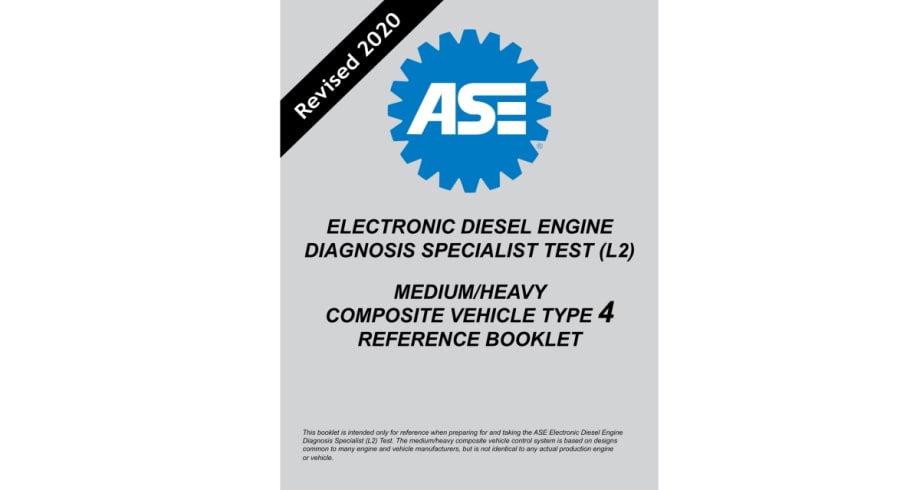
The National Institute for Automotive Service Excellence (ASE) will launch an updated version of the Electronic Diesel Engine Diagnosis Specialist (L2) test on Jan. 6, 2020.
December 5, 2019
2 min to read
The National Institute for Automotive Service Excellence (ASE) will launch an updated version of the Electronic Diesel Engine Diagnosis Specialist (L2) test on Jan. 6, 2020. This release will feature the new Composite Vehicle Type 4 (CV4), a generic medium/heavy vehicle equipped with a high-pressure common rail (HPCR) diesel fuel system, an updated exhaust aftertreatment system, and other updated systems and controls.
As is true of the current test, some questions will call for use of the composite vehicle reference. The updated test will use the L2 Composite Vehicle Type 4 (CV4) Reference Booklet, which may be downloaded or requested (printed copy) at no cost here, along with the updated L2 study guide. Test takers will receive a booklet at the testing center for use during the test but should acquire and carefully review a copy prior to the test appointment.
"As technology changes, the ASE tests must also change to remain relevant. This update has been a major undertaking for our test development department over the past two years," said Tim Zilke, ASE president and CEO. "We are grateful to the many subject matter experts who have contributed their knowledge to updating and improving the test and the reference booklet."
During rollout of the updated test in the first half of 2020, there will be some important differences that test takers should note. From January to July of 2020:
L2 certification and recertification tests will consist of 75 questions and have a 180-minute (3-hour) time limit.
Test takers will receive an immediate "notice of completion" rather than a pass/fail score report. Their myASE profile will show "Score Pending" for the test.
Official pass/fail test results for all L2 certification and recertification tests will be released through myASE accounts in June 2020.
Starting in July, the L2 (certification) test will have 55 questions (including 10 unscored research questions). The L2R (recertification) test will have 45 questions. Both tests will have a two-hour time limit and will provide immediate pass/fail test results.
The current Electronic Diesel Engine Diagnosis Specialist (L2) test, with Composite Vehicle Type 3 (CV3), will be administered to test takers through Jan. 5, 2020. Technicians who will need test results before mid-2020 are encouraged to register and schedule their testing session now.
More Maintenance

Freeing Technicians for Higher-Priority Repairs
Could paid interns help public fleets free up experienced technicians for more complex repairs?
Read More →
Sponsored•September 18, 2026
Stay ready, set and safer with verified fleet inspections
When fleet inspections aren’t verifiable, missed defects can quickly become downtime, safety risks, and service delays. This white paper shows government and municipal fleet leaders how digital inspections can improve accountability, catch issues earlier, and keep vehicles ready when they’re needed most.
Read More →
Using Oil Analysis to Help with Engine Losses
How a Texas city changed its lubrication practices and began tailoring preventive maintenance intervals after test results showed oil degradation and fuel dilution.
Read More →
Sponsored•August 10, 2026
Hidden in Plain Sight: Fleet Compliance Risks
Fleet compliance isn't just about having policies — it's about consistently enforcing them. This practical guide reveals six hidden compliance risks common in public sector and shared fleet operations and outlines proven strategies to improve visibility, accountability, and audit readiness.
Read More →
Is Your Fleet Garage Holding Back Your Operation? | The Fleet Breakroom
Norman Barrientos of Barrientos Design & Consulting explains how agencies can use operational data to show decision-makers why a replacement or major renovation is needed.
Read More →
Reducing Long-Term Maintenance Costs and Downtime
Downtime is rarely caused by a single surprise failure but rather by an issue that builds over time through setbacks ranging from deferred maintenance to poor replacement planning. So what's the fix?
Read More →
The Future of Government Fleet Technicians with Mike Cleary
Insight on preparing for hybrid and electric vehicle service, what fleets need to know about recruiting technicians in a competitive market, and how to make the most of limited training budgets.
Read More →
Work Orders Are More Than Records. They're a Roadmap to Fleet Availability
What if your work orders could predict failures, uncover hidden costs, and boost fleet availability? Here's how leading fleets are using the data.
Read More →
Drive More Profit with Greater Fleet Uptime
Fleet downtime costs money. JASPER helps keep vehicles on the road with quality remanufactured components, fast nationwide delivery, and reliable solutions that boost uptime and profitability.
Read More →
Smart Seasonal Maintenance Tips for Government Fleets
Government fleets carry extra weight, and routes, schedules, and public trust depend on reliability. A systematic spring checklist keeps vehicles in service when agencies need them most.
Read More →