




It's Time For Your Fleet to Outsource Towing
By outsourcing towing, fleets can satisfy customers and the marketplace, control costs, and improve service and response time. Here’s how.
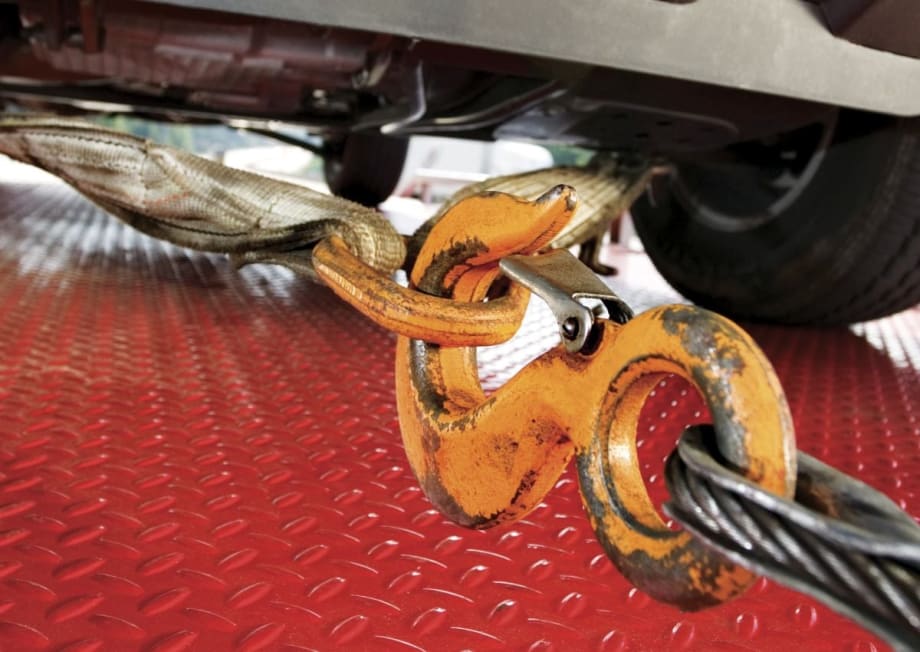
By outsourcing towing, fleets can satisfy customers and the marketplace, control costs, and improve service and response time. Here’s how.
Photo: Getty Images
If you have ever waited for a tow truck to arrive, you know there is no wait longer than that. Your plans for the day are likely shot, you’re watching vehicles sail by, and all you can do is wait until the truck gets there.
For government fleets that own and operate towing equipment, providing that service is typically a throwback to a time when fleets endeavored to provide every service imaginable. In today’s environment where running fleet as a business is a key objective, we know that if the market can perform a service better, faster, and cheaper than fleet operations can perform it internally, it simply makes sense to outsource it.
Towing services fall within this category. Here’s why:
The capital cost of tow trucks is expensive. They’re also expensive to operate and maintain properly.
Towing equipment is complex, requiring extensive operator training to be used properly, and can easily damage vehicles or injure employees, if used improperly.
Tow truck operation is a workers’ compensation claim just waiting to happen.
Towing equipment is likely among the most underutilized in the entire fleet. Retention often contradicts a fleet’s own utilization standards to which other departments are held.
Repurposing busy and highly skilled technicians to towing duties throughout their day is both unproductive and expensive. If a fleet charges for services by the hour, as many fleets do, assigning a revenue-producing technician to a tow call wastes time and prolongs response time.
Suppose there were a more efficient method. Would a process that improves service, controls cost, exploits the strength of the marketplace, and holds vendors accountable routinely be worth considering?
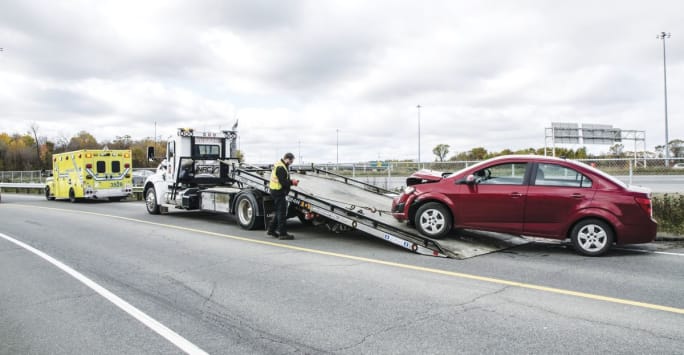
If a fleet charges for services by the hour, assigning a revenue-producing technician to a tow call wastes time and prolongs response time.
Photo: Getty Images
Room for Improvement
When I joined Polk County, Fla., as its fleet director, my first official act was to auction our 32-year-old Studebaker tow truck and get out of the towing business. Although we began outsourcing 100% of our towing, it was years later that we developed the more controlled, more service-minded strategy outlined below. This strategy can be implemented by any fleet, especially those in smaller geographic areas such as cities or counties, and can be easily modified to suit their specific needs.
For years, local vendors provided towing services and although we were largely satisfied with the results, there were aspects our fleet team wanted to improve.
First, we wanted to improve response time. A vehicle down on the roadside is visually objectionable, unsafe, unproductive, a poor reflection on fleet, and worst of all, maddening to customers waiting for the truck to arrive. Our first objective was to get there sooner while maintaining constant contact with our customer.
Second, we wanted more control over the fee structure. Fleets know there are myriad methods by which towing services are charged. Plus, ancillary costs are typically added, over which the customer has little control.
Third, we desired an easily understood vendor accountability method that both rewarded and penalized performance.
“Our first objective was to get there sooner while maintaining constant contact with our customer.”
Making Changes
In our endeavor to gain control, first, we split the county into five zones and towing service into two classifications: light/medium (less than 26,000 lbs. GVW) and heavy (greater than 26,000 lbs. GVW). Using the standard request for proposal (RFP) method with a twist, qualified towing providers (e.g. those with a business license, commercial address, insurance documentation, E-verify, etc.) could participate in one or more zones and in one or both categories.
With the county split into zones, towing firms were encouraged to dispatch based on geography, ensuring the quickest response possible — our primary goal.
We outlined our towing rotation process in that providers would be selected on a rotation basis by zone and category. The “next provider up” in the rotation was selected for that zone and category when one of our vehicles needed a tow. Vendors could accept or reject the assignment based on their immediate availability and, if accepted, they were required to provide an estimated response time.
We were hoping for response times of 30 minutes or less, but we recognized situations where that might be impractical. If the first vendor on the rotation was not available or unable to commit to an immediate response and informed us, it would retain its position as first in the rotation and we would contact the second company on the rotation list. Honesty had its benefits.
The selected provider would then move to the bottom of the rotation and rotate to higher positions as towing needs were fulfilled by firms higher on the rotation.
Using the stated response time estimate, customers were notified in order to make them aware of their projected wait. Fleet staff members used a common cooking timer and the vendor’s stated response time to monitor the job. When the timer rang, we contacted our customer to inquire if the vendor had arrived. If yes, we knew the system worked. If no, we followed up with a status inquiry with the vendor and our customer jointly on the call, and the timing process was repeated.
Vendors received a grade for each assignment. Those that repeatedly failed to honor their time commitments were penalized either by being placed in our “penalty box” and suspended from the rotation temporarily or dropped permanently.
We truly appreciated vendors that were upfront regarding their capabilities and response times. Vendors that failed to keep their promises were penalized, which was clearly stated at every vendor interaction and in the RFP. In those rare occasions where a towing incident fell outside our standards, we appreciated being notified in advance to consider charges that might fall outside our standards and established fee structure.
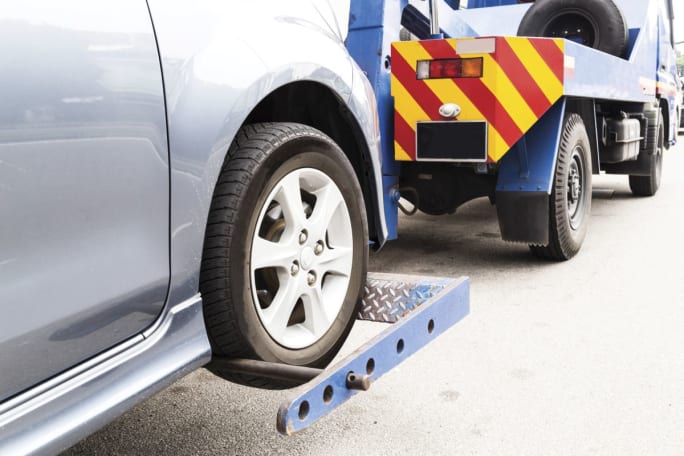
Our outsourcing program reduced average response times by 27%, or 18 minutes per tow call.
Photo: Getty Images
Determining Pricing
As for pricing, here’s the RFP twist. By researching the previous six months, fleet staff developed a strong historical basis to fairly propose towing fees for hook-ups, mileage, drive shaft removal, winch-outs, accident cleanup, etc., which every responding vendor was required to accept if they desired inclusion in our rotation.
Prior to issuing the RFP, the Fleet and Purchasing divisions invited towing suppliers to a meeting where our objectives and rate proposals were clearly outlined. If, during the meeting, attendees presented a compelling case for different rates, we adjusted them. When the RFP was issued, our rate standards were clearly stated. Vendors were required to respond, by zone and classification, and agree to the rate standard established by fleet management.
Fleet included a fuel surcharge calculation methodology in the RFP, by vehicle category, for vendor protection against fuel price hikes. Towing providers greatly appreciated our consideration.
The RFP term was two years with two one-year renewal options. Vendors were required to hold the rates as set by the county for the entire term of the RFP. Vendors had the option to remove themselves from the rotation at any time, for any reason. They also had the opportunity to challenge the established rate structure.
Ours was a large county geographically. Based on the high level of interest shown by the local towing industry, we suspected the strong market would result in quicker responses to our towing needs. This program reduced average response times by 27%, or 18 minutes per tow call.
By fairly setting the fees, we were better able to budget and forecast towing costs, being no longer at the mercy of pricing fluctuations, especially in emergency situations.
“Vendors were required to respond, by zone and classification, and agree to the rate standard established by fleet management.”
A Benefit for Vendors and Citizens
Vendors that clearly understood our strategy and partnered with us were successful in landing a significant share of the county’s business. Vendors that did not, did not.
Our citizens accrued a side benefit, unexpected at the outset, when several municipalities adopted our rotation and rate structure. This allowed them to eliminate their own towing assets or reduce their towing costs. Further, when the county’s towing ordinance was due for review, many more towing vendors participated by assisting county staff in the drafting of a revised local ordinance that was both fair to our citizens and to the vendors towing their vehicles.
About the Author: Bob Stanton, CPFP, CPM, is an independent fleet consultant and retired public sector fleet manager with 42 years of experience. He can be reached at victorybob@gmail.com.
More Operations

Is Keeping Older Fleet Vehicles Really Saving Money?
Is keeping vehicles longer saving money, and what happens when a diagnostic test points to the wrong fix?
Read More →
How Smart Fleet Strategy Can Help Local Government Agencies Do More with Less
Keeping a vehicle longer may ease this year’s budget, but what does it cost the next one? A closer look at fleet decisions can reveal opportunities to reduce spending while protecting essential services.
Read More →
Connect with Government Fleet on LinkedIn
From industry news and fleet management strategies to conversations with peers, Government Fleet's LinkedIn page offers public-sector fleet professionals another way to stay informed and connected.
Read More →
Town of Queen Creek Named Most Successful Fleet Award Winner of Inaugural RTA Fleet Success Awards
Five fleets were honored at RTA Connect 2026 in Chicago for excellence across resource efficiency, intentional culture, risk management, and stakeholder satisfaction.
Read More →
A buyer's guide to fleet management software in 2027
Buying fleet management software in 2027 means looking beyond features and price. As fleet operations, technology and expectations evolve, this guide explores what today’s fleet professionals should consider when choosing a system that can deliver value now and adapt to what comes next.
Read More →
Hazard Alerts, Fleet Car Sales Rise and a New Shuttle Concept
Fleet car sales doubled, but the bigger picture tells a different story in this week’s roundup.
Read More →
How St. Johns County Turned Fleet Data Into Better Replacement Decisions
St. Johns County, Florida, had fleet data, but turning it into reliable decision guidance was another matter. Instead of starting over with a new fleet management system, the county connected existing tools and built a scoring system that gives managers an objective look at fleet health.
Read More →
Fleet Forward Conference Introduces One-Day Passes for 2026
New one-day registration lets fleet professionals attend Tuesday, Wednesday, or Thursday, with passes available for $249.
Read More →
ENC Unveils its ZAVIR Medium-Duty Shuttle
Two variants of the concept shuttles were revealed: a low-floor configuration and a high-floor configuration.
Read More →
Could Your Next Fleet Technician Start as an Intern?
What if your next technician hasn’t worked in a fleet shop yet? What fleets are doing to free up time.
Read More →