





Keep Reading: Mack Trucks Demonstrates Mack LR Electric for New York City
Mack Trucks Celebrates 125 Years
Plus a look at Mack Trucks moments on Government Fleet.
January 13, 2025

Born in World War I, the Mack Bulldog became an enduring symbol of strength. British soldiers nicknamed rugged Mack AC models 'bulldogs,' and in 1932, engineer Alfred Fellows Masury crafted the first Bulldog hood ornament from a bar of soap.
Photo: Mack Trucks
2 min to read
In 1900, two brothers set up shop in a small Brooklyn workshop, laying the foundation for what would become Mack Trucks. Now celebrating 125 years, Mack Trucks has played a pivotal role in shaping the country’s infrastructure.
From carrying steel for the Brooklyn Bridge in 1909 to carving paths for the Pan-American Highway, Mack Trucks has been an integral part of building America’s highways and skylines.
The Bulldog Spirit: An Icon is Born
The Bulldog symbol, born during World War I, is an enduring emblem of Mack’s legacy. British soldiers, impressed by the rugged reliability of Mack AC models under fire, nicknamed them “bulldogs.” This wartime nickname became destiny in 1932, when Mack’s chief engineer Alfred Fellows Masury carved the first Bulldog hood ornament from a bar of soap during a hospital stay.
As Mack Trucks celebrates 125 years, its story reflects a legacy of resilience and innovation. From humble beginnings to becoming a global powerhouse, Mack has remained a trusted force in building and sustaining progress. Here are some remarkable moments from Mack Trucks' history that highlight its impact and evolution.
125 Years of Mack Trucks History
A look back on pivotal moments in Mack’s journey through the decades:
1920s: Pioneered the revolutionary concept of integrated powertrains, combining engines, transmissions and axles into a unified system
1930s: Introduced power brakes and power-assisted steering, setting new safety standards
1953: Launched the Thermodyne engine, establishing new benchmarks for power and efficiency
1967: Revolutionized the industry with the Maxidyne engine, featuring high-torque rise and constant horsepower
1979: Debuted the Econodyne engine, marking a new era in fuel efficiency
1980s: Introduced the groundbreaking RS and RL models
1988: Launched the revolutionary CH model
2010: Introduced the mDRIVE automated manual transmission, revolutionizing driver productivity and fuel efficiency
2016: Introduced the mDRIVE HD 13-speed, making Mack the first truck manufacturer in North America to offer low reduction creeper gear ratios in a proprietary automated manual transmission
2022: Launched the zero tailpipe-emission LR Electric refuse truck, proving that sustainability and power can work hand-in-hand
2023: Expanded electric offerings with MD Electric medium-duty truck
Mack Trucks Moments on Government Fleet
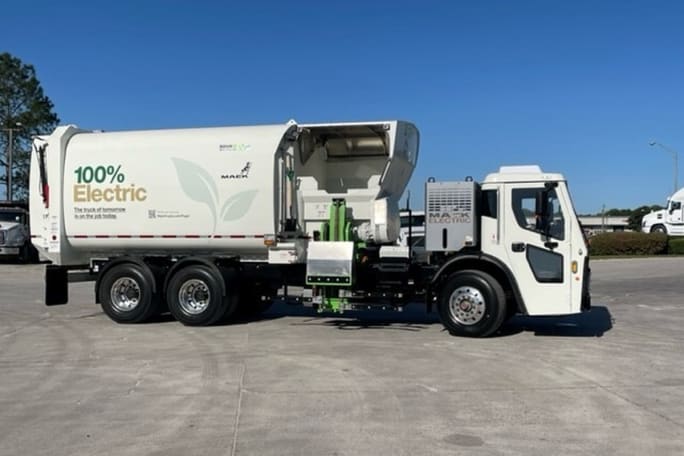
The City of Ocala, Florida, purchased two Mack LR Electric refuse vehicles to add to its solid waste management fleet.
Photo: Mack Trucks
Refuse Fleets Invest in Mack Electric Trucks
Mack Trucks announced several public fleets have purchased Mack LR Electric refuse trucks.
The City of Ocala, Florida, purchased two Mack LR Electric refuse vehicles to add to its solid waste management fleet.
Photo: Mack Trucks
What Happens When Refuse Collection Goes Electric?
The New York City Department of Sanitation shares its experience piloting a refuse electric vehicle.
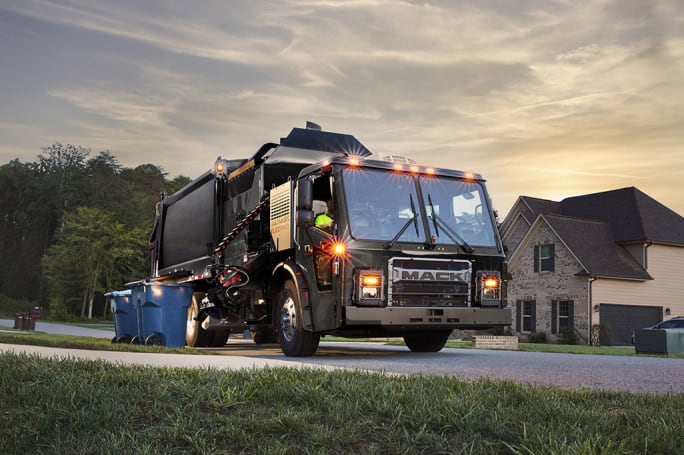
Mack Trucks next generation Mack LR Electric battery-electric vehicle (BEV).
Photo: Mack Trucks
California City Adds First All-Electric Refuse Truck in County
In December, the Santa Cruz Resource Recovery division added the Mack LR Electric Vehicle to its 27-vehicle sanitation fleet.
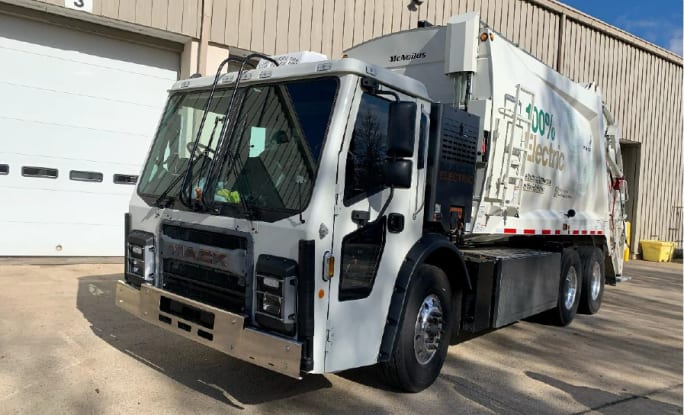
As part of its commitment to build sustainability the city will be test-driving a Mack Electric Refuse truck.
Photo: City of Alexandria
Virginia City to Test Electric Refuse Truck
Alexandria, Virginia, officials stated that electric fleet vehicles align with city goals to build sustainability.
More Operations

Connect with Government Fleet on LinkedIn
From industry news and fleet management strategies to conversations with peers, Government Fleet's LinkedIn page offers public-sector fleet professionals another way to stay informed and connected.
Read More →
Town of Queen Creek Named Most Successful Fleet Award Winner of Inaugural RTA Fleet Success Awards
Five fleets were honored at RTA Connect 2026 in Chicago for excellence across resource efficiency, intentional culture, risk management, and stakeholder satisfaction.
Read More →
Sponsored•October 14, 2026
A buyer's guide to fleet management software in 2027
Buying fleet management software in 2027 means looking beyond features and price. As fleet operations, technology and expectations evolve, this guide explores what today’s fleet professionals should consider when choosing a system that can deliver value now and adapt to what comes next.
Read More →
Hazard Alerts, Fleet Car Sales Rise and a New Shuttle Concept
Fleet car sales doubled, but the bigger picture tells a different story in this week’s roundup.
Read More →
How St. Johns County Turned Fleet Data Into Better Replacement Decisions
St. Johns County, Florida, had fleet data, but turning it into reliable decision guidance was another matter. Instead of starting over with a new fleet management system, the county connected existing tools and built a scoring system that gives managers an objective look at fleet health.
Read More →
Fleet Forward Conference Introduces One-Day Passes for 2026
New one-day registration lets fleet professionals attend Tuesday, Wednesday, or Thursday, with passes available for $249.
Read More →
ENC Unveils its ZAVIR Medium-Duty Shuttle
Two variants of the concept shuttles were revealed: a low-floor configuration and a high-floor configuration.
Read More →
Could Your Next Fleet Technician Start as an Intern?
What if your next technician hasn’t worked in a fleet shop yet? What fleets are doing to free up time.
Read More →
How Phoenix Is Building Its Next Generation of Fleet Technicians
With more than 8,000 vehicles and pieces of equipment to maintain, the City of Phoenix could not afford to wait for fully trained technicians to walk through the door. Instead, they revamped their entire workforce strategy and showed how public fleets can create their own talent pipeline while preparing existing employees for increasingly complex vehicles.
Read More →
What’s Slowing Your Fleet Down?
Could a change in how work gets done help your fleet return vehicles to service sooner?
Read More →