




Check out more takeaways from the 2024 Police Fleet Conference
Sound Solutions: Choosing the Right Siren for Your Public Safety Fleet
Breaking down the basics on siren types and their use cases to help you decide which sirens to use for your fleet.

Christy Grimes・Former Senior Editor
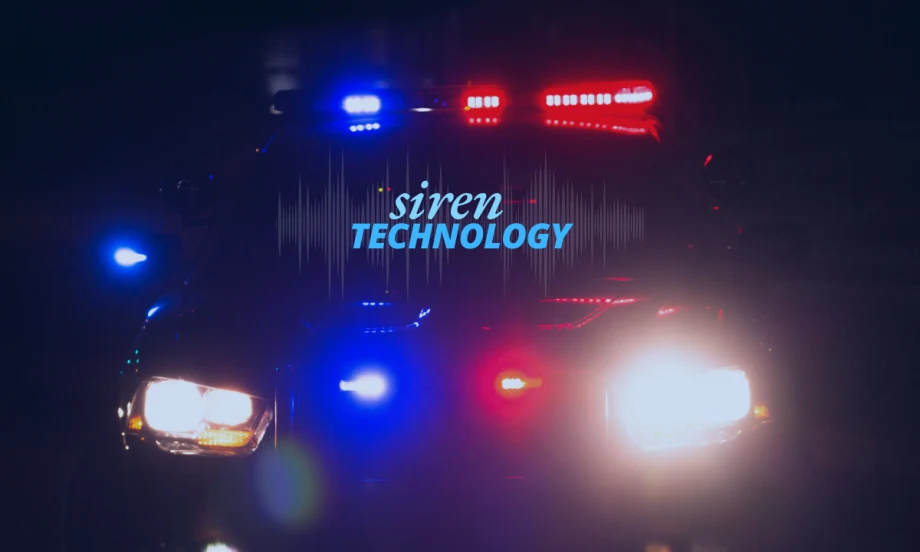
The sirens you choose can keep roadways safer, both protecting first responders and drivers by providing them with the most efficient alerts possible.
Photo: Government Fleet
5 min to read
When we hear emergency sirens while we’re driving — or even when we’re in the passenger’s seat — we tend to immediately look for the source of the sirens so we can get out of the way. That means the sirens are doing their job of alerting the public to oncoming emergency vehicles.
But how do you know which siren to choose for your vehicles? Experts from three competing police equipment manufacturers joined forces at the 2024 Police Fleet Conference at GFX to break down the basics about siren types and their use cases.

Siren Types 101
SAE J1849 is the standard siren manufacturers use. It specifies the performance standards for sirens, including frequency and decibel requirements, ensuring consistency and effectiveness across fleets.
Traditionally, sirens are broken up into high- and low-frequency based on the sound frequency, measured in Hertz. The siren types and examples of when to use them are broken down below.
High-Frequency Sirens
These sirens are between 500 Hz and 2,000 Hz, and include the following types:
Wail: Used often by oncoming emergency vehicles to alert drivers they are approaching; uses a drawn out ‘whooooOOOoooo’ sound
Yelp: Short screaming sound used to encourage drivers to move or pull over
Piercer: Fast-paced constant ‘piercing’ sound used during police chases or other high-speed driving
High-frequency sirens are unidirectional, primarily projecting sound forward. They work well for long-distance warnings, about 350 ft, alerting drivers well in advance of oncoming emergency vehicles.
“As a first responder, time is my friend. It gives the driver an opportunity to react to me, and it gives me a chance to react as well,” Paul Gergets, VP of SSG Engineering at Federal Signal said.
Police cars are often upfitted with 200-watt sirens, which helps increase sound output. While it only picks up three decibels, it improves detectability by 50%, giving drivers more time to move.
Upfitting vehicles for highway use with 200-watt sirens works well. Picture, Gergets said, a highway patrol vehicle traveling at 80 mph. Because they are traveling at a high rate of speed, they need to give drivers as much time to move as possible.
Dual-tone sirens, which produce two distinct tones simultaneously, can put drivers on the alert even better.
“In some applications, it gives a perception that there's more than one vehicle. We've all been in a car when you hear this dual tone come in, and the first vehicle goes by but you're thinking, ‘is there a second one?’ It causes drivers to think a little bit more,” Gergets explained.
Low-Frequency Sirens
These sirens range from 125 Hz to 1,000 Hz and includes the following type:
Rumbler: The most popular type of low-frequency siren; produces a pulsating sound used in tandem with a high-frequency siren; can create vibrations, almost making drivers feel the sound
While low-frequency sirens travel through the air much slower — creating that lower sound — they can be highly effective in ensuring drivers hear them.
“Sound travels faster through objects like glass or aluminum than it does through air. We're leveraging that to reach people inside cars with soundproofing and distractions,” said Doug Baker, Senior Vice President of Technology and Chief Innovation Officer at SoundOff Signal. “Low frequency is not just a gimmick — it really does something for you. It’s about applying known properties of sound and materials to grab attention and improve safety."
These sirens complement high-frequency sirens. In some cases, police fleets will use hi-lo sirens, which alternate between a fixed high and low frequency. This type of siren is more common in Europe, however.
Low-frequency sirens emit omnidirectional sound, making them highly effective at intersections or for close-range warnings like 200 ft.
While you don’t have the advantage of the advance warning a high-frequency siren produces, there are advantages to using low-frequency sirens. High frequency sounds can bounce off surfaces, creating echo effects, where low-frequency sirens can give drivers a clear sense of where the sound is coming from.
This also helps prevent drivers who are further than, say, a block away from hearing the sound, only alerting drivers in the immediate area. Low-frequency sirens are favored in urban settings for their lower environmental noise impact, while still maintaining close-range effectiveness.
Additionally, while them being great for close-range warnings, low-frequency sirens don’t increase the sound exposure level to pedestrians considerably.
New and Emerging Siren Technologies
Siren synchronization, an emerging technology, allows multiple responding officers’ sirens to play at the same time, eliminating echo.
Multichannel sirens are being used more frequently. These sirens allow for multiple siren tones to be played from a single siren at one time.
The alternative, prior to this technology, was using two different sirens to emit the different tones from different speakers. This can be risky, because siren placement on the vehicle is important. If the sirens are placed too close together, there is a risk of one siren canceling the other out.
Multichannel sirens eliminate this concern.
Moving forward, the use of artificial intelligence to enhance siren technology may be an option, but it’s still too early to tell just how it could be used, the panelists noted.
The Bottom Line: Keeping Officers and Drivers Safe
Ultimately, the sirens you choose can keep roadways safer, both protecting first responders and drivers by providing them with the most efficient alerts possible.
“What we want to do is provide you with the tools and the knowledge to equip you to better use that technology in your vehicles so that you can provide better safety for first responders on the road,” Whelen Engineering Product Manager Preston Tischer said.
Subscribe to Our Newsletter
More Police

Ford Pro Introduces Full-Size 2028 Expedition Police Responder
Ford Pro gave law enforcement customers a first look at the pursuit-rated utility during Police Fleet Expo.
Read More →
Paterson Police Expand Drone Fleet, Launch Real-Time Operations Center
The Paterson Police Department has expanded its drone program and opened a new Real-Time Operations Center designed to support emergency response and incident management. The initiative integrates multiple technologies to provide officers with real-time information during investigations and public safety operations.
Read More →
Why Public Fleet Success Depends on More Than the Vehicles
Tim Coxwell of the Leon County Sheriff’s Office discusses the projects shaping his fleet operation, including long-term work around vehicle selection, greenhouse gas emissions, and cost per mile.
Read More →
Havis Acquires Pro-gard Products
The acquisition brings together two manufacturers of public safety vehicle equipment under one company. Havis says the move expands its portfolio of products for outfitting law enforcement vehicles and other public safety fleets.
Read More →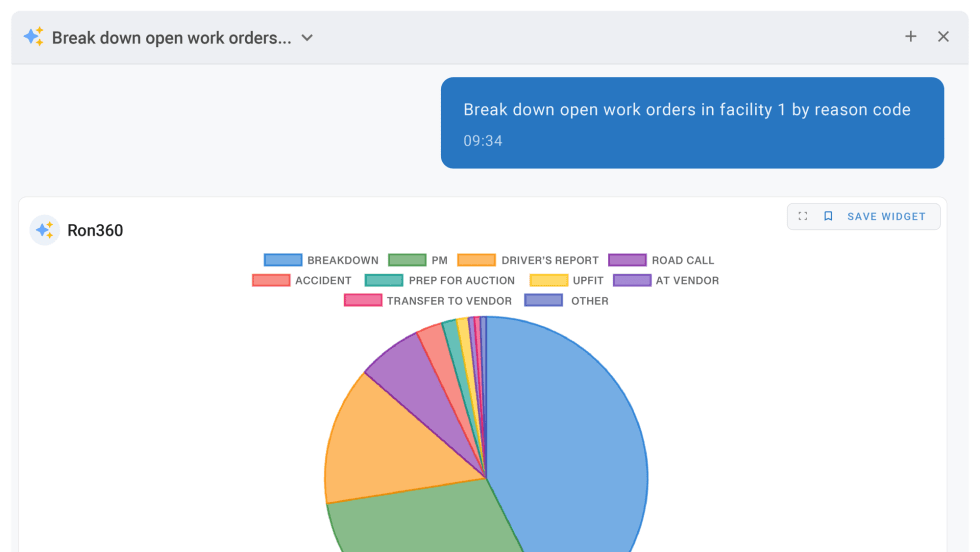
RTA Fleet Introduces AI Assistant for Fleet360 Platform
As artificial intelligence continues to gain traction across public-sector operations, fleet software providers are finding new ways to incorporate the technology into everyday workflows. RTA's latest addition aims to simplify how users interact with fleet data.
Read More →
2026 Police Fleet Innovators Named
Meet the professionals finding new ways to solve some of law enforcement's toughest fleet challenges.
Read More →
Rynse Expands Nationwide Fleet Wash Access for Law Enforcement
The North Carolina Sheriff’s Association Contract Cooperative purchasing contract aims to streamline procurement process for law enforcement agencies across the U.S.
Read More →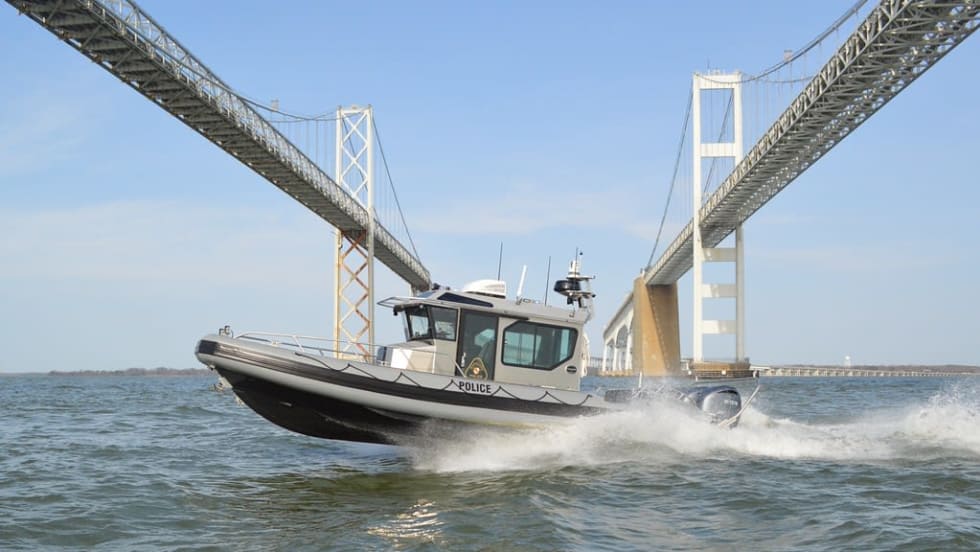
Maryland Natural Resources Police Adds 31-Foot Patrol Boat to Enforcement Fleet
A new addition to Maryland’s marine enforcement fleet is bringing expanded capabilities to Chesapeake Bay operations while honoring a legacy within the agency. The high-performance patrol vessel reflects how law enforcement fleets are adapting to growing demands on the water.
Read More →
LEHR Expands Florida Presence With Enforcement One Acquisition
LEHR has acquired Florida-based emergency vehicle upfitter Enforcement One, marking its eighth add-on acquisition.
Read More →
Maryland’s Wicomico County Sheriff Adds Mustang GT Patrol Vehicles
The agency is also working with the Maryland Police Training Commission on a specialized high-performance driving course for deputies assigned to the vehicles.
Read More →