





Read More: Textron Systems, Kodiak Collaborate to Develop Uncrewed Military Vehicle
Kodiak Robotics Reveals Fully Driverless Military Ground Vehicle
Kodiak has integrated its self-driving technology into Textron Systems RIPSAW M3 vehicle, a fully driverless military vehicle designed to keep service members out of harm’s way.
September 18, 2024
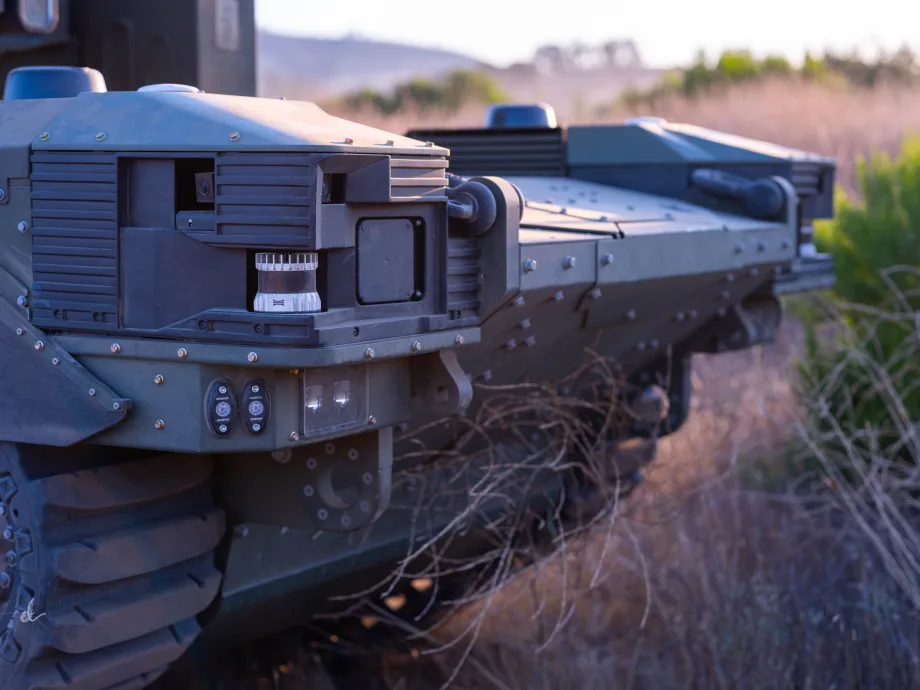
With the RIPSAW M3 vehicle, Textron Systems and Kodiak intend to jointly explore future opportunities with both the U.S. Department of Defense and the militaries of allied nations as they look to accelerate automation into military ground vehicles.
Photo: Kodiak Robotics
2 min to read
Textron Systems Corporation and Kodiak Robotics have integrated the Kodiak Driver, Kodiak’s self-driving system, into Textron’s Systems’ RIPSAW M3 vehicle. The RIPSAW M3 vehicle, equipped with the Kodiak Driver, is a rugged uncrewed robotic ground vehicle designed to keep service members out of harm’s way.
Integrating the Kodiak Driver into Textron Systems’ RIPSAW M3 Vehicle
The Kodiak Driver-equipped RIPSAW M3 vehicle is the first autonomous tracked vehicle on which Kodiak has collaborated, and the first Kodiak Driver-equipped vehicle without room for a human.
The Kodiak Driver-equipped RIPSAW M3 vehicle is capable of executing a range of high-risk military missions, such as reconnaissance, surveillance, and tactical maneuvers across various terrain types, from highways to dirt roads to fully cross-country.
Kodiak integrated its modular DefensePods into each corner of the RIPSAW M3 vehicle, ensuring 360-degree visibility while maintaining a low profile.
DefensePods are an adapted version of Kodiak’s modular, swappable SensorPods, designed for military use.
DefensePods are pre-calibrated, pre-built hardware enclosures that include the sensors necessary for autonomous driving.
DefensePods can be easily swappable in the field in 10 minutes or less, using standard tools and with minimal training.
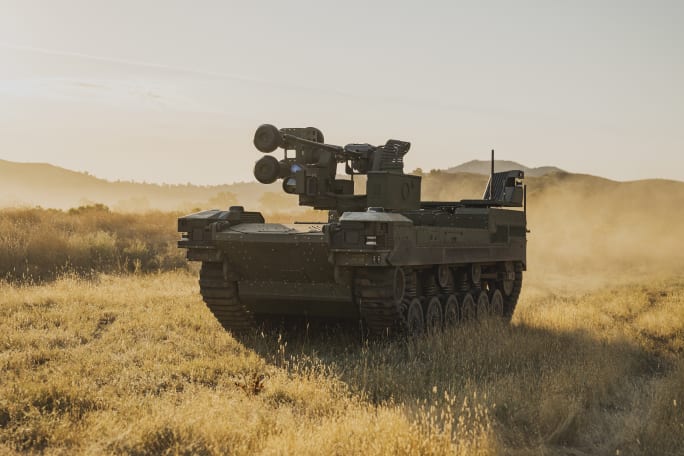
The same technology stack that drives the Kodiak Driver-equipped RIPSAW M3 vehicle has
delivered freight without a human driver in West Texas’s Permian Basin.
Photo: Kodiak Robotics
Combining remote Autonomy Assistance and Remote Driving
Kodiak’s approach to autonomy leverages an advanced perception system to identify what is around the vehicle, recognizing drivable surfaces, and then navigating the vehicle as a human would, allowing for full off-road autonomy.
The Kodiak Driver-equipped RIPSAW M3 also contains Kodiak’s Assisted Autonomy technology, which combines autonomy with human-in-the-loop path planning. Assisted Autonomy combines remote autonomy assistance and remote driving, allowing soldiers to seamlessly control a vehicle remotely when necessary, reducing the risk that vehicles become disabled in novel environments.
When operated in Assisted Autonomy, the autonomy system combines human-driven planning with the Kodiak Driver’s safety controls, ensuring safe operations while enabling human intervention for mission-critical tasks.
Topics:Operations
More Operations

Is Keeping Older Fleet Vehicles Really Saving Money?
Is keeping vehicles longer saving money, and what happens when a diagnostic test points to the wrong fix?
Read More →
How Smart Fleet Strategy Can Help Local Government Agencies Do More with Less
Keeping a vehicle longer may ease this year’s budget, but what does it cost the next one? A closer look at fleet decisions can reveal opportunities to reduce spending while protecting essential services.
Read More →
Connect with Government Fleet on LinkedIn
From industry news and fleet management strategies to conversations with peers, Government Fleet's LinkedIn page offers public-sector fleet professionals another way to stay informed and connected.
Read More →
Town of Queen Creek Named Most Successful Fleet Award Winner of Inaugural RTA Fleet Success Awards
Five fleets were honored at RTA Connect 2026 in Chicago for excellence across resource efficiency, intentional culture, risk management, and stakeholder satisfaction.
Read More →
Sponsored•October 14, 2026
A buyer's guide to fleet management software in 2027
Buying fleet management software in 2027 means looking beyond features and price. As fleet operations, technology and expectations evolve, this guide explores what today’s fleet professionals should consider when choosing a system that can deliver value now and adapt to what comes next.
Read More →
Hazard Alerts, Fleet Car Sales Rise and a New Shuttle Concept
Fleet car sales doubled, but the bigger picture tells a different story in this week’s roundup.
Read More →
How St. Johns County Turned Fleet Data Into Better Replacement Decisions
St. Johns County, Florida, had fleet data, but turning it into reliable decision guidance was another matter. Instead of starting over with a new fleet management system, the county connected existing tools and built a scoring system that gives managers an objective look at fleet health.
Read More →
Fleet Forward Conference Introduces One-Day Passes for 2026
New one-day registration lets fleet professionals attend Tuesday, Wednesday, or Thursday, with passes available for $249.
Read More →
ENC Unveils its ZAVIR Medium-Duty Shuttle
Two variants of the concept shuttles were revealed: a low-floor configuration and a high-floor configuration.
Read More →
Could Your Next Fleet Technician Start as an Intern?
What if your next technician hasn’t worked in a fleet shop yet? What fleets are doing to free up time.
Read More →