





Ready for winter weather? Read how to prepare your EV fleet.
NYSDOT Opening First New Long Island Yard in 12 Years
The new Elwood Yard was built to facilitate more efficient snow removal and improve maintenance on approximately 150 lane miles of state roads in Suffolk County.
December 14, 2022
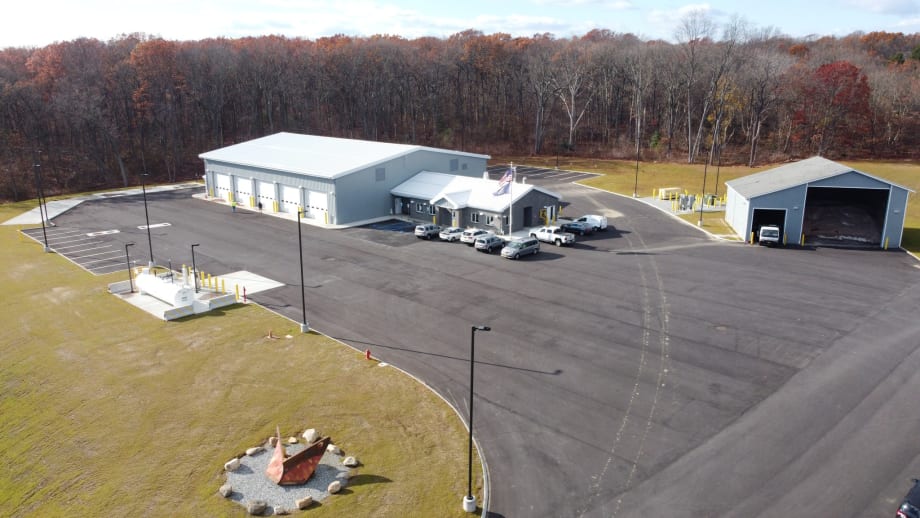
Replacing the outdated Melville North yard on the North Service Road, this new work area is more centrally located for snow plowing beats.
Photo: New York State Department of Transportation
2 min to read
The New York State Department of Transportation (NYSDOT) will be opening its first new highway maintenance facility on Long Island in 12 years.
The new Elwood yard, located in the town of Huntington, will provide a centrally located hub for DOT operations to facilitate highway maintenance activities and more efficient snow and ice removal operations during winter weather. The yard features the latest technology and clean energy initiatives to help safeguard the environment and better serve Long Island drivers, according to NYSDOT.
“The Department of Transportation has one of the most elite snow fighting forces in the nation and this state-of-the art facility will help our dedicated workers do their jobs even better and be ready for the ever-growing consequences of extreme weather," State Department of Transportation Commissioner Marie Therese Dominguez said. "This new yard is evidence of Governor Hochul and DOT’s focus on providing Long Islanders with a safe and reliable transportation network that they deserve.”
The new work area will replace the outdated Melville North yard on the North Service Road. More centrally located for snow plowing beats, the facility has capacity for 2500 tons of salt, ten large dump trucks with snowplows, and other equipment such as generators, lawn mowers, woodchippers, and water pumps.
The 20 workers based at this new yard will be responsible for maintaining approximately 150 lane miles of state roads, performing such task as filling potholes, guiderail repairs, and street sweeping. Areas in this jurisdiction include:
Northern State Parkway between the Nassau/Suffolk County line and Commack Road;
State Route 110 between the Long Island Expressway (Interstate 495) and Youngs Hill Road;
State Route 25 between the Nassau/Suffolk County line and Commack Road;
State Route 25A between the Nassau/Suffolk County line and Bread and Cheese Hollow Road; and
State Route 108 between Woodbury Road and Lawrence Hill Road.
To lessen the carbon footprint and promote a cleaner environment, the facility features exterior and interior LED lighting, plug-in stations for DOT’s vehicles, and a high-efficiency heating system.
As the winter is kicking off, DOT is accepting job applications for highway maintenance workers/snowplow operators, mechanics, engineers, and office staff. A candidate must be at least 18 years old and pass a physical and drug test. Qualified candidates can stop by a local DOT residency, a Regional Fleet shop, or find more information on NYSDOT’s website.
More Operations

Is Keeping Older Fleet Vehicles Really Saving Money?
Is keeping vehicles longer saving money, and what happens when a diagnostic test points to the wrong fix?
Read More →
How Smart Fleet Strategy Can Help Local Government Agencies Do More with Less
Keeping a vehicle longer may ease this year’s budget, but what does it cost the next one? A closer look at fleet decisions can reveal opportunities to reduce spending while protecting essential services.
Read More →
Connect with Government Fleet on LinkedIn
From industry news and fleet management strategies to conversations with peers, Government Fleet's LinkedIn page offers public-sector fleet professionals another way to stay informed and connected.
Read More →
Town of Queen Creek Named Most Successful Fleet Award Winner of Inaugural RTA Fleet Success Awards
Five fleets were honored at RTA Connect 2026 in Chicago for excellence across resource efficiency, intentional culture, risk management, and stakeholder satisfaction.
Read More →
Sponsored•October 14, 2026
A buyer's guide to fleet management software in 2027
Buying fleet management software in 2027 means looking beyond features and price. As fleet operations, technology and expectations evolve, this guide explores what today’s fleet professionals should consider when choosing a system that can deliver value now and adapt to what comes next.
Read More →
Hazard Alerts, Fleet Car Sales Rise and a New Shuttle Concept
Fleet car sales doubled, but the bigger picture tells a different story in this week’s roundup.
Read More →
How St. Johns County Turned Fleet Data Into Better Replacement Decisions
St. Johns County, Florida, had fleet data, but turning it into reliable decision guidance was another matter. Instead of starting over with a new fleet management system, the county connected existing tools and built a scoring system that gives managers an objective look at fleet health.
Read More →
Fleet Forward Conference Introduces One-Day Passes for 2026
New one-day registration lets fleet professionals attend Tuesday, Wednesday, or Thursday, with passes available for $249.
Read More →
ENC Unveils its ZAVIR Medium-Duty Shuttle
Two variants of the concept shuttles were revealed: a low-floor configuration and a high-floor configuration.
Read More →
Could Your Next Fleet Technician Start as an Intern?
What if your next technician hasn’t worked in a fleet shop yet? What fleets are doing to free up time.
Read More →