


"I am honored to be part of such a successful fleet team. Great leadership, unity, and hard work have all played a role in our department’s successes."
—Meghan Stanek, fleet asset manager, Hillsborough County
 MENU
 SEARCH
A strong team of employees working together and practicing mutual respect has helped the Hillsborough County, Florida, fleet management department win the No. 1 Leading Fleets award.
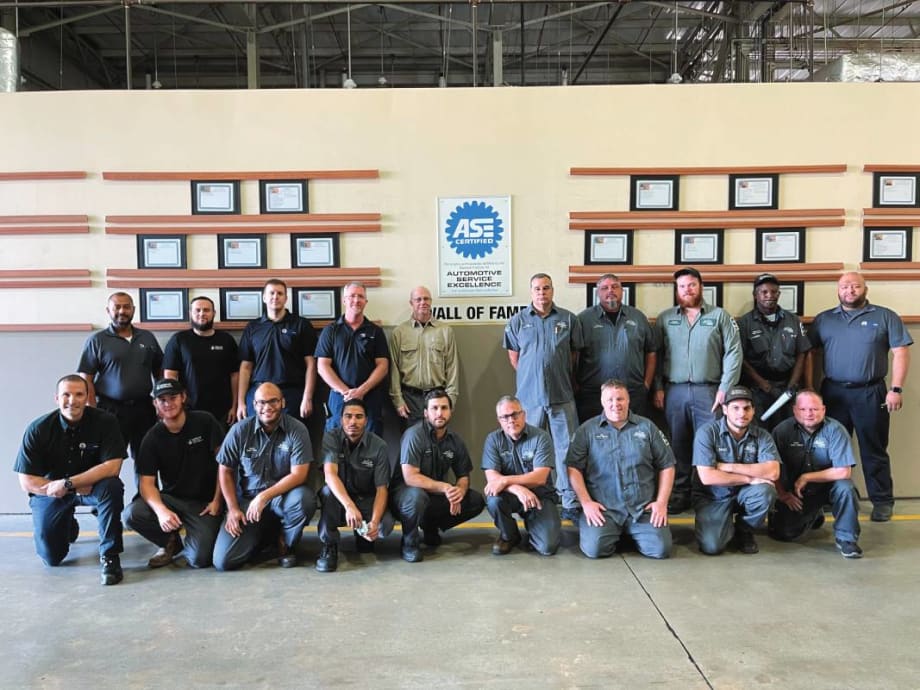
Some of the Hillsborough County, Florida, fleet team is pictured here.
Photo: Hillsborough County
Robert Stine says members of the public often don’t understand the complexity involved with managing a diverse public fleet of vehicles and equipment. Stine, who has CAFM and CPFP certifications and is director of the Hillsborough County, Florida, Fleet Management Department, is still amazed by the diversity of the equipment he manages.
Sedans make up the smallest portion of the Hillsborough County fleet. Light and medium trucks and SUVs are the largest categories. Other large categories include fire rescue equipment, off-road construction equipment, water pumps, generators, trailers, and water boats.
“What’s good about our technicians and any public fleet technicians is they don’t get bored,” said Stine, who has been with the department since 2013. “You name it, you’re going to work on it. If you have basic skill sets from an electrical perspective, or pneudrualics, hydraulics, or troubleshooting, you do very well in this business.”
A team of fleet department employees working together with the same goals in mind is important to run such a diverse fleet, and the three people who report to Stine fit that description. Stine said Fleet Services Manager Quinn Seghi, Fleet Operations Manager Joel Senical, and Fleet Asset Manager Meghan Stanek are a strong team.
“All three of them get along very well,” Stine said. “We’re big into mutual respect, straight talk, and we know we’re all in it together.”
That teamwork in managing the county’s diverse fleet is a main factor that resulted in the Hillsborough County fleet being named the nation’s No. 1 Leading Fleet. The award, sponsored by Ford Pro and coproduced with the American Public Works Association (APWA), recognizes peak-performing fleet operations; more winners can be found here.
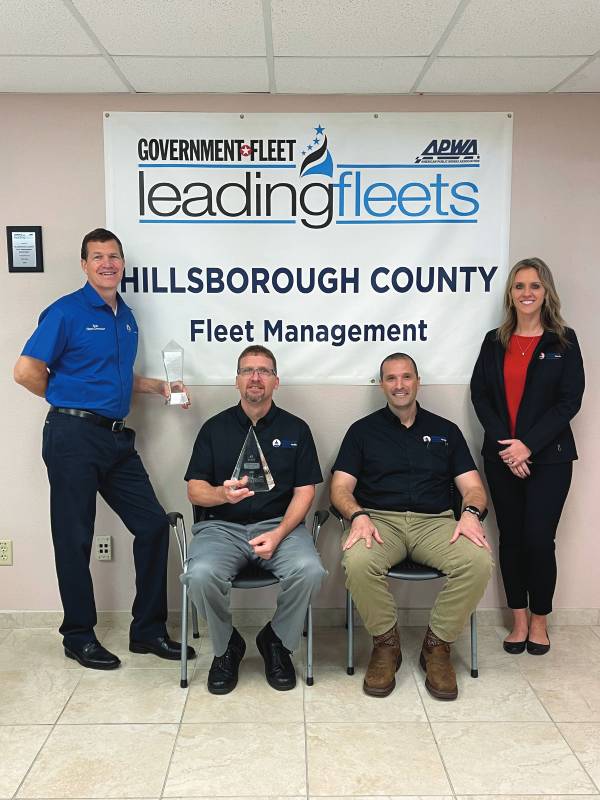
The Hillsborough County fleet management team consists of (l-r) Robert Stine, Jr., fleet director; Joel Senical, fleet operations manager; Quinn Seghi, fleet services manager; and Meghan Stanek, fleet asset manager.
Photo: Hillsborough County
Fleet Services Manager Seghi is responsible for maintenance and repairs, overseeing technicians and service advisers. Fleet Operations Manager Senical is responsible for financial management, fuel management, and contract management. Fleet Asset Manager Stanek is responsible for acquisitions, data management, property control, and business processes.
Stine and his team follow Simon Sinek’s principle, “It Starts with Why,” which he says inspires cooperation, trust, and change.
The fleet uses Lean Six Sigma principles to study how to improve quality of life, improve mission effectiveness, and reduce waste. Based on input from employees, the fleet implemented programs such as technician of the quarter, $800,000 in equipment and database upgrades, and $12 million for three new repair shops and fuel sites designed with technician input.
Also based on staff input, the fleet revamped its business plan and mission statement to implement a “Teamwork, Pride & Respect” logo. The fleet added the logo to its “Challenge Coin,” which Stine provides to his management team to provide to department employees, customers, and vendors to recognize above-and-beyond individual performance.
As examples, the department provides coins to those selected as Technician of the Quarter, as well as to vendors who provide strong service in providing maintenance and repairs. The department also provides coins to individuals from other departments it works with on special projects.
Regarding the “Starts with Why” concept, Stine said he works toward employees being able to answer the question, “Why are you here?”
“For every new employee that comes in the door, I spend time as a director to have a one-on-one with them after they’ve been onboarded for a couple weeks, to make sure they fully understand what public service is all about,” Stine said. “What is the county about, and if you’re in a city, what is the city about? What’s your mission? They have to understand what our mission is, why we are here, and what our responsibility is. Otherwise, they don’t understand the full picture.”
He talks to those new employees about how the county is structured, the department’s vision and mission, and what the employee’s career progression opportunities are with the county. He provided an example of how an employee on the technical side can start out as a vehicle service attendant and be promoted to technician, master technician, technician supervisor, fleet services manager, and even fleet director.
“Or you could go to other staff positions, which technicians have done with professional development, and continue to be successful, because fleet is such a diverse operation,” Stine said. “Most people just think it’s a Jiffy Lube. Why is it costing so much money for an oil change? I always highlight and educate our customers on why it’s everything but that.”
He explains to those employees that the department’s work involves the “core competency” of “asset management.”
“We are responsible for overseeing the acquisition process, then maintaining it after we buy it,” he said. “And then the surplus portion of it, and they’re all based on a lifecycle cost analysis, and when you have 50 to 100 different types of assets in your diverse fleet, each one is on a different lifecycle.”
Stine noted challenges his department faced with continuing operations as COVID-19 spread. In addition to enforcing social distancing, mask wearing, and placing techs on split shifts and staff on hybrid telework schedules, the department spent more than $75,000 on personal protective equipment, cleaning supplies, plexiglass barriers, and additional computers to keep the workforce safe. The department also worked to keep customers safe through measures such as installing air purification systems on fire apparatus and transit buses. Additional measures included installing transit bus plexiglass shields and disinfecting customer vehicles before working on them.
Stine said customer leadership starts with “seeking input, delivering on promises, exceeding expectations, and caring.” His supervisor is Thomas Fass, who is assistant county administrator, asset management and knowledge commons. Stine and Fass are both retired military officers who share an interest in data and getting results.
“We really look at the metrics and try to find ways to get better, and that’s what primarily drives the leadership here in this department, is to look for ways to get better and take care of our customers,” Stine said.
The fleet department seeks customer-satisfaction data, asking for feedback through point-of-sale surveys, leadership surveys, and fleet-hosted customer meetings. The department shares the surveys with employees and uses them to prioritize projects.
In addition, the department provides fleet database access rights and training to customers, as well as monthly newsletters, preventive maintenance schedules, recalls, and trend and billing data. The department also hosts recurring meetings with customers and functional experts together to review replacement programs, financial data, and policy guidance, and tracks 15 customer metrics tied to asset availability and turnaround times.
Stine closely tracks data related to labor, and although the department is authorized 65 employees, it currently employs 58 because of technician shortages. He has worked with the human resources department to increase salary ranges to be more competitive in the race to attract employees.
Stine stressed the importance of a strong team in reflecting on winning the No. 1 Leading Fleet award along with the individual Public Sector Fleet Manager of the Year award.
“I kind of tie it in both together,” he said. “Individually, it’s a team effort. You’re taking accomplishments for what the team did. You integrate it, but overall, it’s a team effort, and you’re not going to be successful unless everyone is heading in the same direction.”
This Thanksgiving, revisit five Government Fleet stories about how public fleets handled some of the year’s most familiar challenges.
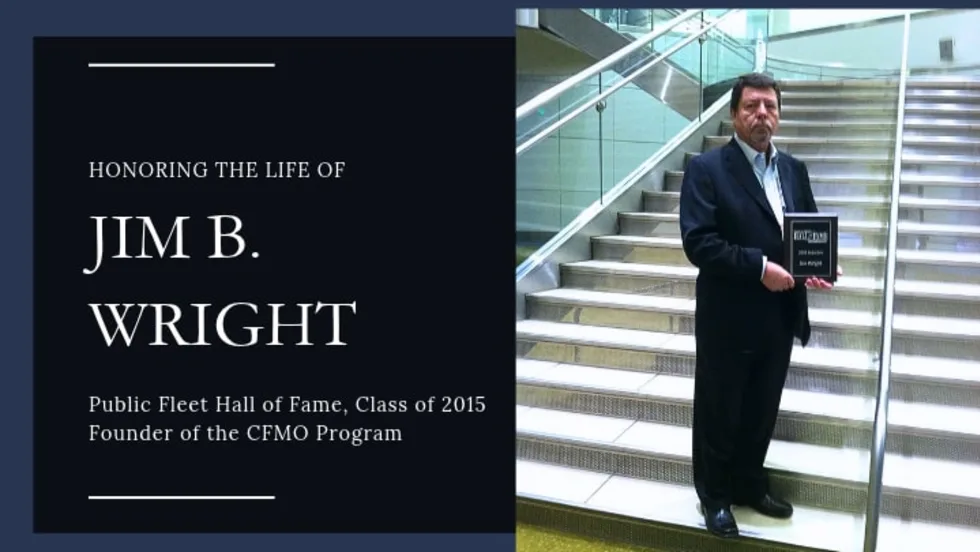
James 'Jim' B. Wright, who founded the Certified Fleet Management Organization (CFMO) program and guided it for many years, died Wednesday evening, Nov. 18.

What could a healthy-looking fleet metric be hiding? This week’s roundup looks at when to dig deeper, how 2027 patrol vehicles performed in preliminary tests, and how to apply for the Police Fleet Innovators Award.

This week, we look at drone footage, what fleets should document before repairs begin, and share a quick poll.

Government Fleet wants to hear from public-sector fleet professionals about their responsibilities for refuse collection and waste management equipment.

Is your next vehicle the right fit, can your records settle a missed pickup dispute, and what could your fleet teach others at GFX 2027?

Could delaying replacement cost your fleet more than it saves? This week’s recap takes a closer look, plus an update on GFX 2027.

What are fleet budgets missing, and how can agencies use the data they already collect to make a stronger case for change?

This October we looked back at how public fleets are reconsidering familiar processes and using what they learn to make better decisions.

Refuse trucks can carry public messages into neighborhoods, but keeping those messages current takes planning and clear responsibility.