




About the Author: Bob Stanton is a consultant for Stanton Fleet Consultants, based in Cumming, Georgia. He previously served as a municipal fleet manager for 25 years and prior to that worked in the private fleet industry. He can be reached at victorybob@gmail.com.
The Bright Future of the Internal Combustion Engine
Despite all the talk about electric vehicles, the internal combustion engine will be with us for decades to come and may never disappear from our landscape.
by Bob Stanton
November 30, 2021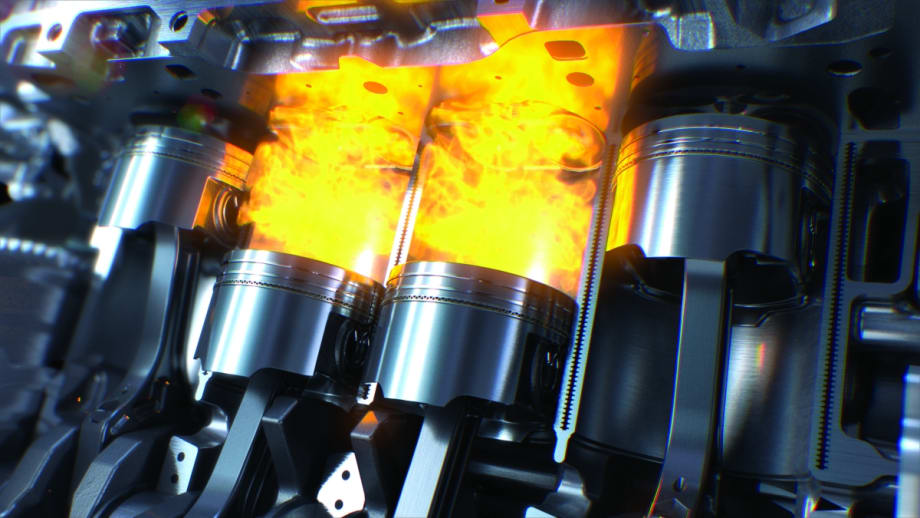
Photo: Getty Images
7 min to read
The industry trade press is agog over the prospect of electrification. One cannot read a newspaper or a trade magazine or review the agendas for industry conferences and webinars without coming face-to-face with yet another article or session about fleet electrification.
The logical conclusion, based on the sheer amount of attention being given to electrification in all segments, light- and heavy-duty notwithstanding, is that the internal combustion engine (ICE) powered by gasoline, diesel, propane, etc., is akin to a “dead man walking.” Imagine you are a teenager seeking a career in this field; would you even consider pursuing the study of ICE concepts and technology? As if our pool of technicians were not small enough already.
To paraphrase Mark Twain, “The presumptions of the death of the ICE are greatly exaggerated.” The ICE will be with us for decades to come and may never disappear from our landscape.
Mounting Pressure to Electrify
Government fleet managers are very likely to face growing pressure from all sides to “electrify” their fleet as this decade progresses. The information here is not meant to counter or ignore the arguments for electrifying some government vehicles; instead, it is intended to remind and reinforce the fact that ICE-powered vehicles will continue to dominate transportation sectors of all stripes for decades to come, including, of course, government fleets.
Yes, it is hard to ignore news that London and other cities in Europe may ban fossil-fueled vehicles in 2040, or that Kansas City’s city manager announced all fleet vehicles must be fully electric where available, or that New York City is transitioning to an all-electric road fleet by 2040. Governments are great copycats, and some may/will ask, “If they can do it, why can’t we?” The real question, however, is whether they can indeed pull it off or instead be forced to consider alternatives. In Kansas City’s case, its own “where available” language may be its escape clause.
With today’s current and future vehicle offerings, the ICE is indeed the best and only alternative available for most mission profiles and is becoming consistently more efficient every year. For instance, according to the Diesel Technology Forum, nitrogen oxide (NOx) emissions have dropped by more than 40% since 2007 and fine particle emissions have declined by 230,000 tons between 2008 and 2017. It may surprise you to learn (unless you either live in or are downwind from California) that the largest source of carbon emissions is not vehicles, but wildfires (43%).
Investments in ICEs Continue
What gets practically zero press are the billions of dollars being invested right now in new ICE technology. Here are some examples:
The U.S. Army has given millions to Achates Power for the continued development of its three-cylinder, six opposed piston, twin crankshaft, two-stroke engine design.
Many OEMs are either developing, or have in production, cylinder deactivation and fuel management systems that boost fuel economy, some by 12%. Similar systems are proposed for heavy-duty truck diesel engines too.
Cummins, Volvo, and Westport are all working on hydrogen-fueled ICEs.
These are just three examples. Your own cursory research efforts will reveal considerably more new technologies on the horizon. The inherent energy-density advantage of gasoline over batteries combined with the efficiency-boosting technologies we have witnessed in recent years, along with the longevity of the ICE over current battery life expectations, all render the benefits of the ICE hard to ignore.
If the ICE’s days are indeed numbered, why is so much research and money being invested in new technology?
Yes, General Motors announced its 2035 termination date for the sale of ICE vehicles. However, seeming to modify that earlier announcement, Chris Bonelli, GM’s global engine spokesman, stated, “We believe we can strive toward the 2035 aspiration, and ultimately an all-electric future, while continuing to innovate and develop our IC offerings.” Presciently, as this article was being written, Chevrolet Performance announced the introduction of two new crate engines, one being the most powerful crate engine in the brand’s history, boasting 1,004 hp.
Unlike GM, Ford announced its $22-billion investment in all-electric vehicles and did not include an announced demise of the ICE. Instead, T.R. Reid, Ford’s director of corporate and public policy communications, stated, “We also see a role for efficient and hybrid ICEs in certain applications in North America as we work to meet our commitment to be carbon neutral by 2050.”
Remember the Limitations of EVs
Although automakers worldwide are embracing an electrified future, based on the development reality of today’s marketplace, battery-powered EVs remain confined to significant range restrictions; uncertain resale profiles; a planned obsolescence of powertrain (battery) life; dependence on the lithium battery whose future, as resources may be limited, seems questionable; concerns over the impact of millions of exhausted batteries as they are added to the waste stream; and even the ability of the nationwide power grid to provide adequate recharge voltage as the population of EVs grows.
It should be noted that for government fleets, only a few full EV models could pass critical public scrutiny. While it might be presumed by their prevalence in the trade press that EV model accessibility is broad and wide, the reality is most full EVs on the market today are marketed to a higher-end EV consumer rather than to fleets.
Full EV offerings from Tesla, Volvo, Audi, Volkswagen, and Porsche, as well as Ford’s Mustang Mach-E, are all outside the procurement spectrum of most government buyers. This leaves only the Chevrolet Bolt and the Nissan Leaf as likely government EV models of choice. While this is likely to expand as other EV models and light-duty trucks become available in the coming years, the high and complex total cost of ownership equation for EVs cannot be ignored by governments as they consider EV acquisition.
Interestingly, in October, the Anderson Economic Group released a study showing that when the costs of a charger, commercial electricity, annual EV tax (currently levied in 19 states), and the “deadhead” miles to reach a fast charger are considered, it costs more to “fuel” an EV than a gasoline automobile.
Batteries & Resale Value Are Unknowns
Just in the last few months, the well-known automotive website Edmunds.com tested the maximum driving range, at full charge, of 24 full EVs and rated them worst to first. Full-charge driving distance varied from a low of 150 miles (Mini Cooper) to a high of 345 miles (Tesla Model 3 Long Range); only eight of the 24 exceeded 300 miles.
Admittedly, governments are less concerned about range unless their geography (e.g. county governments) requires greater coverage. The concern, however, is that despite heavily touted but non-existent “new battery technology,” many EV models’ advertised ranges have not increased greatly since their introduction. Until battery technology is truly revolutionized, EV ranges are unlikely to increase significantly in the near-term future.
Further, the $/c (cost per copy) of EV acquisition is not competitive with comparably sized ICE models. And while many cite the reduced costs of EV maintenance — clearly a true benefit and attractive reality in offsetting costs — few if any fleets factor in or include the costs of infrastructure acquisition and deployment in their total cost of ownership calculations. Infrastructure costs can be considerable both in charging station acquisition and installation and in facility modifications to accommodate the stations.
The largest unknown element is EV resale value. Will the used vehicle buyer want an EV equipped with a battery pack of unknown remaining life? Instead of rotating a used EV from the fleet, will it make greater economic sense to replace the battery and retain the vehicle for another full lifecycle? Would it make economic sense to replace the battery pack in the old EV prior to placing it for sale to make it more attractive to the used vehicle buyer? These and other EV replacement answers will become clear as first-generation EVs reach the end of their initial lifecycles.
Good for Certain Applications
There is no doubt that EVs are well-suited for certain government fleet applications. There is no doubt the population of EVs in government service will only grow as their limited mission profiles allow. There is equally no doubt that ICEs will prevail in government service for decades to come. The fleet manager, as the subject matter expert, is the most capable and reasonable source for the determination of which powertrain makes the most economic and operational sense.
Subscribe to Our Newsletter
More Green Fleet
Sustainability Partners, Energy Systems Group Help Albuquerque Close the Gap on its 100% Renewable Energy Goal
The eight-site, 6 MW solar project has advanced the city toward 100% renewable energy for municipal operations.
Read More →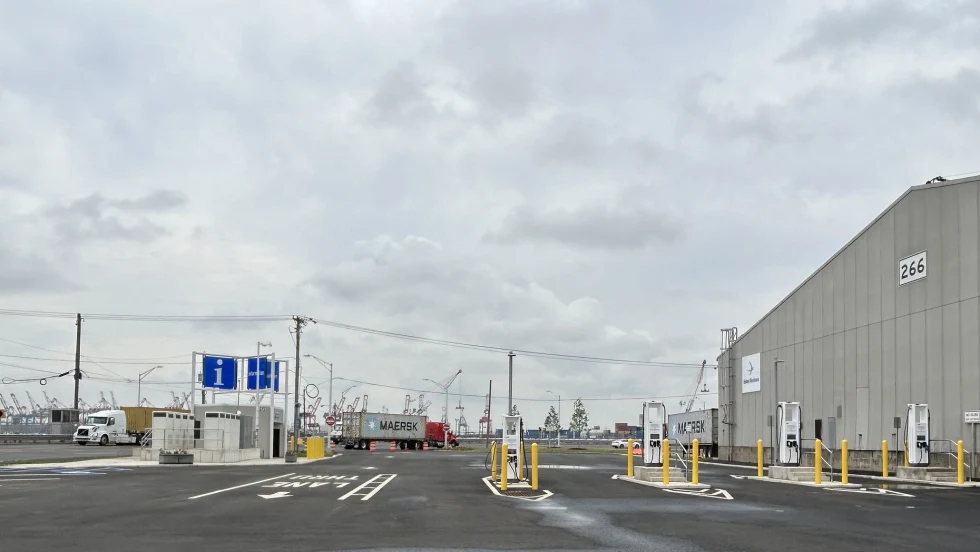
Port Authority and CALSTART Launch $45 Million Electric Truck and Charging Programs
The programs aim to boost sustainable operations across the East Coast's busiest seaport.
Read More →
Moving Government Fleets Beyond the Vehicle Purchase: EV as a Service
A discussion on how EVaaS is moving beyond pilot programs and what fleets should consider before beginning a larger deployment.
Read More →
Moving Government Fleets Beyond the Vehicle Purchase: EV as a Service
As fleets move beyond small EV pilots, Sustainability Partners CEO Adam Cain explains how EVaaS can address the infrastructure and long-term planning required for larger deployments.
Read More →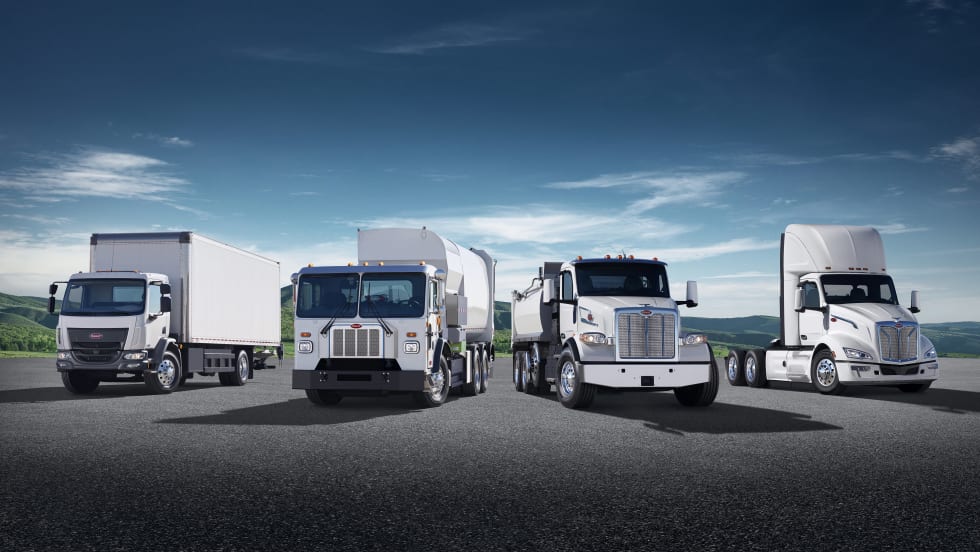
Peterbilt Expands Sourcewell Partnership with Electric Vehicle Lineup
The agreement aims to provide streamlined procurement of Peterbilt trucks for government, education, nonprofit and tribal organizations across the United States and Canada.
Read More →
EV Adoption & Charging Challenges
Where is your fleet in the journey of vehicle electrification? If you're still looking for answers to fleet electrification you've come to the right place.
Read More →
Hawaii Passes Clean Fuel Policy
Hawaii lawmakers passed clean fuel legislation that could support renewable natural gas production, biogas-powered transportation, and lower-carbon fueling options for public and commercial fleets.
Read More →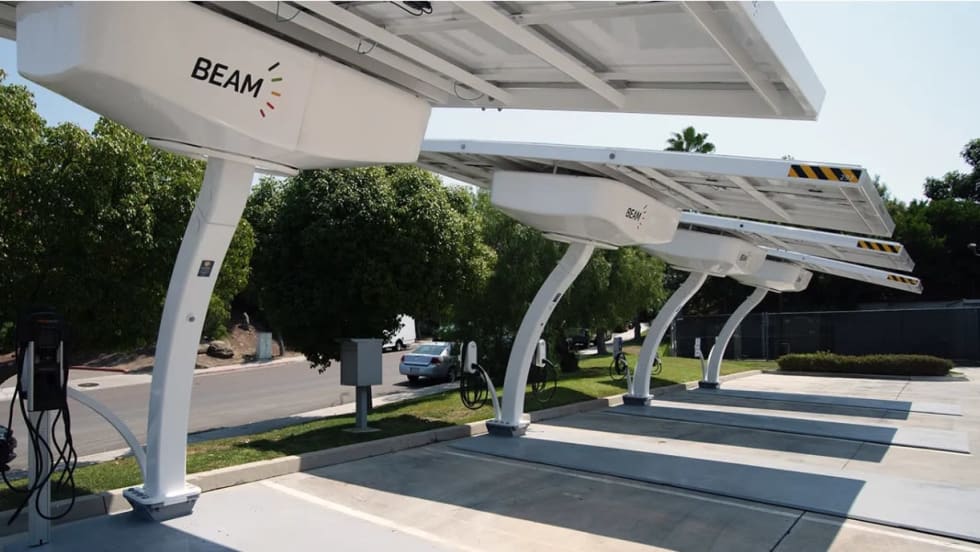
Stanislaus County Deploys Ten Beam Global EV ARC Systems to Support County Fleet Electrification
Stanislaus County deployed 10 off-grid solar-powered EV charging systems and a mobile charging trailer from Beam Global to support its electric fleet operations and emergency response flexibility.
Read More →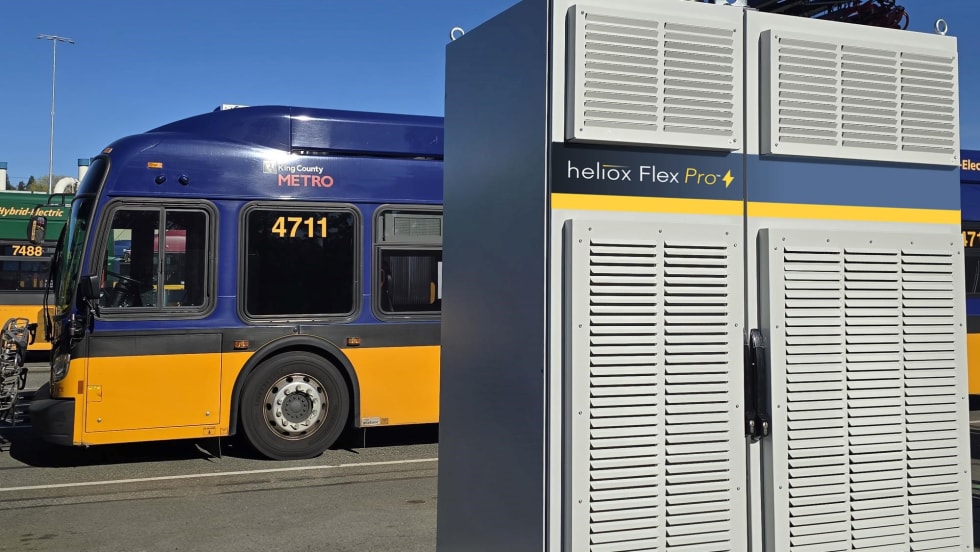
Heliox Pilots 480-kW Bus Charger with King County Metro
King County Metro is piloting Heliox’s new 480-kW Flex Pro charger to support expansion of its battery-electric bus fleet and depot charging infrastructure. The compact charging system supports pantograph and plug-in charging configurations for high-density transit operations.
Read More →