




Washington State DOT Adds LEAFs to Fleet
The Washington State Department of Transportation (WSDOT) continues to improve the sustainability of its fleet by leasing a handful of all-electric Nissan LEAF plug-in electric vehicles (PEV) for official state use.

Washington State Transportation Secretary Lynn Peterson. Photo courtesy of WSDOT.
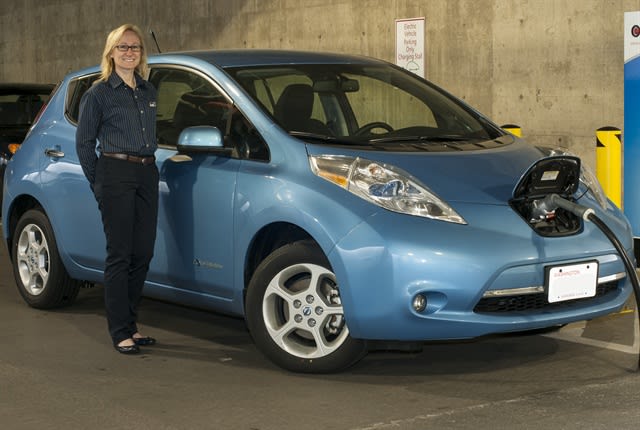
Washington State Transportation Secretary Lynn Peterson. Photo courtesy of WSDOT.
The Washington State Department of Transportation (WSDOT) continues to improve the sustainability of its fleet by leasing a handful of all-electric Nissan LEAF plug-in electric vehicles (PEV) for official state use.
The five new PEVs will soon make their way to WSDOT offices, according to WSDOT Fleet Administrator Greg Hansen, with the Northwest Region headquarters receiving two LEAFs, and one each going to headquarters in Olympia, Tumwater, and Vancouver. WSDOT is also installing 220-volt, Level-2 chargers at all four offices, which deliver full charges in four to eight hours.
In 2012, WSDOT became the first state agency in Washington to acquire a Chevy Volt plug-in hybrid. To help advance PEV technology acceptance, WSDOT this year purchased the first state-owned all-electric vehicle and began a pilot project to negotiate a state contract to lease Nissan LEAFs and make them available to all state and local governments.
WSDOT’s fleet operations is expected to save $2,500 in operating costs over the lifecycle of each PEV. The fleet is gradually transitioning its gas vehicles to all-electric, plug-in hybrids, and biodiesel to reduce greenhouse gas emissions and achieve its sustainability goals. All fleet sedans that are not yet electric or hybrid are compatible with up to 85 percent ethanol flexible fuel.
More Operations

Is Keeping Older Fleet Vehicles Really Saving Money?
Is keeping vehicles longer saving money, and what happens when a diagnostic test points to the wrong fix?
Read More →
How Smart Fleet Strategy Can Help Local Government Agencies Do More with Less
Keeping a vehicle longer may ease this year’s budget, but what does it cost the next one? A closer look at fleet decisions can reveal opportunities to reduce spending while protecting essential services.
Read More →
Connect with Government Fleet on LinkedIn
From industry news and fleet management strategies to conversations with peers, Government Fleet's LinkedIn page offers public-sector fleet professionals another way to stay informed and connected.
Read More →
Town of Queen Creek Named Most Successful Fleet Award Winner of Inaugural RTA Fleet Success Awards
Five fleets were honored at RTA Connect 2026 in Chicago for excellence across resource efficiency, intentional culture, risk management, and stakeholder satisfaction.
Read More →
A buyer's guide to fleet management software in 2027
Buying fleet management software in 2027 means looking beyond features and price. As fleet operations, technology and expectations evolve, this guide explores what today’s fleet professionals should consider when choosing a system that can deliver value now and adapt to what comes next.
Read More →
Hazard Alerts, Fleet Car Sales Rise and a New Shuttle Concept
Fleet car sales doubled, but the bigger picture tells a different story in this week’s roundup.
Read More →
How St. Johns County Turned Fleet Data Into Better Replacement Decisions
St. Johns County, Florida, had fleet data, but turning it into reliable decision guidance was another matter. Instead of starting over with a new fleet management system, the county connected existing tools and built a scoring system that gives managers an objective look at fleet health.
Read More →
Fleet Forward Conference Introduces One-Day Passes for 2026
New one-day registration lets fleet professionals attend Tuesday, Wednesday, or Thursday, with passes available for $249.
Read More →
ENC Unveils its ZAVIR Medium-Duty Shuttle
Two variants of the concept shuttles were revealed: a low-floor configuration and a high-floor configuration.
Read More →
Could Your Next Fleet Technician Start as an Intern?
What if your next technician hasn’t worked in a fleet shop yet? What fleets are doing to free up time.
Read More →