




Snohomish County's Fleet Manager Moving to Position With Arlington County, Va.
EVERETT, WA - Allen Mitchell worked with Snohomish County, Wash., for 19 years as its fleet manager.

Snohomish County's Fleet manager Allen Mitchell.
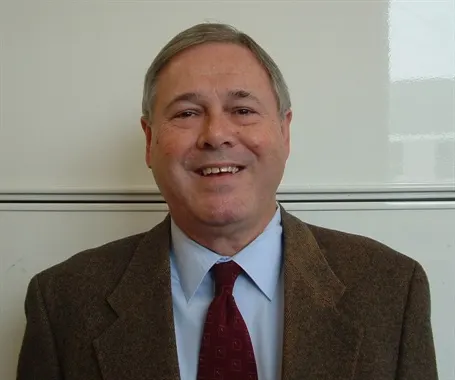
Snohomish County's Fleet manager Allen Mitchell.
EVERETT, WA – Snohomish County, Wash.’s Fleet Manager Allen Mitchell has accepted a new position as the equipment bureau chief for Arlington County, Va.
Mitchell worked with Snohomish County for 19 years as its fleet manager. While working in that role, he managed all aspects of the County’s fleet, serving county departments and 15 external agencies. He will retire from that role, effective Dec. 15, 2011.
Snohomish County has a fleet of 2,264 items of equipment valued at $52 million. Fleet Services has 49 staff at three locations and an annual budget of $27.5 million.
Some of Mitchell’s most memorable achievements while working with Snohomish County including attracting and retaining top-tier professional staff, replacing three fleet maintenance facilities while incurring only minimal debt, and fostering a sustainable fleet by authoring and implementing a green fleet plan. Mitchell also developed a number of interlocal agreements, including cities, tribes, districts, and area maintenance for Washington State General Administration.
“So far, being Snohomish County fleet manager has been the best job in my career,” Mitchell said.
When asked about his new role, he said he’s looking forward to facing new challenges.
“I understand they have very professional fleet staff that I hope to mentor, to provide outstanding fleet customer service, and to implement fleet sustainability initiatives and best management practices,” Mitchell said.
Arlington, Va., is a world-class residential, business and tourist location that was originally part of the "10 miles square" parcel of land surveyed in 1791 to be the Nation's Capital. It is the geographically smallest self-governing county in the United States, occupying slightly less than 26 square miles.
Arlington maintains a rich variety of stable neighborhoods, quality schools and enlightened land use, and received the Environmental Protection Agency's highest award for "Smart Growth" in 2002. Home to some of the most influential organizations in the world, including the Pentagon, Arlington stands out as one of America's preeminent places to live, visit and do business.
A 39-Year career in Fleet
Mitchell began his career in with the U.S. Army. He received his commission as a Second Lieutenant in the Ordinance Corps from the Engineer Officer Candidate School in Ft. Belvoir, Va. After graduating, he attended ordinance basic training, which included an introduction to equipment maintenance in Aberdeen Proving Grounds, Md. After that, Mitchell took the Supply Management Officer course at Ft. Lee, Va. and served 4 years in the Army in maintenance management of vehicles and other equipment.
After the Army, he attended graduate school at Western Washington University in Bellingham, Wash., and received a Master of Education Degree in Adult Education Administration. During his last year of classes, he worked full-time in Seattle as a motor pool supervisor with the State of Washington Department of General Administration. He stayed in that position for two-and-a-half years and then served 9 months as an intern in budget and management analysis with the State of Washington.
While an intern, Mitchell acted as a consultant for Rainier Bank writing fleet policies and was hired as Transportation Services Manager for the regional corporation. He spent nine years in that role. Next, King County, Wash, hired him as the Equipment Supervisor. He spent five-and-a-half years managing the heavy truck and equipment shop in Renton, Wash. That fleet consisted of approximately 550 equipment assets and 25 staff.
From there, Mitchell moved to his position as fleet manager for Snohomish County.
By Greg Basich
More Operations
Who Deserves Fleet Recognition and What Could You Teach at GFX?
Who helped shape your fleet career, and what have you learned that could help someone else?
Read More →
What’s Haunting Public Sector Fleets?
Public sector fleet challenges rarely happen in isolation, and addressing one often means understanding how it connects to another.
Read More →
Is Keeping Older Fleet Vehicles Really Saving Money?
Is keeping vehicles longer saving money, and what happens when a diagnostic test points to the wrong fix?
Read More →
How Smart Fleet Strategy Can Help Local Government Agencies Do More with Less
Keeping a vehicle longer may ease this year’s budget, but what does it cost the next one? A closer look at fleet decisions can reveal opportunities to reduce spending while protecting essential services.
Read More →
Connect with Government Fleet on LinkedIn
From industry news and fleet management strategies to conversations with peers, Government Fleet's LinkedIn page offers public-sector fleet professionals another way to stay informed and connected.
Read More →
Town of Queen Creek Named Most Successful Fleet Award Winner of Inaugural RTA Fleet Success Awards
Five fleets were honored at RTA Connect 2026 in Chicago for excellence across resource efficiency, intentional culture, risk management, and stakeholder satisfaction.
Read More →
A buyer's guide to fleet management software in 2027
Buying fleet management software in 2027 means looking beyond features and price. As fleet operations, technology and expectations evolve, this guide explores what today’s fleet professionals should consider when choosing a system that can deliver value now and adapt to what comes next.
Read More →
Hazard Alerts, Fleet Car Sales Rise and a New Shuttle Concept
Fleet car sales doubled, but the bigger picture tells a different story in this week’s roundup.
Read More →
How St. Johns County Turned Fleet Data Into Better Replacement Decisions
St. Johns County, Florida, had fleet data, but turning it into reliable decision guidance was another matter. Instead of starting over with a new fleet management system, the county connected existing tools and built a scoring system that gives managers an objective look at fleet health.
Read More →
Fleet Forward Conference Introduces One-Day Passes for 2026
New one-day registration lets fleet professionals attend Tuesday, Wednesday, or Thursday, with passes available for $249.
Read More →