




Quick Charger Opens Washington State DOT Fleet to EVs
OLYMPIA, WA - The Washington State DOT unveiled the a DC quick charger for electric vehicles, available for use by business visitor vehicles, employee commuter vehicles, and future WSDOT plug-in vehicles.
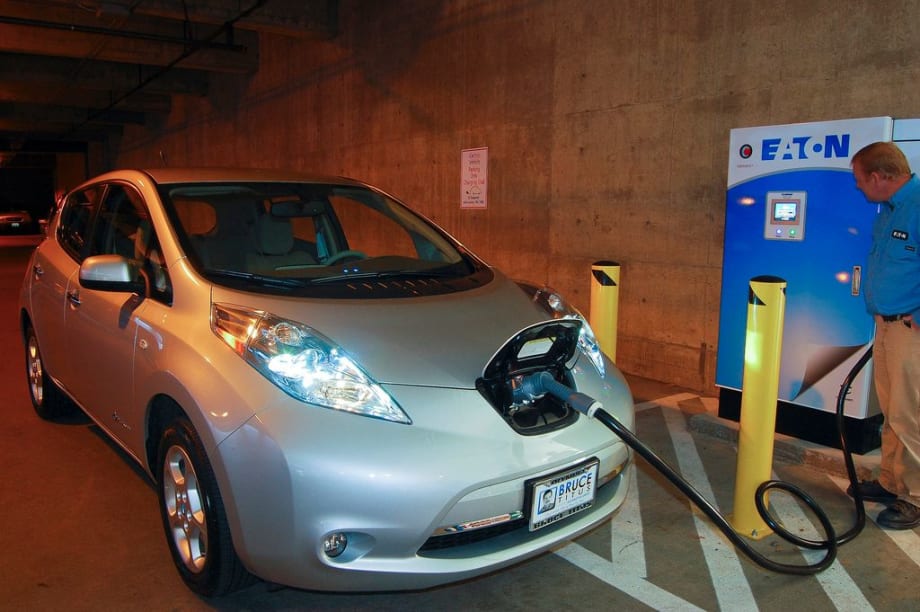
The DC quick charger can charge plug-in vehicles from 0-80 percent charged in less than 30 minutes. Photo courtesy WSDOT.
The DC quick charger can charge plug-in vehicles from 0-80 percent charged in less than 30 minutes. Photo courtesy WSDOT.
OLYMPIA, WA - On Nov. 1, the Washington State DOT unveiled the first DC quick charger for electric vehicles in the state's capital Olympia. Officials at the agency said it is a sign of new transportation infrastructure to come and a glimpse of how many state workers might be refueling in the not-so-distant future, according to a release from the WSDOT.
This refrigerator-sized "wall socket" removes a major roadblock for many agencies considering the switch to electric -- charge time. A DC quick charge can charge a Nissan Leaf and other plug-ins, 0-80 percent charged, in less than 30 minutes. The much more common Level 2 chargers take four to six hours.
"We did this project because it's the future of sustainable transportation," said project manager Tony Trask, senior planner for WSDOT facilities. "WSDOT visitors who are driving electric vehicles can't wait all day for a regular recharge, they need a quick charge so they can get back on the road."
The charging station is available to WSDOT business visitor vehicles, employee commuter vehicles, and anticipated future WSDOT fleet vehicles. While there are not currently any plug-in EVs in the fleet, "Our focus is on building new infrastructure necessary to push the state over the difficult acceptance hump to switch to electric and other alternative-fuel transportation," according to Brady Noel, a spokesperson for the WSDOT.
"We anticipate there will be a steadily increasing demand for this quick-charge service over the next year and beyond as the new Mitsubishi i and several other new EVs hit this important market," he added.
Other government agencies within the state, however, have purchased the Leaf. Through a State Department of Enterprise Services 2011 contract, government agencies in Washington purchased 48 Nissan Leafs, including 20 for the nation's first electric vehicle motor pool administered by King County Metro. Other agencies that purchased the Leaf were: City of Tacoma (9), Snohomish County (5), Pierce County (3), Thurston County (2), City of Edmonds (2), City of Millcreek (2), South Puget Sound Community College (1), Southwest Clean Air Agency (1), City of SeaTac (1), Snohomish Public Utility District (1), and Clark County Public Utility District (1).
WSDOT is leading the transportation industry with electric vehicle charging infrastructure from Canada to Oregon with the state's Electric Highways project, and it is helping encourage cleaner-burning, more efficient travel with the West Coast Green Highway partnership, a planned network of charging stations along Interstate 5 from Vancouver, British Columbia, to Baja, Mexico.
"WSDOT's former assistant secretary for administrative operations Bill Ford (recently retired) was the driving force behind this (new charger)," said Facilities Operations Manager Larry Dittloff. "He understood that we need to be in the forefront of transportation innovations."
More Green Fleet
Sustainability Partners, Energy Systems Group Help Albuquerque Close the Gap on its 100% Renewable Energy Goal
The eight-site, 6 MW solar project has advanced the city toward 100% renewable energy for municipal operations.
Read More →
Port Authority and CALSTART Launch $45 Million Electric Truck and Charging Programs
The programs aim to boost sustainable operations across the East Coast's busiest seaport.
Read More →
Moving Government Fleets Beyond the Vehicle Purchase: EV as a Service
A discussion on how EVaaS is moving beyond pilot programs and what fleets should consider before beginning a larger deployment.
Read More →
Moving Government Fleets Beyond the Vehicle Purchase: EV as a Service
As fleets move beyond small EV pilots, Sustainability Partners CEO Adam Cain explains how EVaaS can address the infrastructure and long-term planning required for larger deployments.
Read More →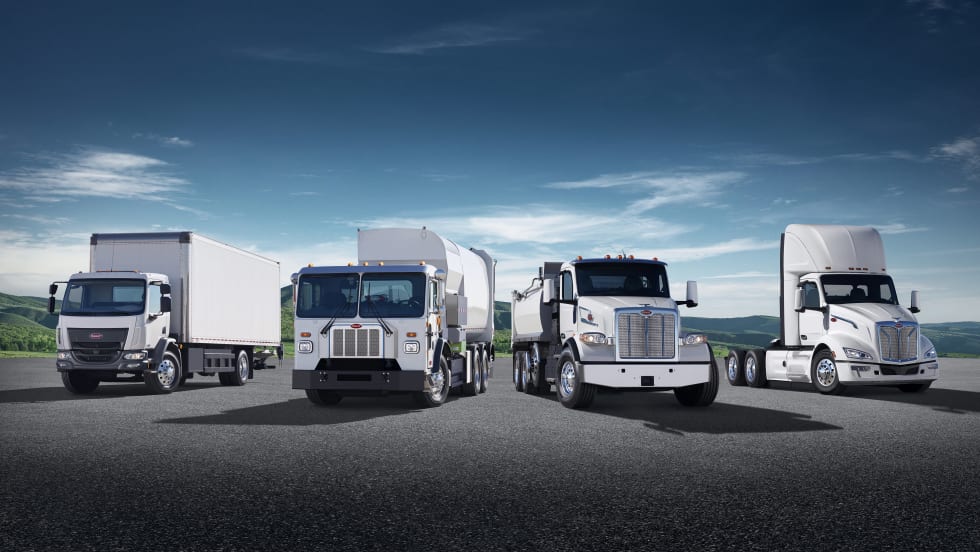
Peterbilt Expands Sourcewell Partnership with Electric Vehicle Lineup
The agreement aims to provide streamlined procurement of Peterbilt trucks for government, education, nonprofit and tribal organizations across the United States and Canada.
Read More →
EV Adoption & Charging Challenges
Where is your fleet in the journey of vehicle electrification? If you're still looking for answers to fleet electrification you've come to the right place.
Read More →
Hawaii Passes Clean Fuel Policy
Hawaii lawmakers passed clean fuel legislation that could support renewable natural gas production, biogas-powered transportation, and lower-carbon fueling options for public and commercial fleets.
Read More →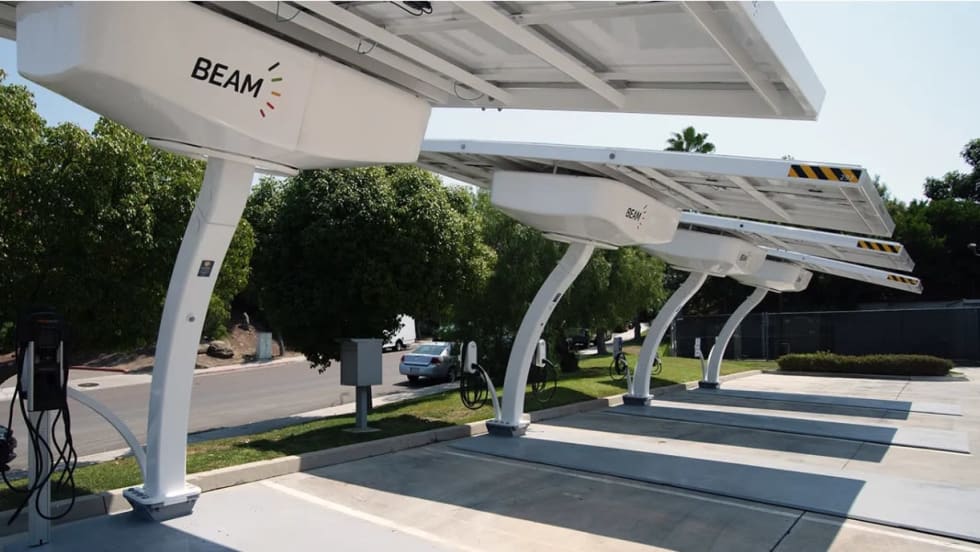
Stanislaus County Deploys Ten Beam Global EV ARC Systems to Support County Fleet Electrification
Stanislaus County deployed 10 off-grid solar-powered EV charging systems and a mobile charging trailer from Beam Global to support its electric fleet operations and emergency response flexibility.
Read More →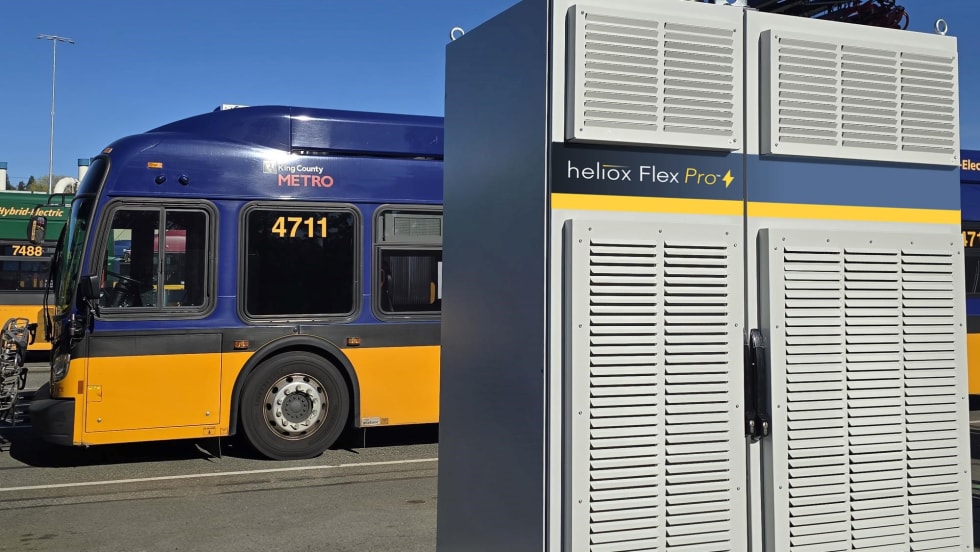
Heliox Pilots 480-kW Bus Charger with King County Metro
King County Metro is piloting Heliox’s new 480-kW Flex Pro charger to support expansion of its battery-electric bus fleet and depot charging infrastructure. The compact charging system supports pantograph and plug-in charging configurations for high-density transit operations.
Read More →