




NTSI Launches Van Safety Curriculum to Help Prevent Rollover Deaths
TUCSON, AZ — Drivers of multi-passenger vans assume decidedly different responsibilities than standard automobile drivers, harnessing a unique set of skills required to keep passengers safe.
TUCSON, AZ — Drivers of multi-passenger vans assume decidedly different responsibilities than standard automobile drivers, harnessing a unique set of skills required to keep passengers safe. However, the recent spike in injuries and deaths due to van rollovers suggests widespread ignorance about this important distinction, and the National Traffic Safety Institute (NTSI) has responded. The NTSI recently unveiled a new multi-passenger van driver safety curriculum, currently being rolled out in classes throughout Arizona. Scheduled for expansion to the 25 other states served by NTSI and its agent licensees, the program covers all aspects of van safety including unique blind spots, significant weight differences, defensive driving techniques, vehicle inspection protocol, and altered centers of gravity when loaded. It also covers the driving differences between a van and a standard automobile and underscores the federal requirement for drivers to hold a "CDL Class C" license, often overlooked by van operators. The curriculum is provided via DVDs, videotape, and a training manual. “Our research suggests that individuals who are operating multi-passenger vans are not getting the specialized training they require,” stated Paul Hallums, NTSI president. “Driving fully loaded vans with bare minimum driving skills is no different than giving the pilot of a small Cessna the keys to a commercial jet,” he continued. “We must empower drivers with the tools they need to get their passengers to their destinations safely.” Course locations and schedules can be obtained by contacting NTSI at 866-346-3283. Founded in 1974, NTSI has trained millions of people across the country to be safer drivers. It remains the nation's oldest and largest traffic safety program.
More Operations

How St. Johns County Turned Fleet Data Into Better Replacement Decisions
St. Johns County, Florida, had fleet data, but turning it into reliable decision guidance was another matter. Instead of starting over with a new fleet management system, the county connected existing tools and built a scoring system that gives managers an objective look at fleet health.
Read More →
Fleet Forward Conference Introduces One-Day Passes for 2026
New one-day registration lets fleet professionals attend Tuesday, Wednesday, or Thursday, with passes available for $249.
Read More →
ENC Unveils its ZAVIR Medium-Duty Shuttle
Two variants of the concept shuttles were revealed: a low-floor configuration and a high-floor configuration.
Read More →
Could Your Next Fleet Technician Start as an Intern?
What if your next technician hasn’t worked in a fleet shop yet? What fleets are doing to free up time.
Read More →
How Phoenix Is Building Its Next Generation of Fleet Technicians
With more than 8,000 vehicles and pieces of equipment to maintain, the City of Phoenix could not afford to wait for fully trained technicians to walk through the door. Instead, they revamped their entire workforce strategy and showed how public fleets can create their own talent pipeline while preparing existing employees for increasingly complex vehicles.
Read More →
What’s Slowing Your Fleet Down?
Could a change in how work gets done help your fleet return vehicles to service sooner?
Read More →
Can Public Fleets Trust the Data Driving Their Decisions?
Public fleets have more data than ever, but inconsistent records and missing information can still undermine maintenance, replacement, and cost decisions.
Read More →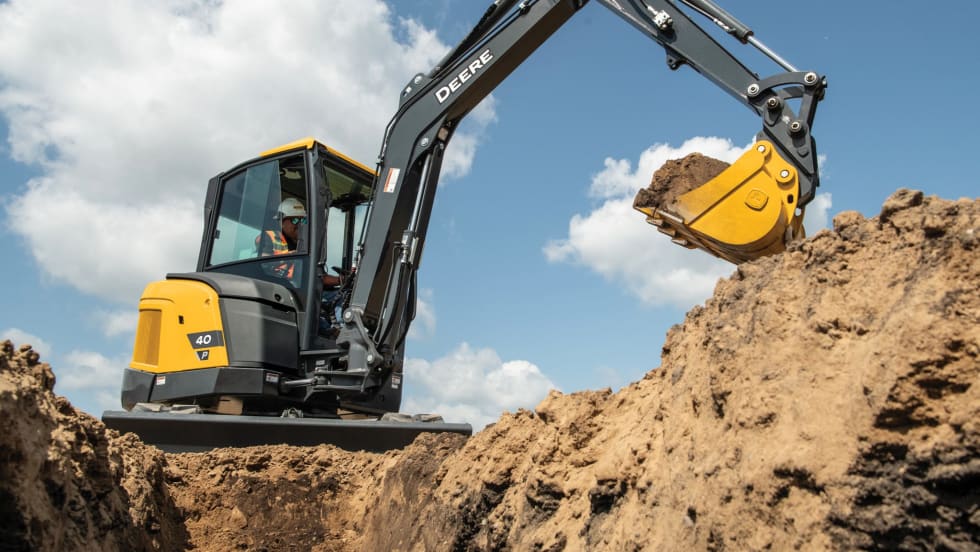
John Deere Introduces 40 P-Tier Compact Excavator
John Deere is adding a compact excavator designed for crews that need to move equipment between jobsites and handle multiple types of work with one machine. The 40 P-Tier weighs less than 10,000 pounds and offers configurable hydraulics, attachment options, and connected fleet-management capabilities.
Read More →
How Leading Fleets Improve and Why Business Plans Matter
This week, we look at what past Leading Fleet winners can teach us about making progress, plus how to build a business plan your fleet will actually use.
Read More →
Nominate a Fleet Leader for the 2027 Public Fleet Hall of Fame
Do you know a fleet leader who has made a lasting impact on the industry? Nominate this fleet professional for the 2027 Public Fleet Hall of Fame.
Read More →